Xu Shengyu, Jiang Xiaojun, Jia Xinlin, Jiang Xuemei, Che Lianqiang, Lin Yan, Zhuo Yong, Feng Bin, Fang Zhengfeng, Li Jian, Wang Jianping, Ren Zhihua, Wu De
Key Laboratory of Animal Disease-Resistance Nutrition, Ministry of Education, Animal Nutrition Institute, Sichuan Agricultural University, Chengdu 611130, China.
Key Laboratory of Animal Disease-Resistance Nutrition and Feed, Ministry of Agriculture and Rural Affairs, Animal Nutrition Institute, Sichuan Agricultural University, Chengdu 611130, China.
Animals (Basel). 2022 Aug 26;12(17):2202. doi: 10.3390/ani12172202.
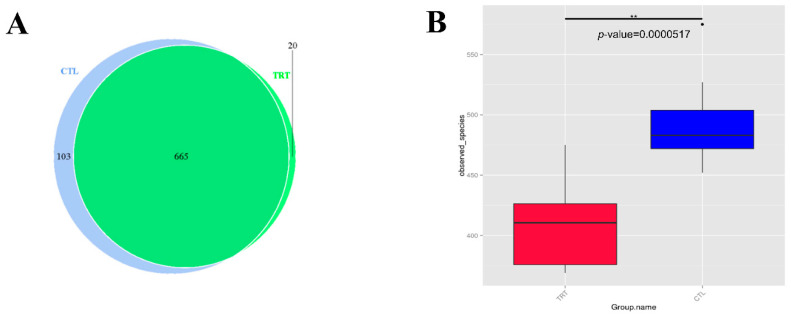
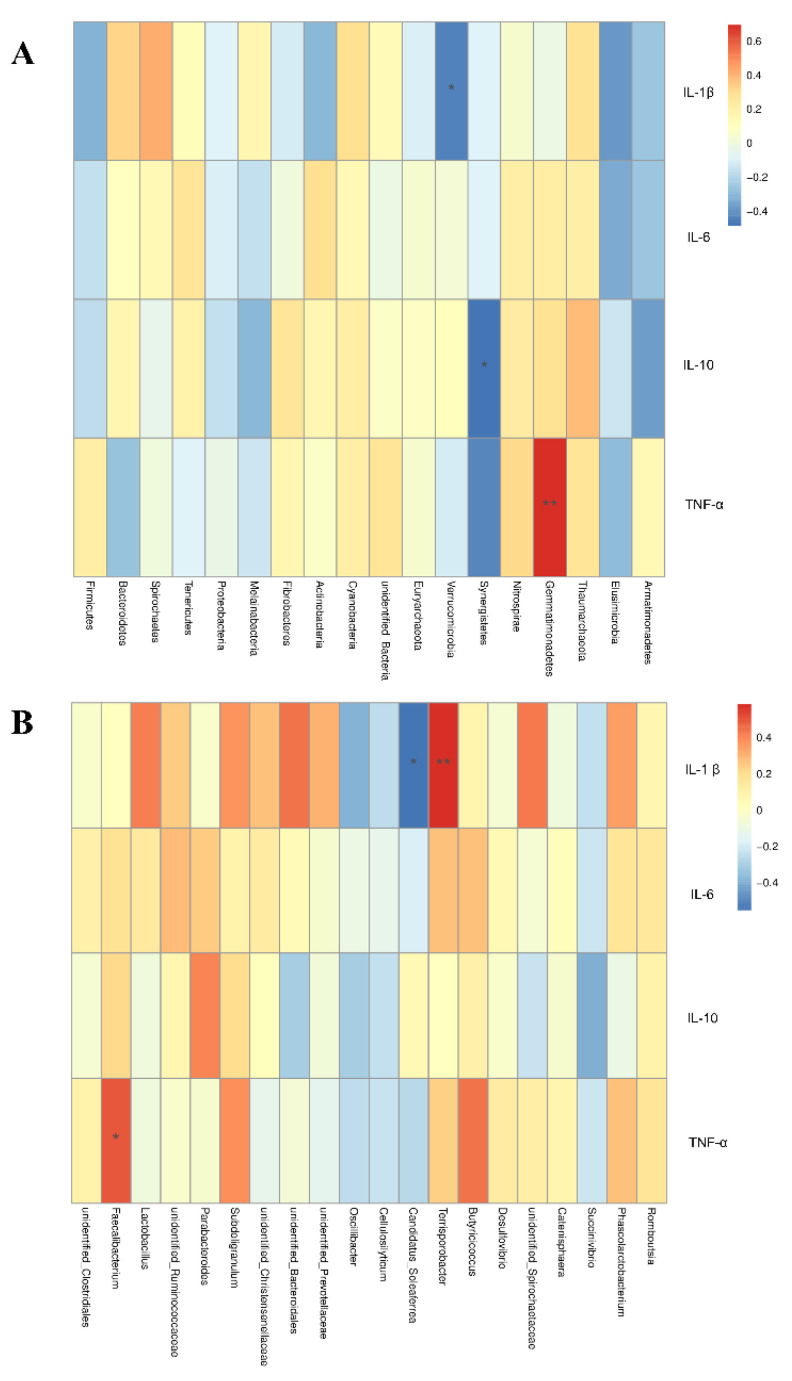
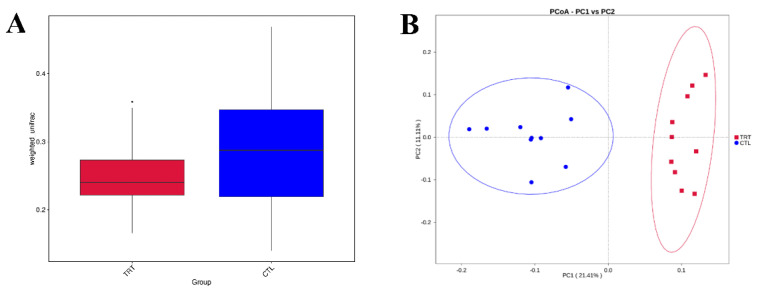
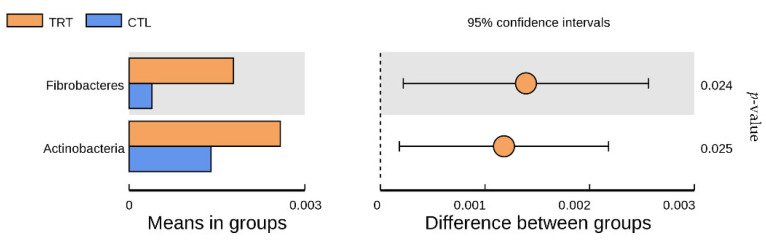
Inflammatory responses reduce milk production in lactating sows. Silymarin may modulate inflammatory reactions. Here, we aimed to verify whether dietary silymarin supplementation could alleviate inflammatory responses in lactating sows through microbiota change in the gut. We also investigated how silymarin impacts inflammatory response in lactating sows. One hundred and ten sows were randomly assigned to a control diet (basal diet) or treatment diet (basal diet and 40 g/d silymarin) from the 108th day of gestation to weaning. Blood, milk, and feces from sows were collected for analysis. It was shown in the results that dietary silymarin supplementation decreased the level of pro-inflammatory cytokine IL-1β (p < 0.05) on the 18th day of lactation in the blood of the sows. Dietary silymarin supplementation tended to decrease (p = 0.06) somatic cell count in the colostrum of sows. Dietary silymarin supplementation reduced the gut bacterial community and the richness of the gut microbial community (p < 0.01) using 16S rRNA gene sequencing. The fecal microbes varied at different taxonomic levels in the lactating sows with silymarin supplementation. The most representative changes included an increase in the relative abundance of Fibrobacteres and Actinobacteria (p < 0.05) and tended to reduce the relative abundance of Spirochaetaes and Tenericutes (p = 0.09, 0.06) at the phylum level. It is suggested that dietary silymarin supplementation in late gestation until lactation has anti-inflammatory effects in lactation sow, which could be associated with the modulation of gut microbiota.
炎症反应会降低泌乳母猪的产奶量。水飞蓟素可能调节炎症反应。在此,我们旨在验证日粮中添加水飞蓟素是否能通过改变肠道微生物群来减轻泌乳母猪的炎症反应。我们还研究了水飞蓟素如何影响泌乳母猪的炎症反应。从妊娠第108天到断奶,将110头母猪随机分为对照组(基础日粮)或处理组(基础日粮 + 40 g/d水飞蓟素)。采集母猪的血液、乳汁和粪便进行分析。结果表明,日粮中添加水飞蓟素可降低泌乳第18天母猪血液中促炎细胞因子IL-1β的水平(p < 0.05)。日粮中添加水飞蓟素倾向于降低(p = 0.06)母猪初乳中的体细胞计数。采用16S rRNA基因测序分析,日粮中添加水飞蓟素可减少肠道细菌群落和肠道微生物群落的丰富度(p < 0.01)。添加水飞蓟素的泌乳母猪粪便微生物在不同分类水平上存在差异。最具代表性的变化包括在门水平上,纤维杆菌门和放线菌门的相对丰度增加(p < 0.05),螺旋体门和柔膜菌门的相对丰度有降低趋势(p = 0.09,0.06)。研究表明,妊娠后期至泌乳期日粮中添加水飞蓟素对泌乳母猪具有抗炎作用,这可能与肠道微生物群的调节有关。