Molecular Medicine Research Center, biobank.cy Center of Excellence in Biobanking and Biomedical Research, University of Cyprus, Nicosia 2109, Cyprus.
Department of Cardiology, Nicosia General Hospital, Nicosia 2029, Cyprus.
Genes (Basel). 2024 Feb 28;15(3):319. doi: 10.3390/genes15030319.
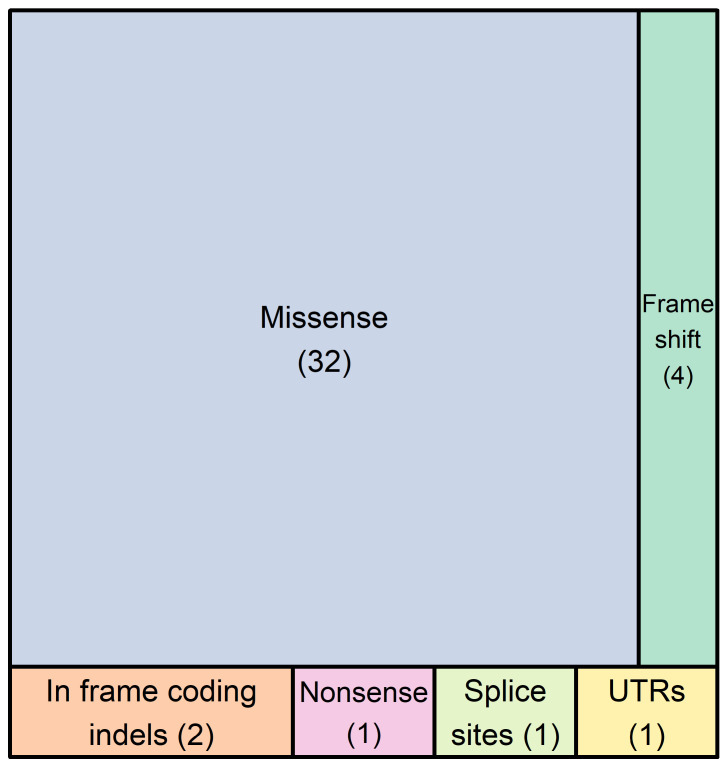
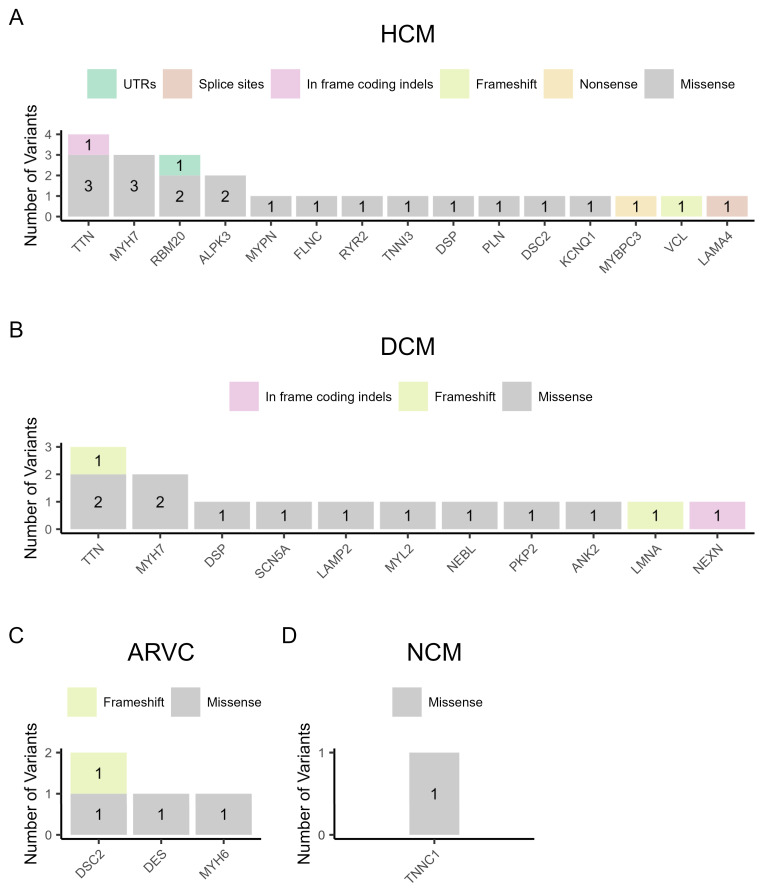
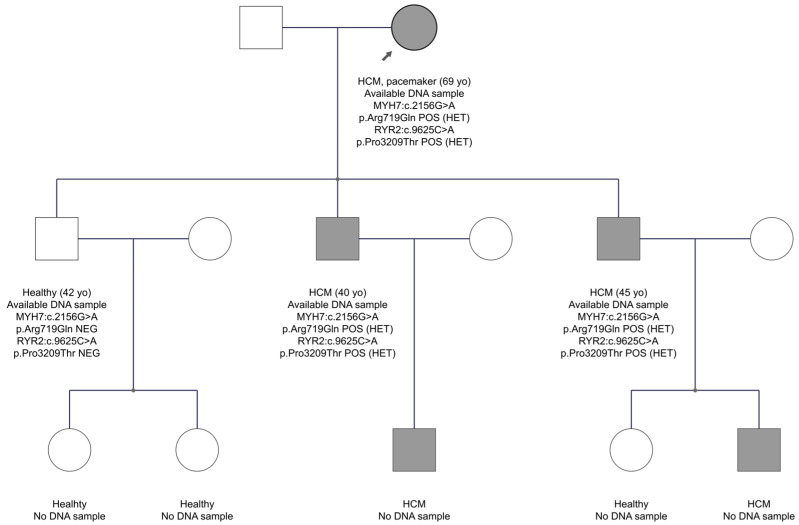
Inherited cardiomyopathies represent a highly heterogeneous group of cardiac diseases. DNA variants in genes expressed in cardiomyocytes cause a diverse spectrum of cardiomyopathies, ultimately leading to heart failure, arrythmias, and sudden cardiac death. We applied massive parallel DNA sequencing using a 72-gene panel for studying inherited cardiomyopathies. We report on variants in 25 families, where pathogenicity was predicted by different computational approaches, databases, and an in-house filtering analysis. All variants were validated using Sanger sequencing. Familial segregation was tested when possible. We identified 41 different variants in 26 genes. Analytically, we identified fifteen variants previously reported in the Human Gene Mutation Database: twelve mentioned as disease-causing mutations (DM) and three as probable disease-causing mutations (DM?). Additionally, we identified 26 novel variants. We classified the forty-one variants as follows: twenty-eight (68.3%) as variants of uncertain significance, eight (19.5%) as likely pathogenic, and five (12.2%) as pathogenic. We genetically characterized families with a cardiac phenotype. The genetic heterogeneity and the multiplicity of candidate variants are making a definite molecular diagnosis challenging, especially when there is a suspicion of incomplete penetrance or digenic-oligogenic inheritance. This is the first systematic study of inherited cardiac conditions in Cyprus, enabling us to develop a genetic baseline and precision cardiology.
遗传性心肌病是一组高度异质性的心脏疾病。在心肌细胞中表达的基因中的 DNA 变异导致了多种心肌病,最终导致心力衰竭、心律失常和心脏性猝死。我们应用大规模平行 DNA 测序技术,使用 72 个基因进行遗传性心肌病的研究。我们报告了 25 个家族的变异情况,通过不同的计算方法、数据库和内部过滤分析预测了其致病性。所有变异均通过 Sanger 测序进行验证。在可能的情况下,我们测试了家族遗传。我们在 26 个基因中发现了 41 个不同的变异。分析表明,我们在人类基因突变数据库中发现了 15 个先前报道的变异:12 个被认为是致病突变(DM),3 个被认为是可能的致病突变(DM?)。此外,我们还发现了 26 个新的变异。我们将这 41 个变异分类如下:28 个(68.3%)为意义不明的变异,8 个(19.5%)为可能致病的变异,5 个(12.2%)为致病性的变异。我们对具有心脏表型的家族进行了基因特征分析。遗传异质性和候选变异的多样性使得明确的分子诊断具有挑战性,特别是当怀疑不完全外显率或双基因/寡基因遗传时。这是塞浦路斯首次对遗传性心脏疾病进行的系统研究,使我们能够建立遗传基线和精准心脏病学。