• 文献检索
  • 文档翻译
  • 深度研究
  • 学术资讯
  • Suppr Zotero 插件Zotero 插件
  • 邀请有礼
  • 套餐&价格
  • 历史记录
应用&插件
Suppr Zotero 插件Zotero 插件浏览器插件Mac 客户端Windows 客户端微信小程序
定价
高级版会员购买积分包购买API积分包
服务
文献检索文档翻译深度研究API 文档MCP 服务
关于我们
关于 Suppr公司介绍联系我们用户协议隐私条款
关注我们

Suppr 超能文献

核心技术专利:CN118964589B侵权必究
粤ICP备2023148730 号-1Suppr @ 2026

文献检索

告别复杂PubMed语法,用中文像聊天一样搜索,搜遍4000万医学文献。AI智能推荐,让科研检索更轻松。

立即免费搜索

文件翻译

保留排版,准确专业,支持PDF/Word/PPT等文件格式,支持 12+语言互译。

免费翻译文档

深度研究

AI帮你快速写综述,25分钟生成高质量综述,智能提取关键信息,辅助科研写作。

立即免费体验

患者生成的健康数据(PGHD):数据安全与隐私方面的理解、要求、挑战及现有技术

Patient-Generated Health Data (PGHD): Understanding, Requirements, Challenges, and Existing Techniques for Data Security and Privacy.

作者信息

Khatiwada Pankaj, Yang Bian, Lin Jia-Chun, Blobel Bernd

机构信息

Department of Information Security and Communication Technology (IIK), Norwegian University of Science and Technology (NTNU), 7034 Trondheim, Norway.

Medical Faculty, University of Regensburg, 93053 Regensburg, Germany.

出版信息

J Pers Med. 2024 Mar 3;14(3):282. doi: 10.3390/jpm14030282.

DOI:10.3390/jpm14030282
PMID:38541024
原文链接:https://pmc.ncbi.nlm.nih.gov/articles/PMC10971637/
Abstract

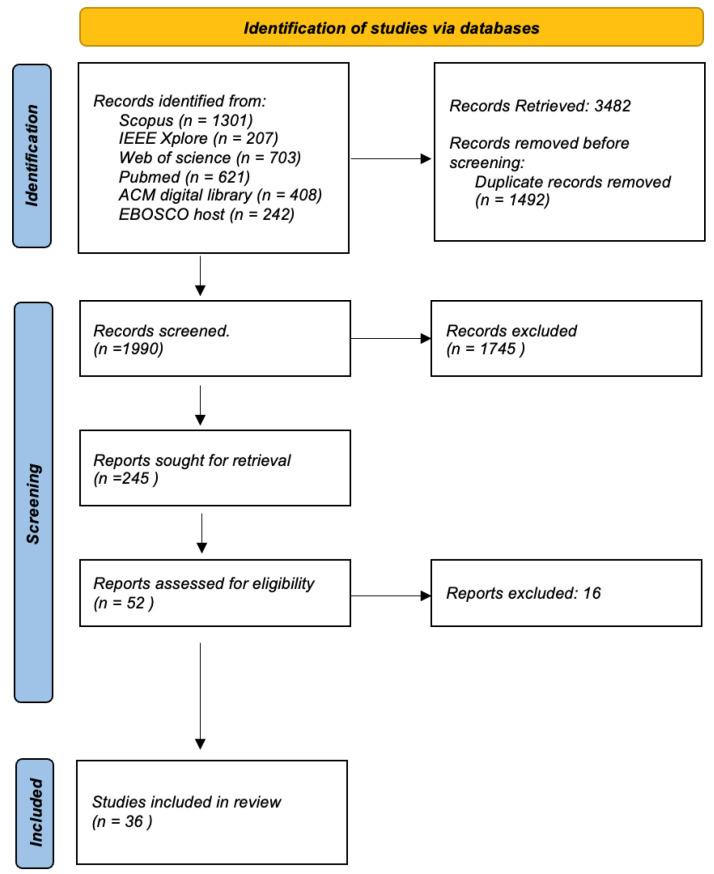
The evolution of Patient-Generated Health Data (PGHD) represents a major shift in healthcare, fueled by technological progress. The advent of PGHD, with technologies such as wearable devices and home monitoring systems, extends data collection beyond clinical environments, enabling continuous monitoring and patient engagement in their health management. Despite the growing prevalence of PGHD, there is a lack of clear understanding among stakeholders about its meaning, along with concerns about data security, privacy, and accuracy. This article aims to thoroughly review and clarify PGHD by examining its origins, types, technological foundations, and the challenges it faces, especially in terms of privacy and security regulations. The review emphasizes the role of PGHD in transforming healthcare through patient-centric approaches, their understanding, and personalized care, while also exploring emerging technologies and addressing data privacy and security issues, offering a comprehensive perspective on the current state and future directions of PGHD. The methodology employed for this review followed the Preferred Reporting Items for Systematic Reviews and Meta-Analyses (PRISMA) guidelines and Rayyan, AI-Powered Tool for Systematic Literature Reviews. This approach ensures a systematic and comprehensive coverage of the available literature on PGHD, focusing on the various aspects outlined in the objective. The review encompassed 36 peer-reviewed articles from various esteemed publishers and databases, reflecting a diverse range of methodologies, including interviews, regular articles, review articles, and empirical studies to address three RQs exploratory, impact assessment, and solution-oriented questions related to PGHD. Additionally, to address the future-oriented fourth RQ for PGHD not covered in the above review, we have incorporated existing domain knowledge articles. This inclusion aims to provide answers encompassing both basic and advanced security measures for PGHD, thereby enhancing the depth and scope of our analysis.

摘要

患者生成的健康数据(PGHD)的发展代表了医疗保健领域的重大转变,这一转变由技术进步推动。PGHD的出现,借助可穿戴设备和家庭监测系统等技术,将数据收集扩展到临床环境之外,实现了持续监测以及患者对自身健康管理的参与。尽管PGHD的普及率不断提高,但利益相关者对其含义缺乏清晰的理解,同时还存在对数据安全、隐私和准确性的担忧。本文旨在通过研究PGHD的起源、类型、技术基础及其面临的挑战,特别是在隐私和安全法规方面的挑战,对其进行全面审查和澄清。该审查强调了PGHD在通过以患者为中心的方法、理解和个性化护理来转变医疗保健方面的作用,同时还探索了新兴技术并解决数据隐私和安全问题,为PGHD的当前状态和未来方向提供了全面的视角。本审查采用的方法遵循系统评价和荟萃分析的首选报告项目(PRISMA)指南以及Rayyan(用于系统文献综述的人工智能工具)。这种方法确保了对关于PGHD的现有文献进行系统和全面的覆盖,重点关注目标中概述的各个方面。该审查涵盖了来自各种知名出版商和数据库的36篇同行评审文章,反映了包括访谈、常规文章、综述文章和实证研究在内的多种方法,以解决与PGHD相关的三个研究问题:探索性问题、影响评估问题和面向解决方案的问题。此外,为了解决上述审查未涵盖的PGHD的面向未来的第四个研究问题,我们纳入了现有的领域知识文章。这种纳入旨在提供涵盖PGHD基本和高级安全措施的答案,从而加深我们分析的深度和广度。
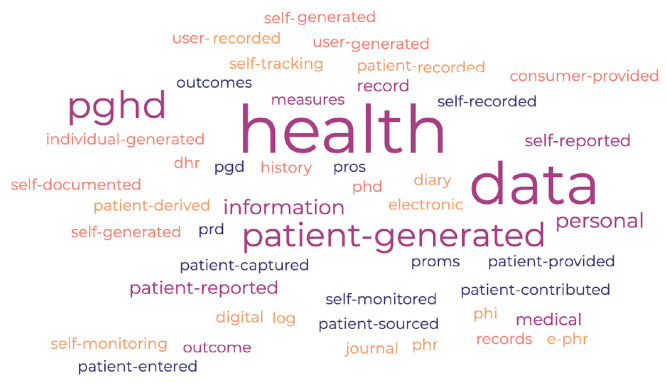
https://cdn.ncbi.nlm.nih.gov/pmc/blobs/486f/10971637/0625e3c1516b/jpm-14-00282-g008.jpg
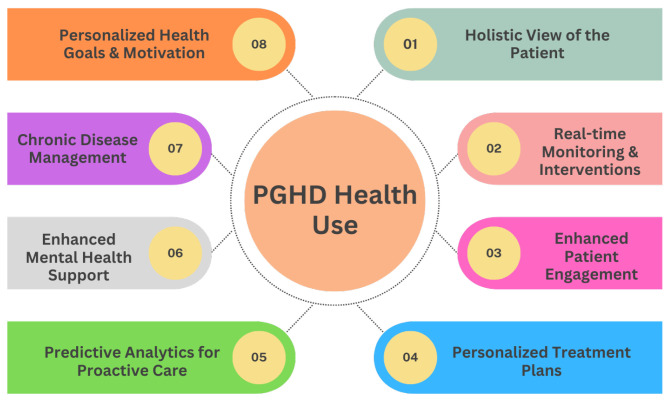
https://cdn.ncbi.nlm.nih.gov/pmc/blobs/486f/10971637/f65ba42feeb7/jpm-14-00282-g001.jpg
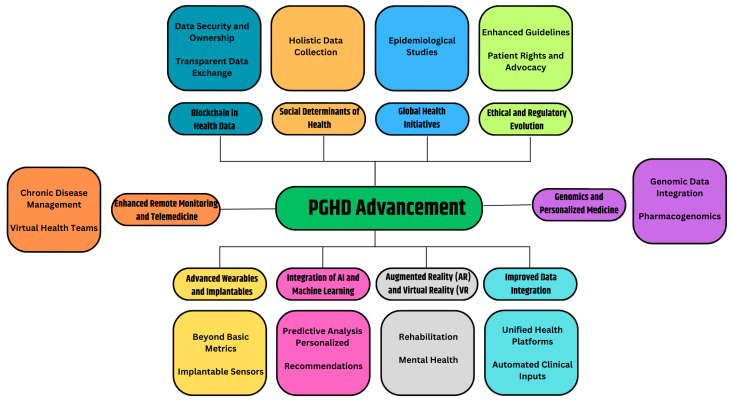
https://cdn.ncbi.nlm.nih.gov/pmc/blobs/486f/10971637/f3ceffe49da3/jpm-14-00282-g002.jpg
https://cdn.ncbi.nlm.nih.gov/pmc/blobs/486f/10971637/b12d16d4305e/jpm-14-00282-g003.jpg
https://cdn.ncbi.nlm.nih.gov/pmc/blobs/486f/10971637/b1824cc1cacc/jpm-14-00282-g004.jpg
https://cdn.ncbi.nlm.nih.gov/pmc/blobs/486f/10971637/bd1526a3b64a/jpm-14-00282-g005.jpg
https://cdn.ncbi.nlm.nih.gov/pmc/blobs/486f/10971637/c5ec819cf5e8/jpm-14-00282-g006.jpg
https://cdn.ncbi.nlm.nih.gov/pmc/blobs/486f/10971637/e063698f1f52/jpm-14-00282-g007.jpg
https://cdn.ncbi.nlm.nih.gov/pmc/blobs/486f/10971637/0625e3c1516b/jpm-14-00282-g008.jpg
https://cdn.ncbi.nlm.nih.gov/pmc/blobs/486f/10971637/f65ba42feeb7/jpm-14-00282-g001.jpg
https://cdn.ncbi.nlm.nih.gov/pmc/blobs/486f/10971637/f3ceffe49da3/jpm-14-00282-g002.jpg
https://cdn.ncbi.nlm.nih.gov/pmc/blobs/486f/10971637/b12d16d4305e/jpm-14-00282-g003.jpg
https://cdn.ncbi.nlm.nih.gov/pmc/blobs/486f/10971637/b1824cc1cacc/jpm-14-00282-g004.jpg
https://cdn.ncbi.nlm.nih.gov/pmc/blobs/486f/10971637/bd1526a3b64a/jpm-14-00282-g005.jpg
https://cdn.ncbi.nlm.nih.gov/pmc/blobs/486f/10971637/c5ec819cf5e8/jpm-14-00282-g006.jpg
https://cdn.ncbi.nlm.nih.gov/pmc/blobs/486f/10971637/e063698f1f52/jpm-14-00282-g007.jpg
https://cdn.ncbi.nlm.nih.gov/pmc/blobs/486f/10971637/0625e3c1516b/jpm-14-00282-g008.jpg

相似文献

1
Patient-Generated Health Data (PGHD): Understanding, Requirements, Challenges, and Existing Techniques for Data Security and Privacy.患者生成的健康数据(PGHD):数据安全与隐私方面的理解、要求、挑战及现有技术
J Pers Med. 2024 Mar 3;14(3):282. doi: 10.3390/jpm14030282.
2
The Use of Patient-Generated Health Data From Consumer-Grade Mobile Devices in Clinical Workflows: Protocol for a Systematic Review.消费级移动设备生成的患者健康数据在临床工作流程中的应用:系统评价方案
JMIR Res Protoc. 2023 Feb 27;12:e39389. doi: 10.2196/39389.
3
Patient-generated health data management and quality challenges in remote patient monitoring.远程患者监测中的患者生成健康数据管理与质量挑战
JAMIA Open. 2019 Sep 20;2(4):471-478. doi: 10.1093/jamiaopen/ooz036. eCollection 2019 Dec.
4
Patient generated health data: Benefits and challenges.患者生成的健康数据:益处与挑战。
Curr Probl Pediatr Adolesc Health Care. 2021 Nov;51(11):101103. doi: 10.1016/j.cppeds.2021.101103. Epub 2021 Nov 16.
5
Use of Patient-Generated Health Data From Consumer-Grade Devices by Health Care Professionals in the Clinic: Systematic Review.医疗保健专业人员在诊所中使用消费者级设备生成的患者健康数据:系统评价。
J Med Internet Res. 2024 May 31;26:e49320. doi: 10.2196/49320.
6
Understanding Mental Health Clinicians' Perceptions and Concerns Regarding Using Passive Patient-Generated Health Data for Clinical Decision-Making: Qualitative Semistructured Interview Study.了解心理健康临床医生对使用被动患者生成的健康数据进行临床决策的看法和担忧:定性半结构化访谈研究
JMIR Form Res. 2023 Aug 10;7:e47380. doi: 10.2196/47380.
7
The role of artificial intelligence for the application of integrating electronic health records and patient-generated data in clinical decision support.人工智能在整合电子健康记录和患者生成数据以用于临床决策支持方面的作用。
AMIA Jt Summits Transl Sci Proc. 2024 May 31;2024:459-467. eCollection 2024.
8
Person-Generated Health Data in Women's Health: Scoping Review.女性健康中的个体生成健康数据:范围综述。
J Med Internet Res. 2024 May 16;26:e53327. doi: 10.2196/53327.
9
Folic acid supplementation and malaria susceptibility and severity among people taking antifolate antimalarial drugs in endemic areas.在流行地区,服用抗叶酸抗疟药物的人群中,叶酸补充剂与疟疾易感性和严重程度的关系。
Cochrane Database Syst Rev. 2022 Feb 1;2(2022):CD014217. doi: 10.1002/14651858.CD014217.
10
mHealth and patient generated health data: stakeholder perspectives on opportunities and barriers for transforming healthcare.移动健康与患者生成的健康数据:利益相关者对医疗保健转型机遇与障碍的看法
Mhealth. 2020 Jan 5;6:8. doi: 10.21037/mhealth.2019.09.17. eCollection 2020.

引用本文的文献

1
Integrating Precision Medicine and Digital Health in Personalized Weight Management: The Central Role of Nutrition.将精准医学和数字健康整合到个性化体重管理中:营养的核心作用。
Nutrients. 2025 Aug 20;17(16):2695. doi: 10.3390/nu17162695.
2
Integrating advanced neural network architectures with privacy enhanced encryption for secure and intelligent healthcare analytics.将先进的神经网络架构与隐私增强加密技术相结合,以实现安全且智能的医疗保健分析。
Sci Rep. 2025 Aug 19;15(1):30367. doi: 10.1038/s41598-025-92575-8.
3
Perceptions and Willingness of Patients and Caregivers on the Utilization of Patient-Generated Health Data: A Cross-Sectional Survey.

本文引用的文献

1
Artificial intelligence enhanced sensors - enabling technologies to next-generation healthcare and biomedical platform.人工智能增强型传感器——下一代医疗保健和生物医学平台的使能技术。
Bioelectron Med. 2023 Aug 2;9(1):17. doi: 10.1186/s42234-023-00118-1.
2
Integrating Patient-Generated Health Data Throughout the Total Product Life Cycle of Medical Devices.将患者生成的健康数据整合到医疗器械的整个产品生命周期中。
Ther Innov Regul Sci. 2023 Sep;57(5):952-956. doi: 10.1007/s43441-023-00505-5. Epub 2023 Jun 9.
3
A review of multi-factor authentication in the Internet of Healthcare Things.
患者及照护者对使用患者生成的健康数据的认知与意愿:一项横断面调查
Int J Environ Res Public Health. 2025 Jul 11;22(7):1099. doi: 10.3390/ijerph22071099.
4
Voices that matter: The impact of patient-reported outcome measures on clinical decision-making.重要的声音:患者报告结局指标对临床决策的影响
World J Methodol. 2025 Jun 20;15(2):98066. doi: 10.5662/wjm.v15.i2.98066.
5
Reliability of digitally instructed self-reported 30-second chair stand test for lower extremity function.数字指导下自我报告的30秒椅子站立测试评估下肢功能的可靠性。
Osteoarthr Cartil Open. 2025 Apr 9;7(2):100613. doi: 10.1016/j.ocarto.2025.100613. eCollection 2025 Jun.
6
A System Model and Requirements for Transformation to Human-Centric Digital Health.以患者为中心的数字健康转型的系统模型与要求
J Med Internet Res. 2025 Apr 28;27:e68661. doi: 10.2196/68661.
7
What Clinicians Should Tell Patients About Wearable Devices and Data Privacy: A Narrative Review.临床医生应告知患者关于可穿戴设备和数据隐私的内容:一项叙述性综述。
Cureus. 2025 Mar 25;17(3):e81167. doi: 10.7759/cureus.81167. eCollection 2025 Mar.
8
Identifying Contextual Factors That Shape Cybersecurity Risk Perception for Assisted Living and Health Care Technologies and Wearables: Mixed Methods Study.识别影响辅助生活、医疗保健技术及可穿戴设备网络安全风险认知的背景因素:混合方法研究
J Med Internet Res. 2025 Mar 19;27:e64388. doi: 10.2196/64388.
9
Mobile health in communication disorders: willingness to use, attitude, advantages, and challenges from the perspective of patients.沟通障碍中的移动健康:从患者角度看使用意愿、态度、优势及挑战
BMC Health Serv Res. 2025 Jan 14;25(1):68. doi: 10.1186/s12913-025-12220-y.
10
Data Ownership in the AI-Powered Integrative Health Care Landscape.人工智能驱动的整合式医疗保健领域的数据所有权。
JMIR Med Inform. 2024 Nov 19;12:e57754. doi: 10.2196/57754.
医疗物联网中的多因素认证综述。
Digit Health. 2023 May 22;9:20552076231177144. doi: 10.1177/20552076231177144. eCollection 2023 Jan-Dec.
4
Progress of Advanced Devices and Internet of Things Systems as Enabling Technologies for Smart Homes and Health Care.先进设备和物联网系统作为智能家居和医疗保健使能技术的进展
ACS Mater Au. 2022 Apr 7;2(4):394-435. doi: 10.1021/acsmaterialsau.2c00001. eCollection 2022 Jul 13.
5
The Use of Patient-Generated Health Data From Consumer-Grade Mobile Devices in Clinical Workflows: Protocol for a Systematic Review.消费级移动设备生成的患者健康数据在临床工作流程中的应用:系统评价方案
JMIR Res Protoc. 2023 Feb 27;12:e39389. doi: 10.2196/39389.
6
A Decentralized Marketplace for Patient-Generated Health Data: Design Science Approach.去中心化的患者健康数据交易市场:设计科学方法。
J Med Internet Res. 2023 Feb 27;25:e42743. doi: 10.2196/42743.
7
Flexible and cost-effective cryptographic encryption algorithm for securing unencrypted database files at rest and in transit.灵活且经济高效的加密算法,用于保护静态和传输中的未加密数据库文件。
MethodsX. 2022 Nov 11;9:101924. doi: 10.1016/j.mex.2022.101924. eCollection 2022.
8
An Overview on Security and Privacy of Data in IoMT Devices: Performance Metrics, Merits, Demerits, and Challenges.物联网医疗设备中数据的安全性和隐私性概述:性能指标、优缺点和挑战。
Stud Health Technol Inform. 2022 Nov 3;299:126-136. doi: 10.3233/SHTI220970.
9
A Scoping Review to Assess Adherence to and Clinical Outcomes of Wearable Devices in the Cancer Population.一项评估癌症患者对可穿戴设备的依从性及临床结局的范围综述。
Cancers (Basel). 2022 Sep 13;14(18):4437. doi: 10.3390/cancers14184437.
10
Local differential privacy protection for wearable device data.可穿戴设备数据的局部差分隐私保护。
PLoS One. 2022 Aug 17;17(8):e0272766. doi: 10.1371/journal.pone.0272766. eCollection 2022.