Department of Anesthesiology and Pain Medicine, Busan Paik Hospital, Inje University College of Medicine, Busan 47392, Republic of Korea.
Paik Institute for Clinical Research, Inje University College of Medicine, Busan 47392, Republic of Korea.
Medicina (Kaunas). 2024 Feb 27;60(3):403. doi: 10.3390/medicina60030403.
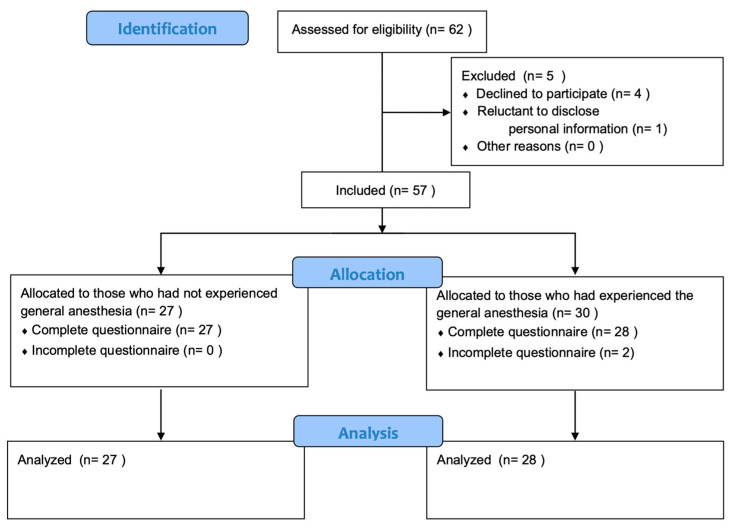
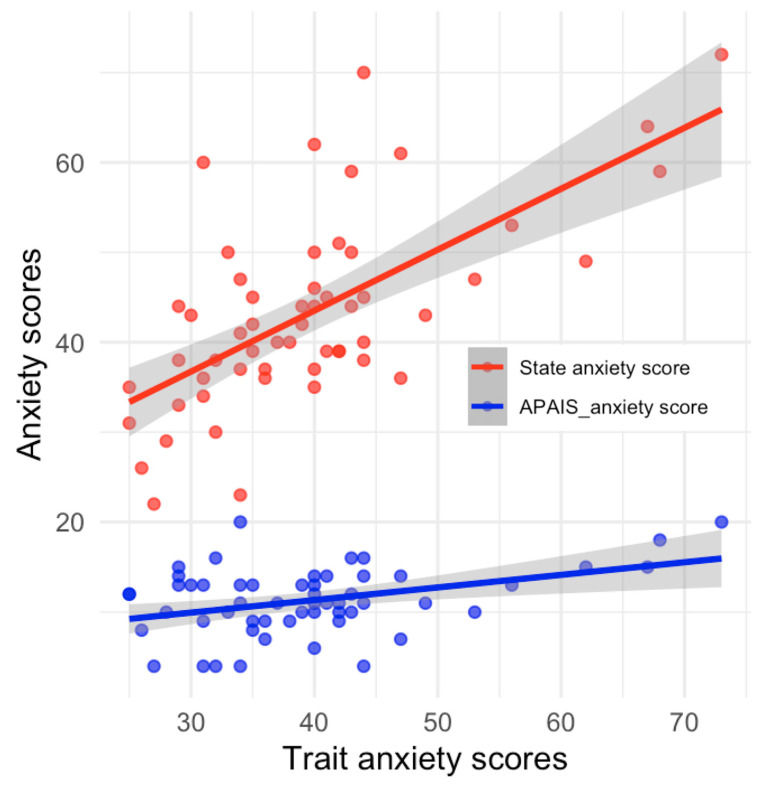
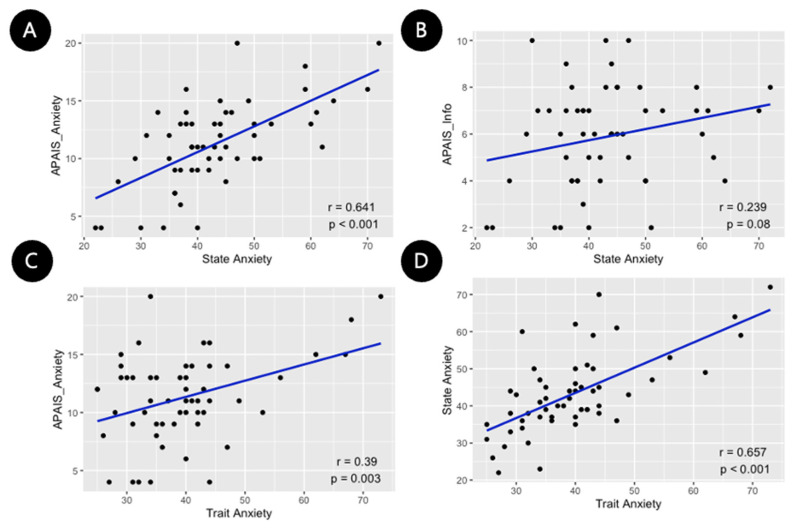
: Preoperative anxiety is a common emotional response before elective surgery that influences postoperative outcomes and can increase analgesic requirements. However, clinicians frequently overlook these concerns. This study aimed to quantify preoperative anxiety and evaluate its association with patient-related factors. : Anxiety levels were evaluated in adult patients awaiting elective surgery using the Korean-translated version of the Amsterdam Preoperative Anxiety and Information Scale (APAIS) and the State-Trait Anxiety Inventory-Korean YZ form (STAI-KYZ). The patients were also surveyed regarding the subjective causes of preoperative anxiety. : The study found that a total of 55 adult patients had a well-balanced subject distribution. Both questionnaires showed high internal consistency (Cronbach's alpha values of 0.85 and 0.93). Significant correlations were observed in situational anxiety scores from the questionnaires, indicating differences between groups with high trait anxiety and those with normal anxiety levels ( < 0.05). Notably, female sex was the only patient-related factor that significantly affected the anxiety scores ( < 0.05). Furthermore, when considering additional patient factors stratified by sex, it became evident that younger females and females with prior general anesthesia experience displayed higher anxiety levels than their male counterparts. The most commonly reported subjective concern related to anesthesia was the fear of not regaining consciousness, followed by concerns about postoperative pain, intraoperative emergence, and other issues. : This study confirms that being female is a significant risk factor for preoperative anxiety. Therefore, it is necessary to provide enhanced preoperative anxiolytic therapies, including preoperative patient education and other interventions, to individuals undergoing surgical procedures.
术前焦虑是择期手术前常见的情绪反应,它会影响术后结果,并可能增加镇痛需求。然而,临床医生经常忽视这些问题。本研究旨在量化术前焦虑,并评估其与患者相关因素的关系。
使用阿姆斯特丹术前焦虑和信息量表(APAIS)的韩语翻译版和状态-特质焦虑量表-韩语 YZ 形式(STAI-KYZ)评估了等待择期手术的成年患者的焦虑水平。还对患者进行了术前焦虑的主观原因调查。
研究发现,共有 55 名成年患者具有均衡的受试者分布。两个问卷都表现出较高的内部一致性(Cronbach 的 alpha 值分别为 0.85 和 0.93)。问卷中的情境焦虑评分存在显著相关性,表明特质焦虑水平高的组与正常焦虑水平的组之间存在差异(<0.05)。值得注意的是,女性是唯一显著影响焦虑评分的患者相关因素(<0.05)。此外,当考虑按性别分层的其他患者因素时,年轻女性和有过全身麻醉经历的女性比男性表现出更高的焦虑水平。与麻醉相关的最常见的主观问题是担心无法恢复意识,其次是担心术后疼痛、术中苏醒和其他问题。
本研究证实,女性是术前焦虑的一个重要危险因素。因此,有必要为接受手术的个体提供强化的术前抗焦虑治疗,包括术前患者教育和其他干预措施。