Chenrayan Venkatesh, Palanisamy Dhanabal, Mani Kalayarasan, Shahapurkar Kiran, Elahi M Soudagar Manzoore, Fouad Yasser, Kalam M A, Ali Muhammad Mahmood, Nasir Bashir Muhammad
Polymer Composite Processing and Research Laboratory, Department of Mechanical Engineering, Alliance University, Anekal, Bengaluru, India.
Department of Mechanical Engineering, Yonsei University, 50-1 Yonsei-ro, Seodaemun-gu, Seoul, 03722, Republic of Korea.
Heliyon. 2024 Mar 15;10(6):e28057. doi: 10.1016/j.heliyon.2024.e28057. eCollection 2024 Mar 30.
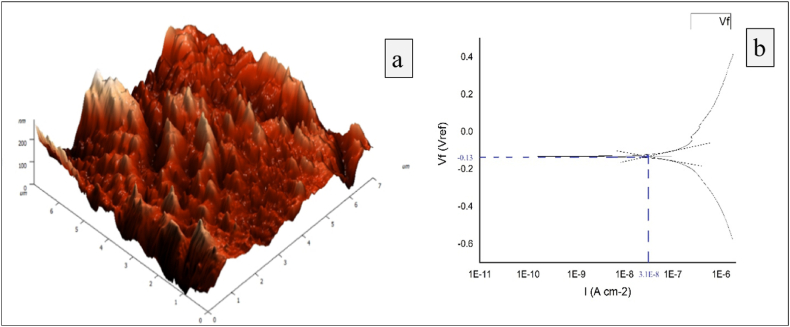
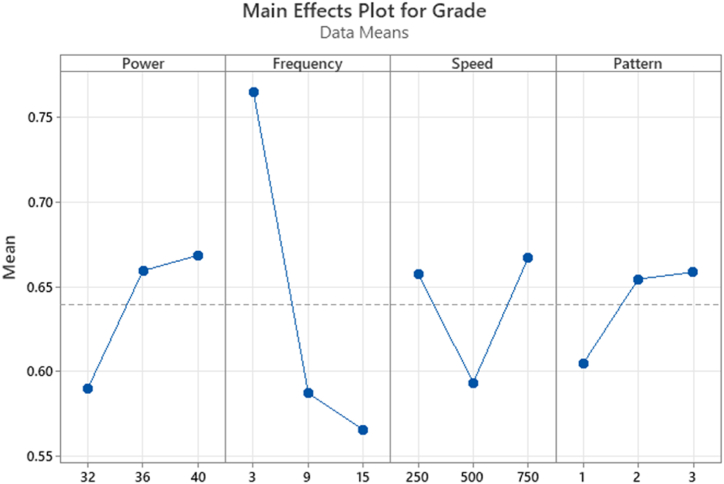
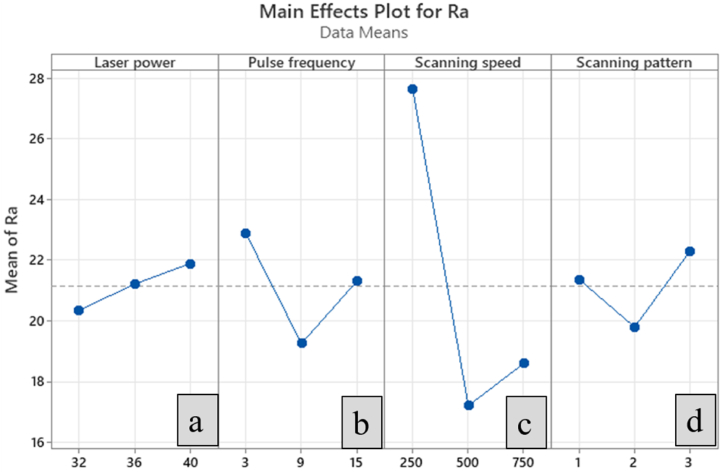
Cardiovascular diseases, particularly coronary artery disease, pose big challenges to human life. Deployment of the stent is a preferable treatment for the above-mentioned disease. However, stents are usually made up of shape memory alloy called Nitinol. The poorer surface finish on the machined nitinol stents accelerates the migration of Nickel ions from the implanted nitinol stent, which is considered toxic and can lead to stenosis. The current study deals with controlling surface quality by minimising surface roughness and improving corrosion resistance. Femtosecond laser (-laser 10 s) micromachining was employed to machine the Nitinol surface to achieve sub-micron surface roughness. The Grey relational analysis (GRA)-coupled design of the experimental technique was implemented to determine optimal levels of four micromachining parameters (laser power, pulse frequency, scanning speed, and scanning pattern) varied at three levels to achieve minimum surface roughness and to maximise the volume ablation. The results show that to yield minimum surface roughness and maximum volume ablation, laser power and scanning speed are in a higher range. In contrast, the pulse frequency is lower, and the scanning pattern is in a zig-zag manner. ANOVA results manifest that scanning speed is the predominant factor in minimising surface roughness, followed by pulse frequency. Furthermore, the corrosion behaviour of the machined nitinol specimens was evaluated, and the results show that specimens with lower surface roughness had lower corrosion rates.
心血管疾病,尤其是冠状动脉疾病,对人类生命构成了巨大挑战。支架植入是治疗上述疾病的一种优选方法。然而,支架通常由一种名为镍钛诺的形状记忆合金制成。加工后的镍钛诺支架表面光洁度较差,会加速植入的镍钛诺支架中镍离子的迁移,镍离子被认为具有毒性,会导致血管狭窄。当前的研究致力于通过最小化表面粗糙度和提高耐腐蚀性来控制表面质量。采用飞秒激光(激光10秒)微加工来加工镍钛诺表面,以实现亚微米级的表面粗糙度。运用实验技术的灰色关联分析(GRA)耦合设计来确定四个微加工参数(激光功率、脉冲频率、扫描速度和扫描模式)在三个水平上变化时的最佳水平,以实现最小表面粗糙度并最大化体积消融。结果表明,为了产生最小表面粗糙度和最大体积消融,激光功率和扫描速度处于较高范围。相比之下,脉冲频率较低,扫描模式为锯齿形。方差分析结果表明,扫描速度是最小化表面粗糙度的主要因素,其次是脉冲频率。此外,对加工后的镍钛诺试样的腐蚀行为进行了评估,结果表明表面粗糙度较低的试样腐蚀速率较低。