Department of Psychology, Humboldt-Universität zu Berlin, Berlin, Germany.
Institute of Psychiatric Phenomics and Genomics (IPPG), University Hospital, LMU Munich, Munich, Germany.
Mol Psychiatry. 2024 Sep;29(9):2714-2723. doi: 10.1038/s41380-024-02489-6. Epub 2024 Mar 28.
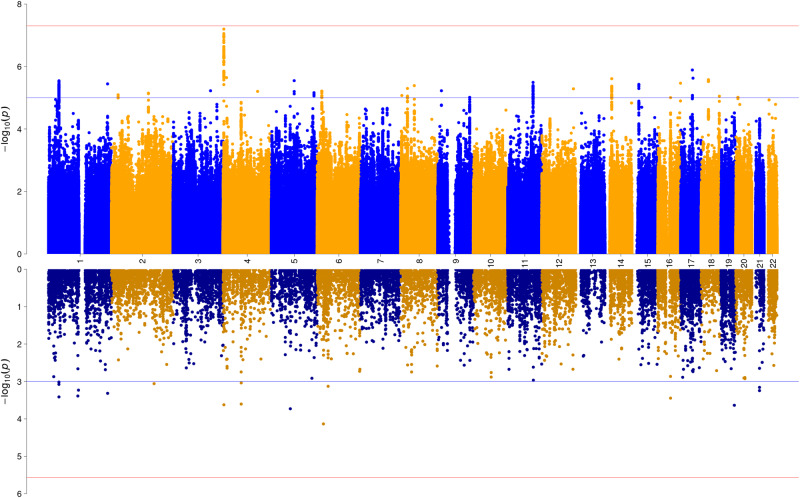
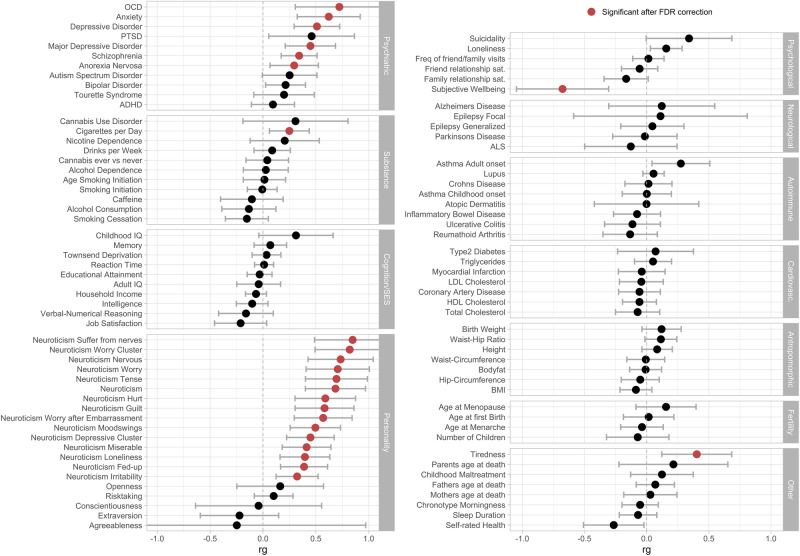
While 1-2% of individuals meet the criteria for a clinical diagnosis of obsessive-compulsive disorder (OCD), many more (~13-38%) experience subclinical obsessive-compulsive symptoms (OCS) during their life. To characterize the genetic underpinnings of OCS and its genetic relationship to OCD, we conducted the largest genome-wide association study (GWAS) meta-analysis of parent- or self-reported OCS to date (N = 33,943 with complete phenotypic and genome-wide data), combining the results from seven large-scale population-based cohorts from Sweden, the Netherlands, England, and Canada (including six twin cohorts and one cohort of unrelated individuals). We found no genome-wide significant associations at the single-nucleotide polymorphism (SNP) or gene-level, but a polygenic risk score (PRS) based on the OCD GWAS previously published by the Psychiatric Genetics Consortium (PGC-OCD) was significantly associated with OCS (P = 3.06 × 10). Also, one curated gene set (Mootha Gluconeogenesis) reached Bonferroni-corrected significance (N = 28, Beta = 0.79, SE = 0.16, P = 0.008). Expression of genes in this set is high at sites of insulin mediated glucose disposal. Dysregulated insulin signaling in the etiology of OCS has been suggested by a previous study describing a genetic overlap of OCS with insulin signaling-related traits in children and adolescents. We report a SNP heritability of 4.1% (P = 0.0044) in the meta-analyzed GWAS, and heritability estimates based on the twin cohorts of 33-43%. Genetic correlation analysis showed that OCS were most strongly associated with OCD (r = 0.72, p = 0.0007) among all tested psychiatric disorders (N = 11). Of all 97 tested phenotypes, 24 showed a significant genetic correlation with OCS, and 66 traits showed concordant directions of effect with OCS and OCD. OCS have a significant polygenic contribution and share genetic risk with diagnosed OCD, supporting the hypothesis that OCD represents the extreme end of widely distributed OCS in the population.
虽然只有 1-2%的个体符合强迫症 (OCD) 的临床诊断标准,但在其一生中,有更多 (~13-38%) 的个体经历亚临床强迫症状 (OCS)。为了描述 OCS 的遗传基础及其与 OCD 的遗传关系,我们进行了迄今为止最大的针对父母或自我报告的 OCS 的全基因组关联研究 (GWAS) 荟萃分析 (N = 33943 例,具有完整的表型和全基因组数据),结合了来自瑞典、荷兰、英国和加拿大的七个大规模基于人群的队列的结果(包括六个双胞胎队列和一个无关个体队列)。我们没有在单核苷酸多态性 (SNP) 或基因水平上发现全基因组显著关联,但基于先前由精神遗传学联合会 (PGC-OCD) 发布的 OCD GWAS 的多基因风险评分 (PRS) 与 OCS 显著相关(P = 3.06×10)。此外,一个经过精心整理的基因集(Mootha Gluconeogenesis)达到了 Bonferroni 校正的显著性(N = 28,Beta = 0.79,SE = 0.16,P = 0.008)。在胰岛素介导的葡萄糖处置部位,该基因集的基因表达水平较高。先前的一项研究表明,OCS 与儿童和青少年时期的胰岛素信号相关特征存在遗传重叠,提示胰岛素信号失调在 OCS 的发病机制中起作用。我们报告了在荟萃分析的 GWAS 中 SNP 遗传率为 4.1%(P = 0.0044),并且基于双胞胎队列的遗传率估计值为 33-43%。遗传相关性分析表明,在所有测试的精神障碍中(N = 11),OCS 与 OCD 的相关性最强(r = 0.72,p = 0.0007)。在所有 97 个测试的表型中,有 24 个与 OCS 具有显著的遗传相关性,而 66 个表型与 OCS 和 OCD 的效应方向一致。OCS 具有显著的多基因贡献,并与诊断为 OCD 的个体共享遗传风险,支持 OCD 代表人群中广泛分布的 OCS 的极端情况的假设。