Slaviero Ashley N, Gorantla Nipun, Simkins Jacob, Crespo Emmanuel L, Ikefuama Ebenezer C, Tree Maya O, Prakash Mansi, Björefeldt Andreas, Barnett Lauren M, Lambert Gerard G, Lipscombe Diane, Moore Christopher I, Shaner Nathan C, Hochgeschwender Ute
Central Michigan University, College of Medicine, Mount Pleasant, Michigan, United States.
Central Michigan University, Biochemistry, Cellular and Molecular Biology Graduate Program, Mount Pleasant, Michigan, United States.
Neurophotonics. 2024 Apr;11(2):024208. doi: 10.1117/1.NPh.11.2.024208. Epub 2024 Mar 29.
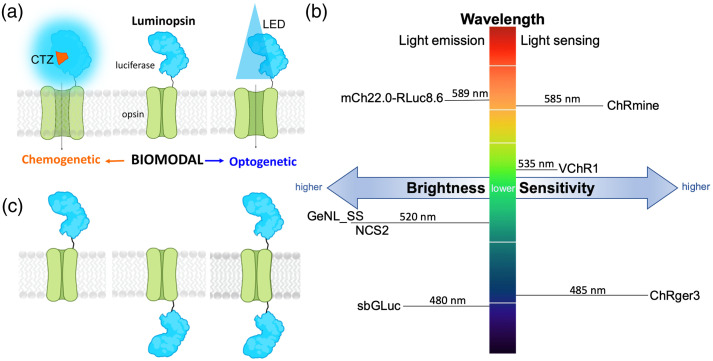
Luminopsins (LMOs) are bioluminescent-optogenetic tools with a luciferase fused to an opsin that allow bimodal control of neurons by providing both optogenetic and chemogenetic access. Determining which design features contribute to the efficacy of LMOs will be beneficial for further improving LMOs for use in research.
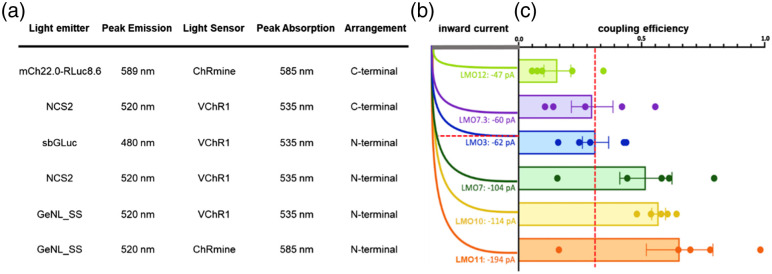
We investigated the relative impact of luciferase brightness, opsin sensitivity, pairing of emission and absorption wavelength, and arrangement of moieties on the function of LMOs.
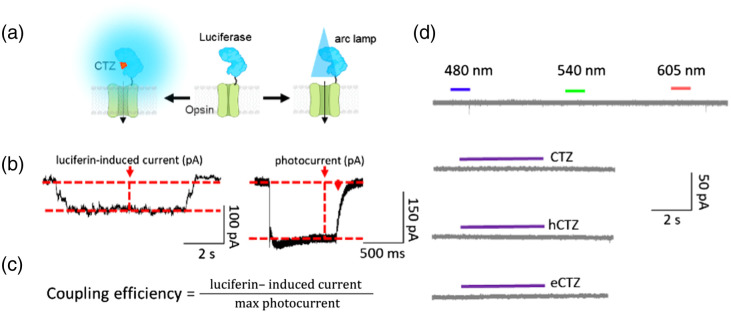
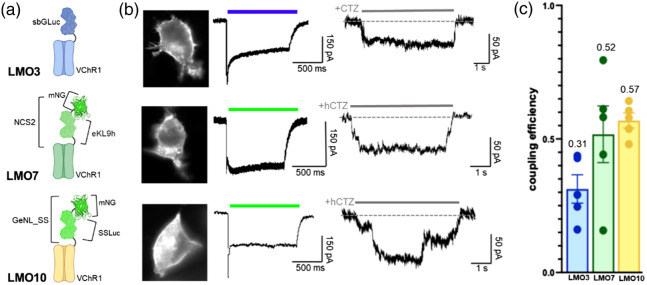
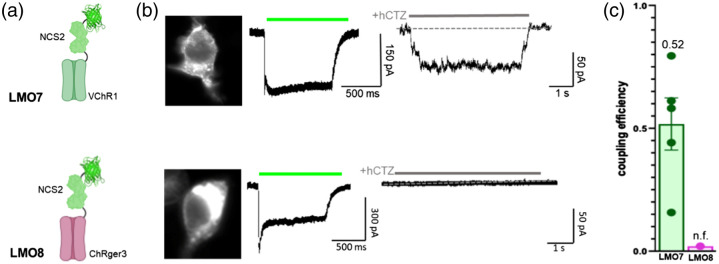
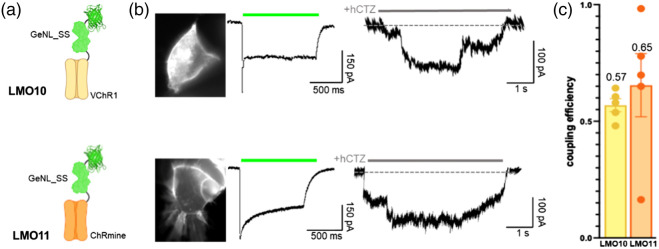
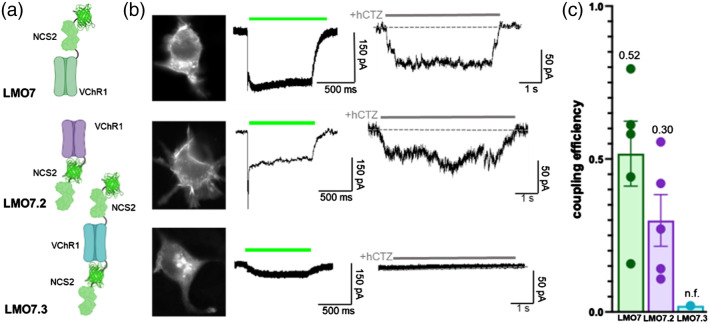
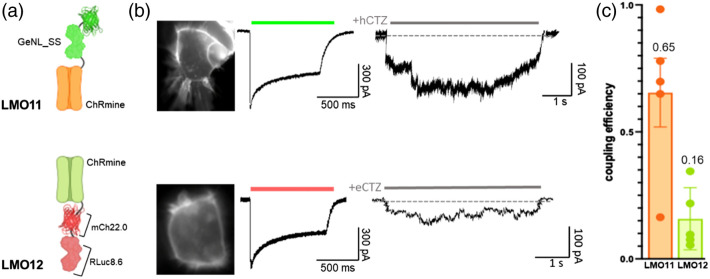
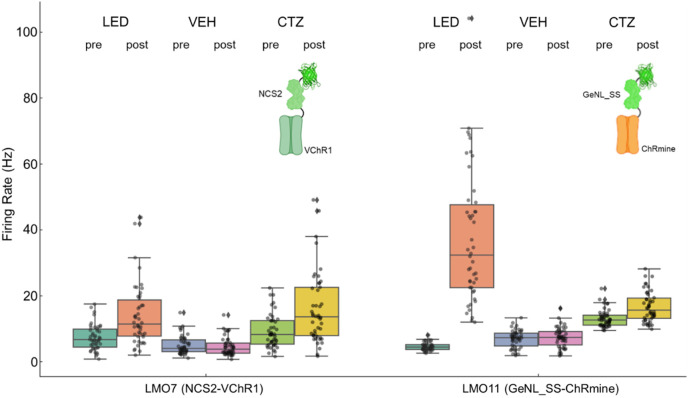
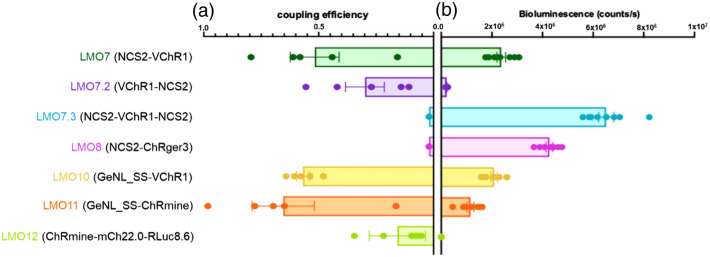
We quantified efficacy of LMOs through whole cell patch clamp recordings in HEK293 cells by determining coupling efficiency, the percentage of maximum LED induced photocurrent achieved with bioluminescent activation of an opsin. We confirmed key results by multielectrode array recordings in primary neurons.
Luciferase brightness and opsin sensitivity had the most impact on the efficacy of LMOs, and N-terminal fusions of luciferases to opsins performed better than C-terminal and multi-terminal fusions. Precise paring of luciferase emission and opsin absorption spectra appeared to be less critical.
Whole cell patch clamp recordings allowed us to quantify the impact of different characteristics of LMOs on their function. Our results suggest that coupling brighter bioluminescent sources to more sensitive opsins will improve LMO function. As bioluminescent activation of opsins is most likely based on Förster resonance energy transfer, the most effective strategy for improving LMOs further will be molecular evolution of luciferase-fluorescent protein-opsin fusions.
发光视蛋白(LMOs)是一种生物发光光遗传学工具,其将荧光素酶与视蛋白融合,通过提供光遗传学和化学遗传学途径实现对神经元的双模态控制。确定哪些设计特征有助于LMOs的功效,将有利于进一步改进LMOs以用于研究。
我们研究了荧光素酶亮度、视蛋白敏感性、发射和吸收波长的配对以及部分的排列对LMOs功能的相对影响。
我们通过在HEK293细胞中进行全细胞膜片钳记录,通过确定偶联效率(视蛋白生物发光激活所实现的最大LED诱导光电流的百分比)来量化LMOs的功效。我们通过在原代神经元中的多电极阵列记录证实了关键结果。
荧光素酶亮度和视蛋白敏感性对LMOs的功效影响最大,荧光素酶与视蛋白的N端融合比C端和多端融合表现更好。荧光素酶发射光谱和视蛋白吸收光谱的精确配对似乎不太关键。
全细胞膜片钳记录使我们能够量化LMOs不同特征对其功能的影响。我们的结果表明,将更亮的生物发光源与更敏感的视蛋白偶联将改善LMO功能。由于视蛋白的生物发光激活很可能基于福斯特共振能量转移,进一步改进LMOs的最有效策略将是荧光素酶-荧光蛋白-视蛋白融合体的分子进化。