Petersen Eric D, Sharkey Erik D, Pal Akash, Shafau Lateef O, Zenchak-Petersen Jessica, Peña Alex J, Aggarwal Anu, Prakash Mansi, Hochgeschwender Ute
Program in Neuroscience, Central Michigan University, Mount Pleasant, MI, United States.
College of Medicine, Central Michigan University, Mount Pleasant, MI, United States.
Front Neurol. 2022 Jan 20;12:792643. doi: 10.3389/fneur.2021.792643. eCollection 2021.
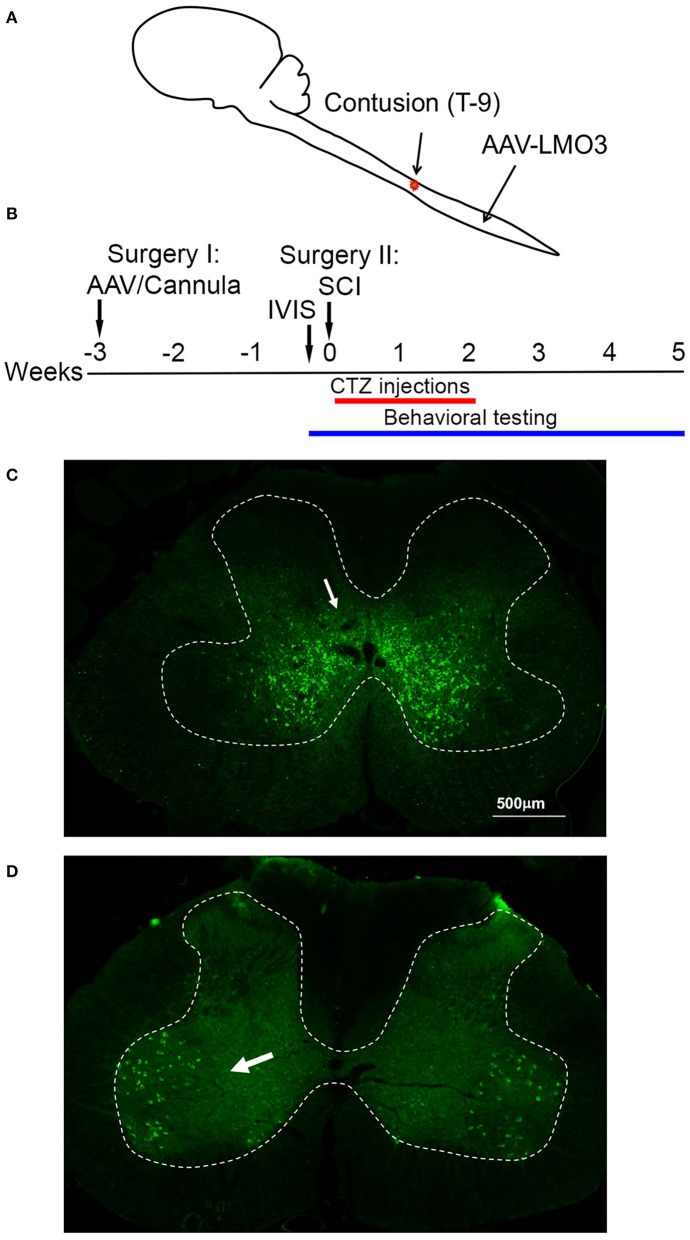
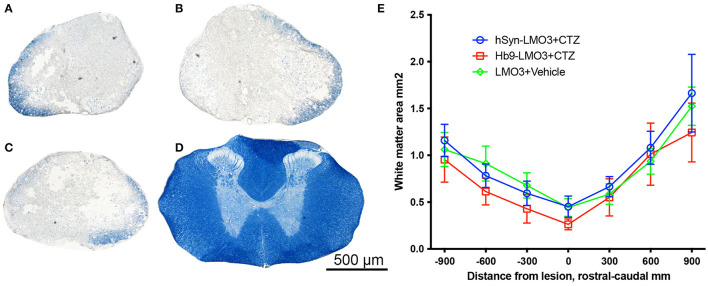
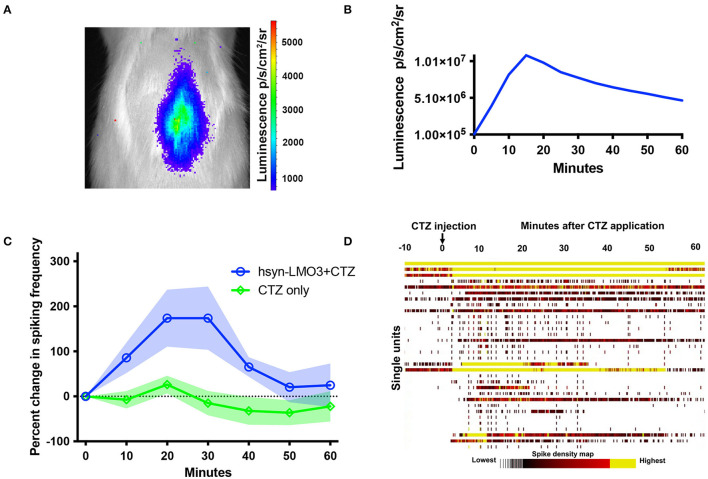
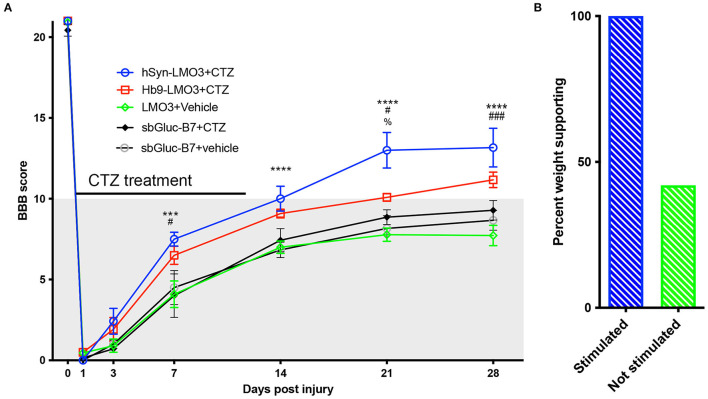
The ability to manipulate specific neuronal populations of the spinal cord following spinal cord injury (SCI) could prove highly beneficial for rehabilitation in patients through maintaining and strengthening still existing neuronal connections and/or facilitating the formation of new connections. A non-invasive and highly specific approach to neuronal stimulation is bioluminescent-optogenetics (BL-OG), where genetically expressed light emitting luciferases are tethered to light sensitive channelrhodopsins (luminopsins, LMO); neurons are activated by the addition of the luciferase substrate coelenterazine (CTZ). This approach utilizes ion channels for current conduction while activating the channels through the application of a small chemical compound, thus allowing non-invasive stimulation and recruitment of all targeted neurons. Rats were transduced in the lumbar spinal cord with AAV2/9 to express the excitatory LMO3 under control of a pan-neuronal or motor neuron-specific promoter. A day after contusion injury of the thoracic spine, rats received either CTZ or vehicle every other day for 2 weeks. Activation of either neuron population below the level of injury significantly improved locomotor recovery lasting beyond the treatment window. Utilizing histological and gene expression methods we identified neuronal plasticity as a likely mechanism underlying the functional recovery. These findings provide a foundation for a rational approach to spinal cord injury rehabilitation, thereby advancing approaches for functional recovery after SCI.
Bioluminescent optogenetic activation of spinal neurons results in accelerated and enhanced locomotor recovery after spinal cord injury in rats.
脊髓损伤(SCI)后,操控脊髓特定神经元群的能力对于患者康复可能极为有益,可通过维持和强化尚存的神经元连接及/或促进新连接的形成来实现。一种非侵入性且高度特异性的神经元刺激方法是生物发光光遗传学(BL-OG),即通过基因表达将发光荧光素酶与光敏感通道视紫红质(发光视蛋白,LMO)相连;添加荧光素酶底物腔肠素(CTZ)可激活神经元。该方法利用离子通道进行电流传导,同时通过施加一种小分子化合物来激活通道,从而实现对所有靶向神经元的非侵入性刺激和募集。用携带AAV2/9的病毒转导大鼠腰段脊髓,使其在泛神经元或运动神经元特异性启动子的控制下表达兴奋性LMO3。在胸椎挫伤损伤一天后,大鼠每隔一天接受CTZ或赋形剂治疗,持续2周。损伤水平以下任一神经元群的激活均显著改善了运动恢复,且这种改善持续超过治疗期。利用组织学和基因表达方法,我们确定神经元可塑性是功能恢复的潜在机制。这些发现为脊髓损伤康复的合理方法奠定了基础,从而推动了脊髓损伤后功能恢复的研究进展。
脊髓神经元的生物发光光遗传学激活可加速并增强大鼠脊髓损伤后的运动恢复。