Wang Junya, Zhang Yi-Jiao, Xu Cong, Li Jiaze, Sun Jiachen, Xie Jiarong, Feng Ling, Zhou Tianshou, Hu Yanqing
School of Systems Science and Engineering, Sun Yat-sen University, Guangzhou, 510006, China.
Department of Statistics and Data Science, College of Science, Southern University of Science and Technology, Shenzhen, 518055, China.
Nat Commun. 2024 Apr 2;15(1):2849. doi: 10.1038/s41467-024-47248-x.
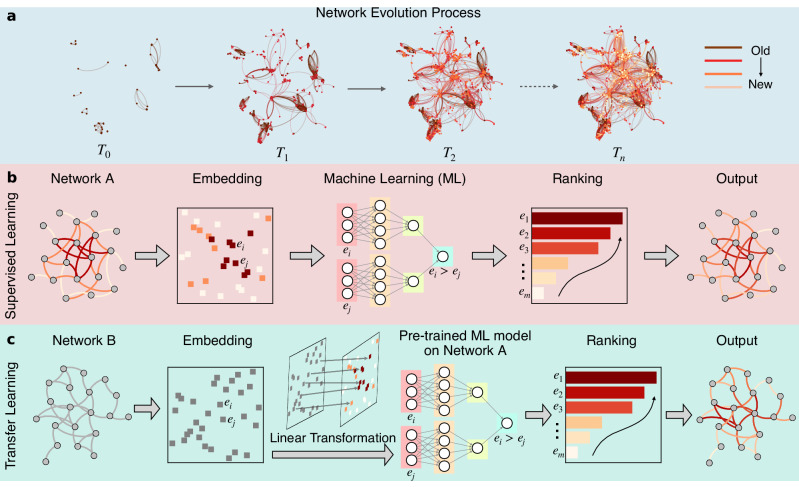
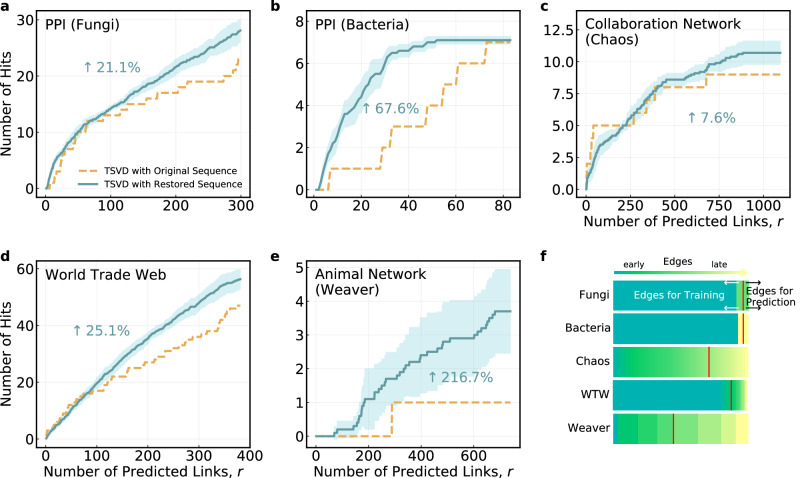
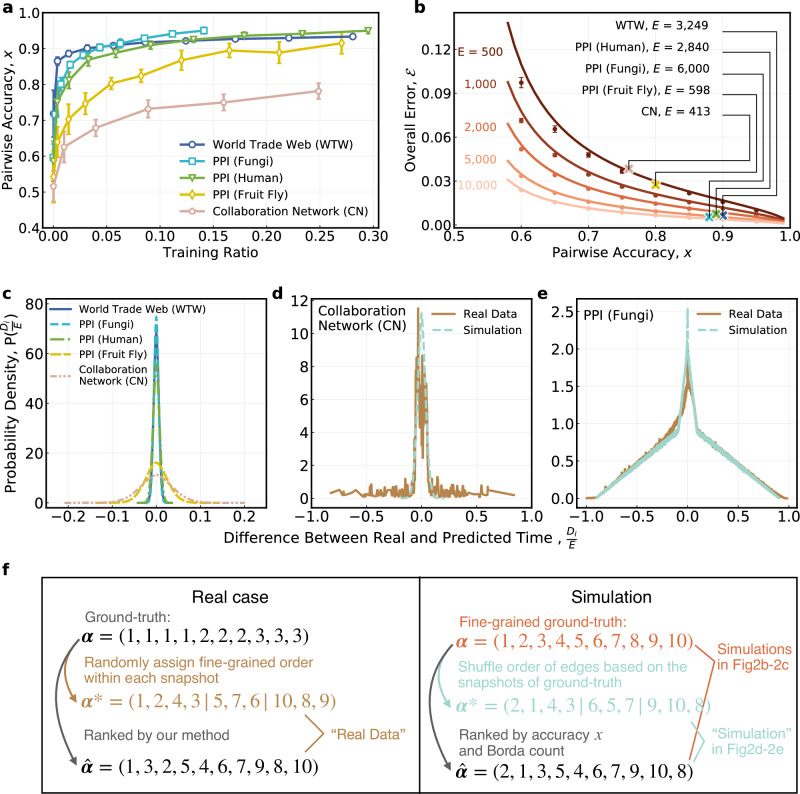
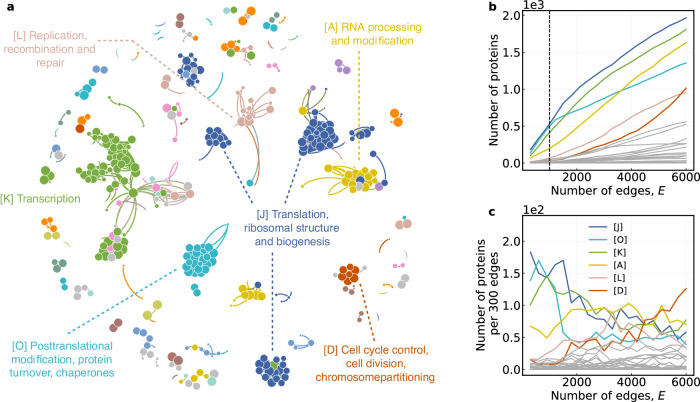
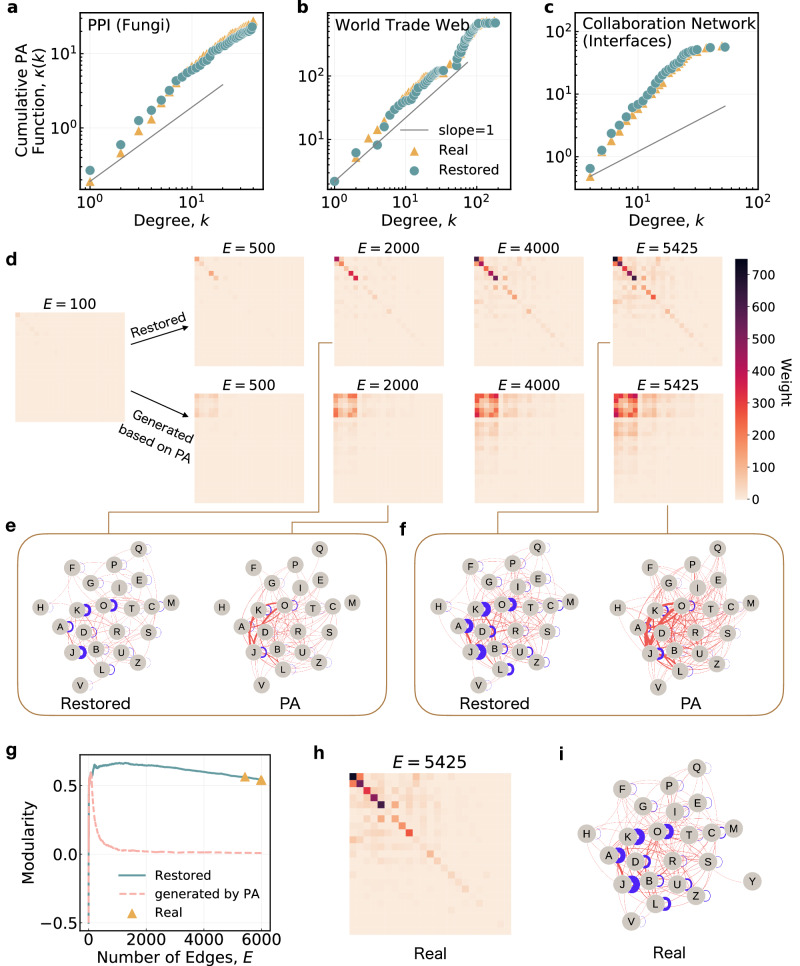
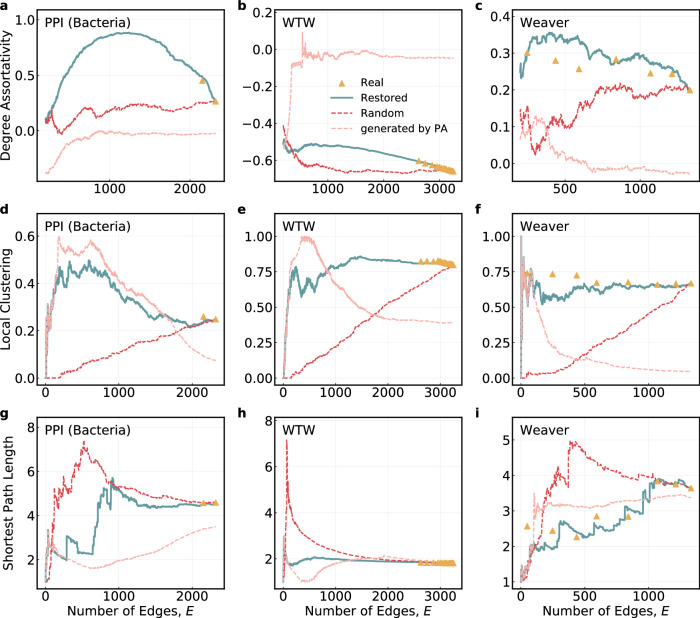
The evolution processes of complex systems carry key information in the systems' functional properties. Applying machine learning algorithms, we demonstrate that the historical formation process of various networked complex systems can be extracted, including protein-protein interaction, ecology, and social network systems. The recovered evolution process has demonstrations of immense scientific values, such as interpreting the evolution of protein-protein interaction network, facilitating structure prediction, and particularly revealing the key co-evolution features of network structures such as preferential attachment, community structure, local clustering, degree-degree correlation that could not be explained collectively by previous theories. Intriguingly, we discover that for large networks, if the performance of the machine learning model is slightly better than a random guess on the pairwise order of links, reliable restoration of the overall network formation process can be achieved. This suggests that evolution history restoration is generally highly feasible on empirical networks.
复杂系统的演化过程在系统的功能特性中承载着关键信息。通过应用机器学习算法,我们证明了可以提取各种网络复杂系统的历史形成过程,包括蛋白质-蛋白质相互作用、生态和社会网络系统。恢复的演化过程具有巨大的科学价值,例如解释蛋白质-蛋白质相互作用网络的演化、促进结构预测,特别是揭示网络结构的关键共同演化特征,如优先连接、社区结构、局部聚类、度-度相关性,这些特征是以前的理论无法共同解释的。有趣的是,我们发现对于大型网络,如果机器学习模型在链接的成对顺序上的表现略优于随机猜测,就可以实现对整个网络形成过程的可靠恢复。这表明在经验网络上恢复演化历史通常是高度可行的。