Heilmann Elizabeth, Tembo Tannia, Fwoloshi Sombo, Kabamba Bupe, Chilambe Felix, Kalenga Kalubi, Siwingwa Mpanji, Mulube Conceptor, Seffren Victoria, Bolton-Moore Carolyn, Simwanza John, Yingst Samuel, Yadav Ruchi, Rogier Eric, Auld Andrew F, Agolory Simon, Kapina Muzala, Gutman Julie R, Savory Theodora, Kangale Chabu, Mulenga Lloyd B, Sikazwe Izukanji, Hines Jonas Z
Public Health Institute, Oakland, California, United States of America.
Division of Global HIV and Tuberculosis, U.S. Centers for Disease Control and Prevention, Lusaka, Zambia.
PLOS Glob Public Health. 2024 Apr 3;4(4):e0003073. doi: 10.1371/journal.pgph.0003073. eCollection 2024.
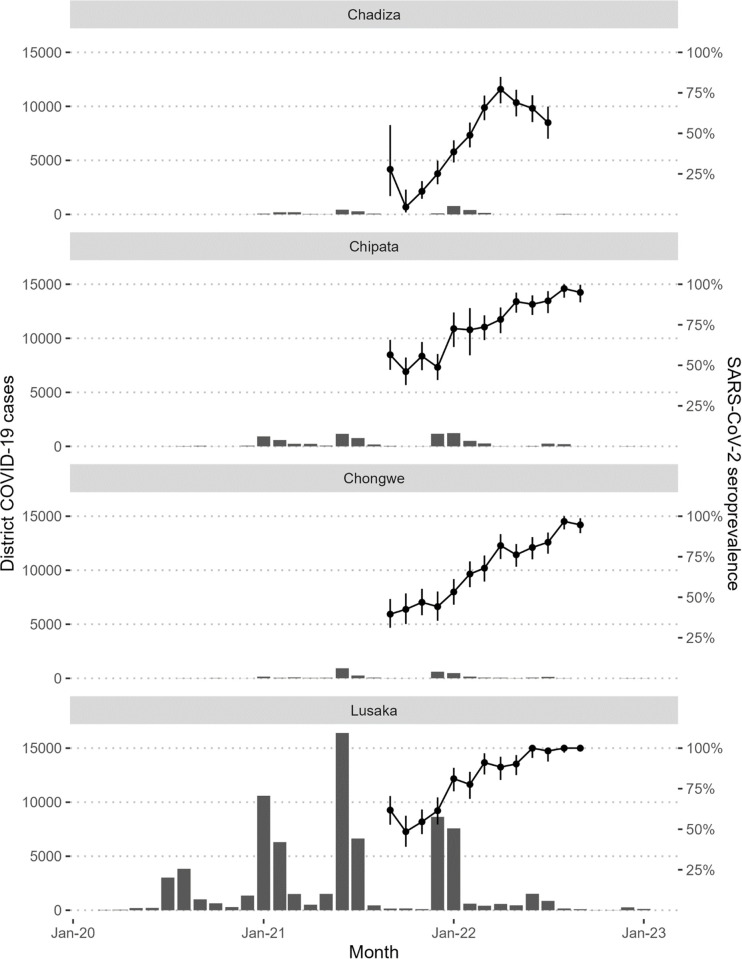
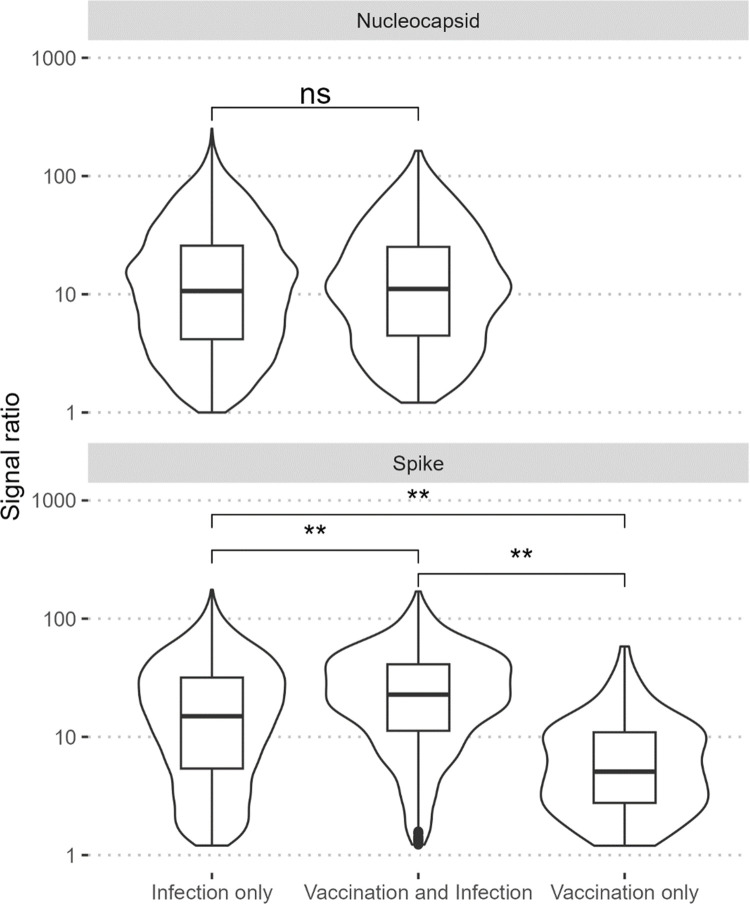
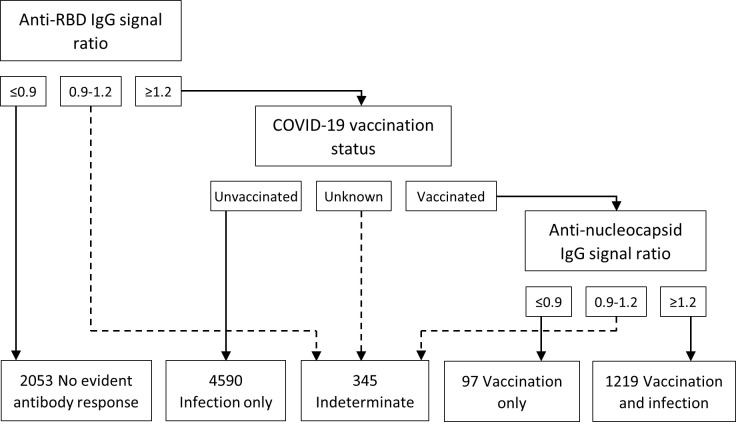
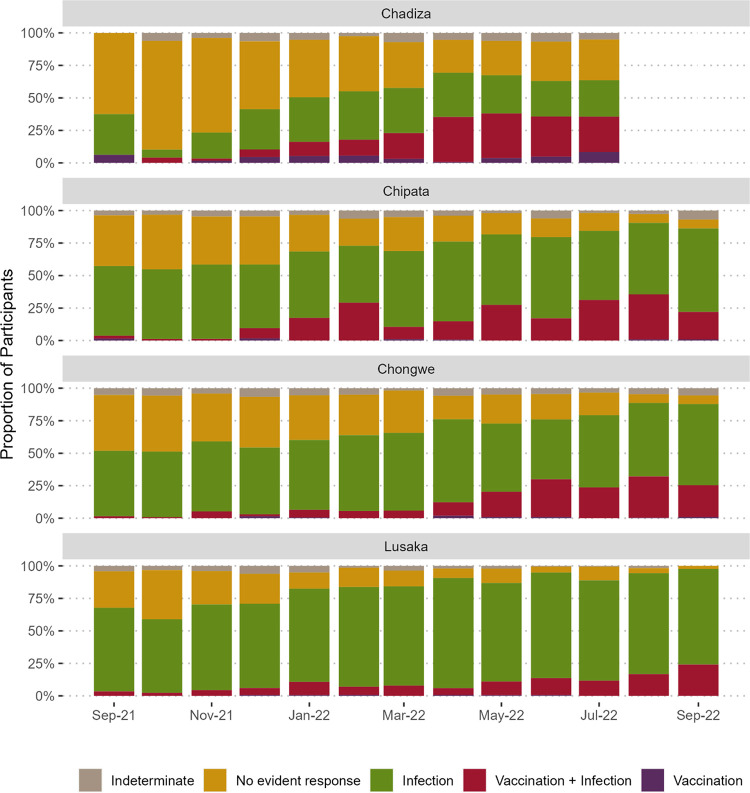
SARS-CoV-2 serosurveys help estimate the extent of transmission and guide the allocation of COVID-19 vaccines. We measured SARS-CoV-2 seroprevalence among women attending ANC clinics to assess exposure trends over time in Zambia. We conducted repeated cross-sectional SARS-CoV-2 seroprevalence surveys among pregnant women aged 15-49 years attending their first ANC visits in four districts of Zambia (two urban and two rural) during September 2021-September 2022. Serologic testing was done using a multiplex bead assay which detects IgG antibodies to the nucleocapsid protein and the spike protein receptor-binding domain (RBD). We calculated monthly SARS-CoV-2 seroprevalence by district. We also categorized seropositive results as infection alone, infection and vaccination, or vaccination alone based on anti-RBD and anti-nucleocapsid test results and self-reported COVID-19 vaccination status (vaccinated was having received ≥1 dose). Among 8,304 participants, 5,296 (63.8%) were cumulatively seropositive for SARS-CoV-2 antibodies from September 2021 through September 2022. SARS-CoV-2 seroprevalence primarily increased from September 2021 to September 2022 in three districts (Lusaka: 61.8-100.0%, Chongwe: 39.6-94.7%, Chipata: 56.5-95.0%), but in Chadiza, seroprevalence increased from 27.8% in September 2021 to 77.2% in April 2022 before gradually dropping to 56.6% in July 2022. Among 5,906 participants with a valid COVID-19 vaccination status, infection alone accounted for antibody responses in 77.7% (4,590) of participants. Most women attending ANC had evidence of prior SARS-CoV-2 infection and most SARS-CoV-2 seropositivity was infection-induced. Capturing COVID-19 vaccination status and using a multiplex bead assay with anti-nucleocapsid and anti-RBD targets facilitated distinguishing infection-induced versus vaccine-induced antibody responses during a period of increasing COVID-19 vaccine coverage in Zambia. Declining seroprevalence in Chadiza may indicate waning antibodies and a need for booster vaccines. ANC clinics have a potential role in ongoing SARS-CoV-2 serosurveillance and can continue to provide insights into SARS-CoV-2 antibody dynamics to inform near real-time public health responses.
严重急性呼吸综合征冠状病毒2(SARS-CoV-2)血清学调查有助于估计传播范围并指导2019冠状病毒病(COVID-19)疫苗的分配。我们测量了在赞比亚接受产前保健(ANC)门诊的女性中的SARS-CoV-2血清阳性率,以评估随时间推移的暴露趋势。2021年9月至2022年9月期间,我们在赞比亚四个地区(两个城市地区和两个农村地区)对年龄在15 - 49岁、首次进行ANC就诊的孕妇进行了重复横断面SARS-CoV-2血清阳性率调查。血清学检测采用多重微珠分析法,该方法可检测针对核衣壳蛋白和刺突蛋白受体结合域(RBD)的IgG抗体。我们按地区计算了每月的SARS-CoV-2血清阳性率。我们还根据抗RBD和抗核衣壳检测结果以及自我报告的COVID-19疫苗接种状况(接种过是指已接种≥1剂),将血清阳性结果分为仅感染、感染和接种疫苗或仅接种疫苗。在8304名参与者中,从2021年9月到2022年9月,累计有5296名(63.8%)参与者的SARS-CoV-2抗体呈血清阳性。在三个地区(卢萨卡:61.8% - 100.0%,琼圭:从39.6%升至94.7%,奇帕塔:56.5% - 95.0%),SARS-CoV-2血清阳性率主要从2021年9月到2022年9月有所上升,但在查迪扎,血清阳性率从2021年9月的27.8%升至2022年4月的77.2%,之后在2022年7月逐渐降至56.6%。在5906名有有效COVID-19疫苗接种状况的参与者中,仅感染导致抗体反应的参与者占77.7%(4590名)。大多数接受ANC的女性有先前SARS-CoV-2感染的证据,且大多数SARS-CoV-2血清阳性是由感染引起的。在赞比亚COVID-19疫苗接种覆盖率不断提高的时期,记录COVID-19疫苗接种状况并使用针对抗核衣壳和抗RBD靶点的多重微珠分析法有助于区分感染诱导的与疫苗诱导的抗体反应。查迪扎血清阳性率下降可能表明抗体减弱,需要加强疫苗接种。ANC门诊在持续的SARS-CoV-2血清学监测中具有潜在作用,并可继续提供有关SARS-CoV-2抗体动态的见解,以为近乎实时的公共卫生应对提供信息。