Victorian Clinical Genetics Services, Murdoch Children's Research Institute, Parkville, Victoria, Australia.
University of Melbourne, Melbourne, Victoria, Australia.
BMJ Open. 2024 Apr 3;14(4):e081426. doi: 10.1136/bmjopen-2023-081426.
Newborn bloodspot screening (NBS) is a highly successful public health programme that uses biochemical and other assays to screen for severe but treatable childhood-onset conditions. Introducing genomic sequencing into NBS programmes increases the range of detectable conditions but raises practical and ethical issues. Evidence from prospectively ascertained cohorts is required to guide policy and future implementation. This study aims to develop, implement and evaluate a genomic NBS (gNBS) pilot programme.
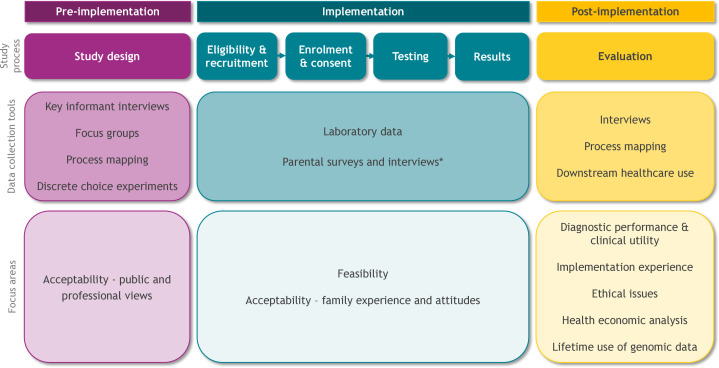
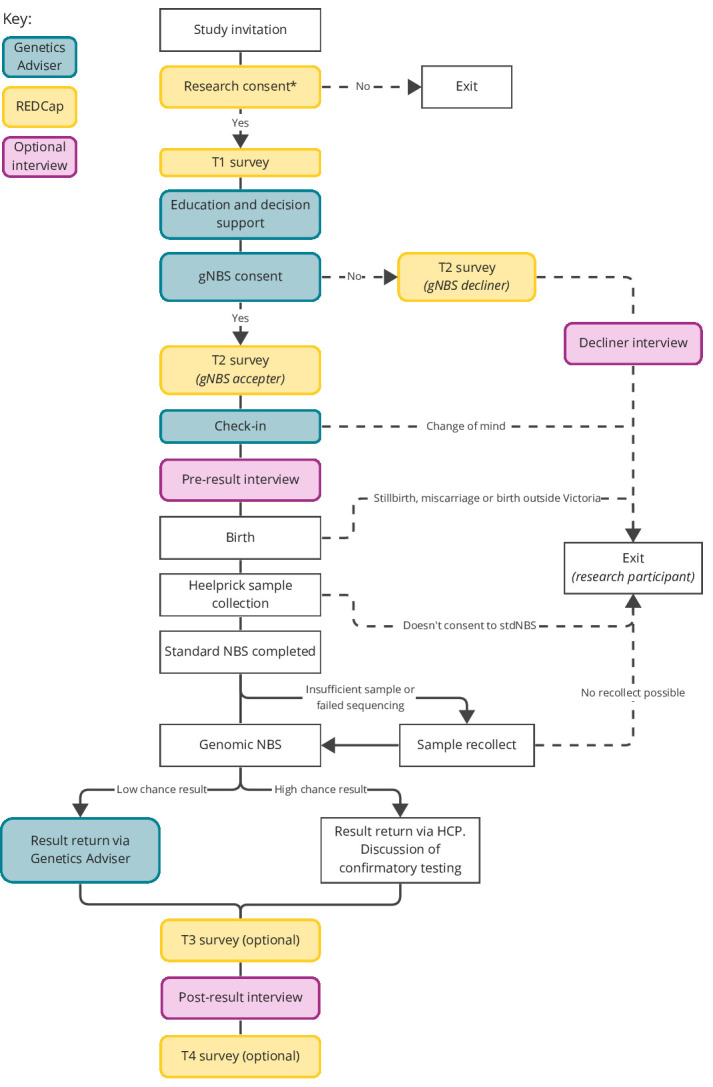
The BabyScreen+ study will pilot gNBS in three phases. In the preimplementation phase, study materials, including education resources, decision support and data collection tools, will be designed. Focus groups and key informant interviews will also be undertaken to inform delivery of the study and future gNBS programmes. During the implementation phase, we will prospectively recruit birth parents in Victoria, Australia, to screen 1000 newborns for over 600 severe, treatable, childhood-onset conditions. Clinically accredited whole genome sequencing will be performed following standard NBS using the same sample. High chance results will be returned by genetic healthcare professionals, with follow-on genetic and other confirmatory testing and referral to specialist services as required. The postimplementation phase will evaluate the feasibility of gNBS as the primary aim, and assess ethical, implementation, psychosocial and health economic factors to inform future service delivery.
This project received ethics approval from the Royal Children's Hospital Melbourne Research Ethics Committee: HREC/91500/RCHM-2023, HREC/90929/RCHM-2022 and HREC/91392/RCHM-2022. Findings will be disseminated to policy-makers, and through peer-reviewed journals and conferences.
新生儿足跟血筛查(NBS)是一项非常成功的公共卫生计划,它使用生化和其他检测方法来筛查严重但可治疗的儿童期发病疾病。将基因组测序引入 NBS 计划会增加可检测疾病的范围,但也会带来实际和伦理问题。需要前瞻性确定的队列的证据来指导政策和未来的实施。本研究旨在开发、实施和评估基因组 NBS(gNBS)试点计划。
BabyScreen+研究将分三个阶段试点 gNBS。在预实施阶段,将设计研究材料,包括教育资源、决策支持和数据收集工具。还将进行焦点小组和关键知情人访谈,为研究的开展和未来的 gNBS 计划提供信息。在实施阶段,我们将在澳大利亚维多利亚州前瞻性招募 1000 名新生儿的父母,对 600 多种严重、可治疗、儿童期发病的疾病进行筛查。将使用与标准 NBS 相同的样本进行临床认可的全基因组测序。遗传医疗保健专业人员将返回高可能性结果,并根据需要进行后续的遗传和其他确认性检测以及向专科服务机构转诊。实施后阶段将评估 gNBS 的可行性作为主要目标,并评估伦理、实施、心理社会和健康经济因素,为未来的服务提供信息。
该项目已获得墨尔本皇家儿童医院伦理委员会的伦理批准:HREC/91500/RCHM-2023、HREC/90929/RCHM-2022 和 HREC/91392/RCHM-2022。研究结果将传达给决策者,并通过同行评议的期刊和会议进行传播。