Division of Obstetrics and Feto-Maternal Medicine, Department of Obstetrics and Gynecology, Comprehensive Center for Pediatrics, Medical University of Vienna, Waehringer Guertel 18-20, 1090, Vienna, Austria.
Division of Neonatology, Pediatric Intensive Care Medicine and Neuropediatrics, Department of Pediatrics, Comprehensive Center for Pediatrics, Medical University of Vienna, Vienna, Austria.
Sci Rep. 2024 Apr 3;14(1):7898. doi: 10.1038/s41598-024-57785-6.
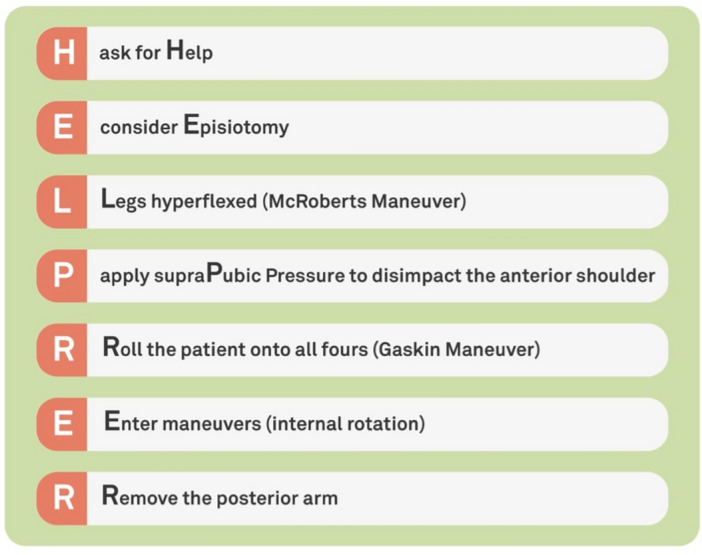
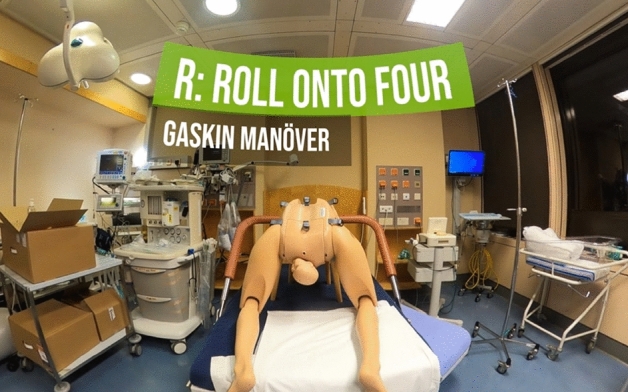
This study analyzed the adherence to the modified Advanced Life Support in Obstetrics (ALSO) algorithm (HELP-RER) for handling shoulder dystocia (SD) using a virtual reality (VR) training modality. Secondary outcomes were improvements in the post-training diagnosis-to-delivery time, human skills factors (HuFSHI), and perceived task-load index (TLX). Prospective, case-control, single-blind, 1:1 randomized crossover study. Participants were shown a 360° VR video of SD management. The control group was briefed theoretically. Both groups underwent HuFSHI and HELP-RER score assessments at baseline and after the manikin-based training. The TLX questionnaire was then administered. After a washout phase of 12 weeks, we performed a crossover, and groups were switched. There were similar outcomes between groups during the first training session. However, after crossover, the control group yielded significantly higher HELP-RER scores [7 vs. 6.5; (p = 0.01)], with lower diagnosis-to-delivery-time [85.5 vs. 99 s; (p = 0.02)], and TLX scores [57 vs. 68; (p = 0.04)]. In the multivariable linear regression analysis, VR training was independently associated with improved HELP-RER scores (p = 0.003). The HuFSHI scores were comparable between groups. Our data demonstrated the feasibility of a VR simulation training of SD management for caregivers. Considering the drawbacks of common high-fidelity trainings, VR-based simulations offer new perspectives.
本研究分析了使用虚拟现实(VR)培训模式对处理肩难产(SD)的改良高级生命支持在产科(ALSO)算法(HELP-RER)的依从性。次要结局是提高培训后诊断到分娩的时间、人为技能因素(HuFSHI)和感知任务负荷指数(TLX)。前瞻性、病例对照、单盲、1:1 随机交叉研究。参与者观看了 SD 管理的 360° VR 视频。对照组进行了理论简报。两组均在基线和基于模型的培训后进行 HuFSHI 和 HELP-RER 评分评估。然后进行了 TLX 问卷调查。经过 12 周的洗脱期后,我们进行了交叉,两组交换。在第一次培训中,两组的结果相似。然而,交叉后,对照组的 HELP-RER 评分显著升高[7 分比 6.5 分;(p=0.01)],诊断到分娩时间缩短[85.5 秒比 99 秒;(p=0.02)],TLX 评分降低[57 分比 68 分;(p=0.04)]。在多变量线性回归分析中,VR 培训与 HELP-RER 评分的改善独立相关(p=0.003)。两组的 HuFSHI 评分无差异。我们的数据证明了 VR 模拟培训在 SD 管理方面对护理人员的可行性。考虑到常见高保真培训的缺点,基于 VR 的模拟提供了新的视角。