Department of radiation protection medicine, School of Preventive Medicine, Fourth Military Medical University, Xi'an, 710032, China.
Ministry of Education Key Lab of Hazard Assessment and Control in Special Operational Environment, Xi'an, China.
Cell Commun Signal. 2024 Apr 3;22(1):216. doi: 10.1186/s12964-024-01591-0.
Radiation-induced brain injury (RIBI) is a common and severe complication during radiotherapy for head and neck tumor. Repetitive transcranial magnetic stimulation (rTMS) is a novel and non-invasive method of brain stimulation, which has been applied in various neurological diseases. rTMS has been proved to be effective for treatment of RIBI, while its mechanisms have not been well understood.
RIBI mouse model was established by cranial irradiation, K252a was daily injected intraperitoneally to block BDNF pathway. Immunofluorescence staining, immunohistochemistry and western blotting were performed to examine the microglial pyroptosis and hippocampal neurogenesis. Behavioral tests were used to assess the cognitive function and emotionality of mice. Golgi staining was applied to observe the structure of dendritic spine in hippocampus.
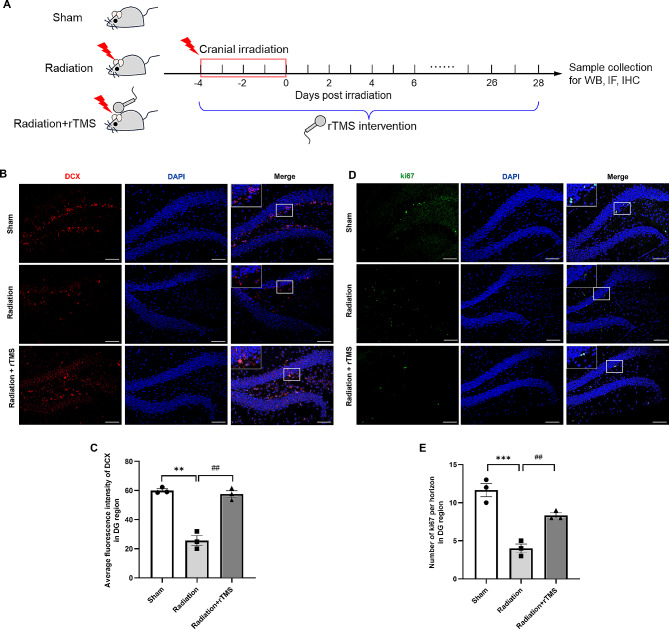
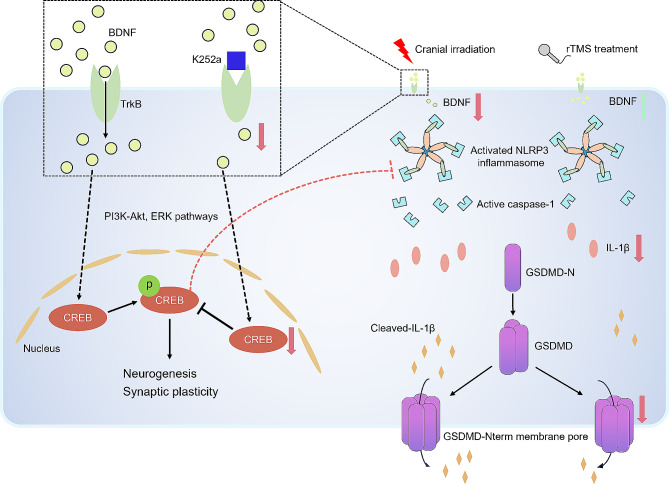
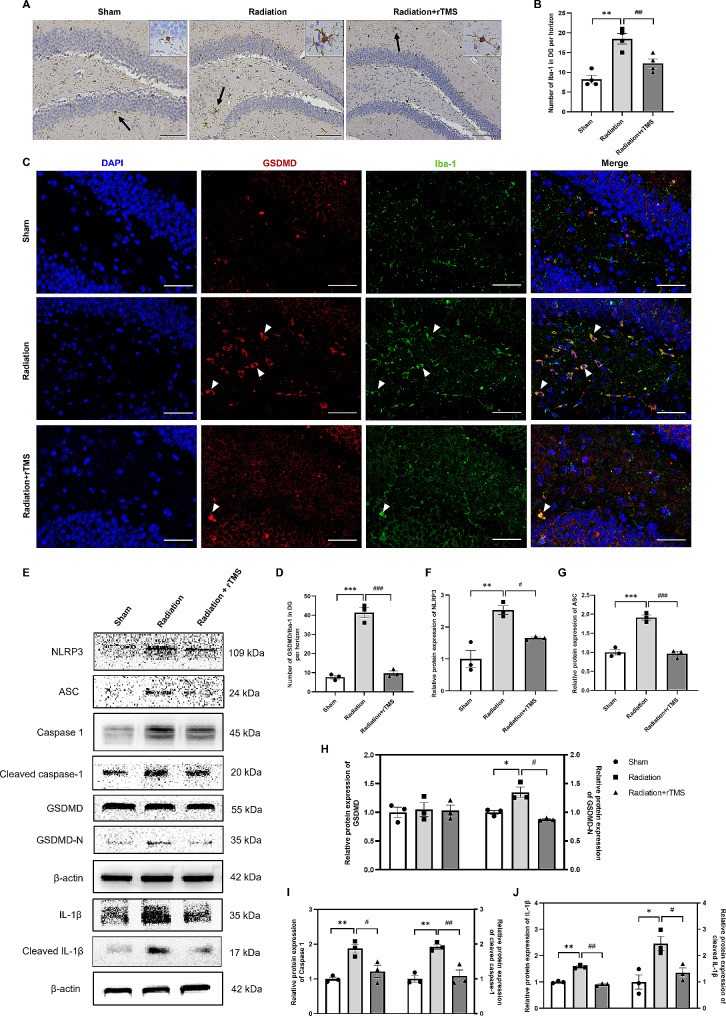
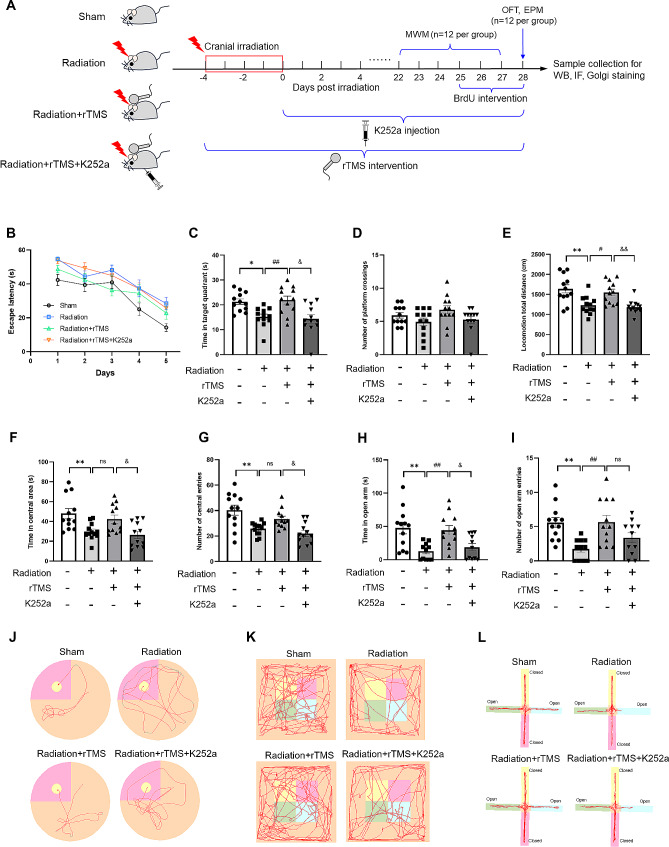
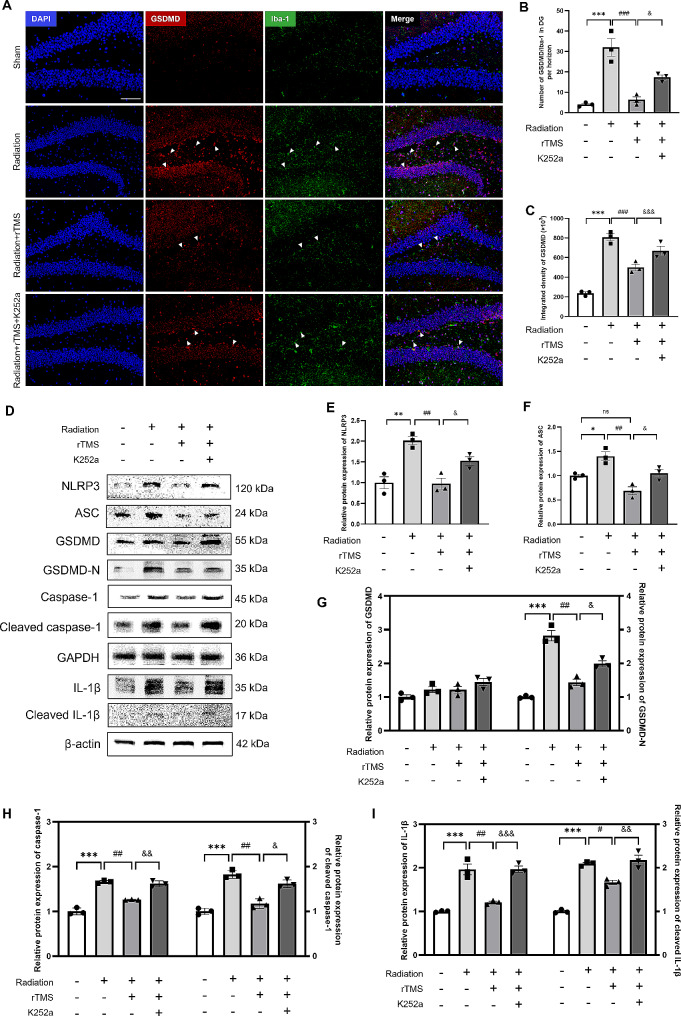
rTMS significantly promoted hippocampal neurogenesis and mitigated neuroinflammation, with ameliorating pyroptosis in microglia, as well as downregulation of the protein expression level of NLRP3 inflammasome and key pyroptosis factor Gasdermin D (GSDMD). BDNF signaling pathway might be involved in it. After blocking BDNF pathway by K252a, a specific BDNF pathway inhibitor, the neuroprotective effect of rTMS was markedly reversed. Evaluated by behavioral tests, the cognitive dysfunction and anxiety-like behavior were found aggravated with the comparison of mice in rTMS intervention group. Moreover, the level of hippocampal neurogenesis was found to be attenuated, the pyroptosis of microglia as well as the levels of GSDMD, NLRP3 inflammasome and IL-1β were upregulated.
Our study indicated that rTMS notably ameliorated RIBI-induced cognitive disorders, by mitigating pyroptosis in microglia and promoting hippocampal neurogenesis via mediating BDNF pathway.
放射性脑损伤(RIBI)是头颈部肿瘤放疗过程中常见且严重的并发症。重复经颅磁刺激(rTMS)是一种新颖的、非侵入性的脑刺激方法,已应用于各种神经疾病。rTMS 已被证明对 RIBI 治疗有效,但其机制尚未得到很好的理解。
采用颅照射建立 RIBI 小鼠模型,腹腔内每日注射 K252a 阻断 BDNF 通路。免疫荧光染色、免疫组织化学和 Western blot 检测小胶质细胞焦亡和海马神经发生情况。行为学测试用于评估小鼠的认知功能和情绪。Golgi 染色观察海马树突棘结构。
rTMS 显著促进海马神经发生,减轻神经炎症,减轻小胶质细胞焦亡,下调 NLRP3 炎性体和关键焦亡因子 Gasdermin D(GSDMD)的蛋白表达水平。BDNF 信号通路可能参与其中。用 K252a,一种特定的 BDNF 通路抑制剂,阻断 BDNF 通路后,rTMS 的神经保护作用明显逆转。通过行为学测试评估,与 rTMS 干预组相比,发现认知功能障碍和焦虑样行为加重。此外,发现海马神经发生水平降低,小胶质细胞焦亡以及 GSDMD、NLRP3 炎性体和 IL-1β的水平上调。
我们的研究表明,rTMS 通过调节 BDNF 通路减轻小胶质细胞焦亡和促进海马神经发生,显著改善 RIBI 引起的认知障碍。