Australian Venom Research Unit, Department of Biochemistry and Pharmacology, Faculty of Medicine, Dentistry and Health Sciences, University of Melbourne, Melbourne, Australia.
Department of Epidemiology and Preventive Medicine, School of Public Health and Preventive Medicine, Faculty of Medicine, Nursing and Health Sciences, Monash University, Clayton, Australia.
PLoS Negl Trop Dis. 2024 Apr 4;18(4):e0012080. doi: 10.1371/journal.pntd.0012080. eCollection 2024 Apr.
Snakebite envenoming represents a significant and often neglected public health challenge, particularly in rural communities across tropical and subtropical regions. An estimated 1.2-5.5 million people are envenomed by snakebites annually. More than 125,000 of these bites are fatal, and 3-4 times as many results in disability/disfigurement. Despite its prevalence, collecting accurate epidemiological data on snakebite is challenging. This systematic review and meta-analysis collates global epidemiology data on snakebite morbidity and mortality.
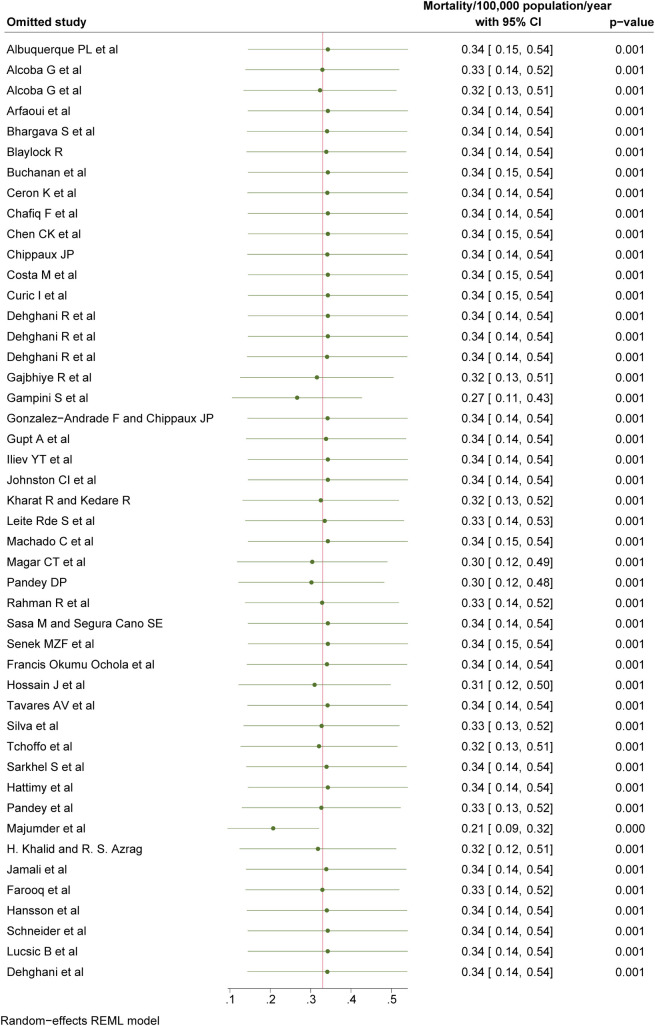
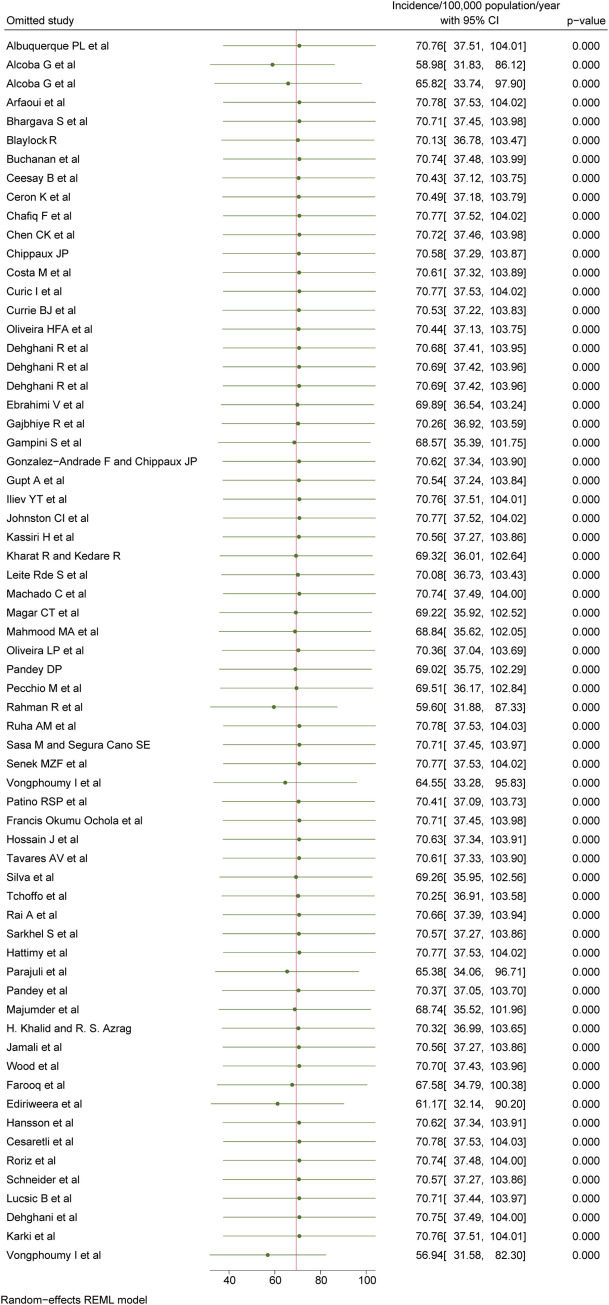
Medline, Embase, Cochrane and CINAHL Plus databases were searched for articles published between 2001-2022. Pooled incidence and mortality were obtained using random effects modelling, heterogeneity (I2) was tested, and sensitivity analyses performed. Newcastle-Ottawa Scale assessed study quality.
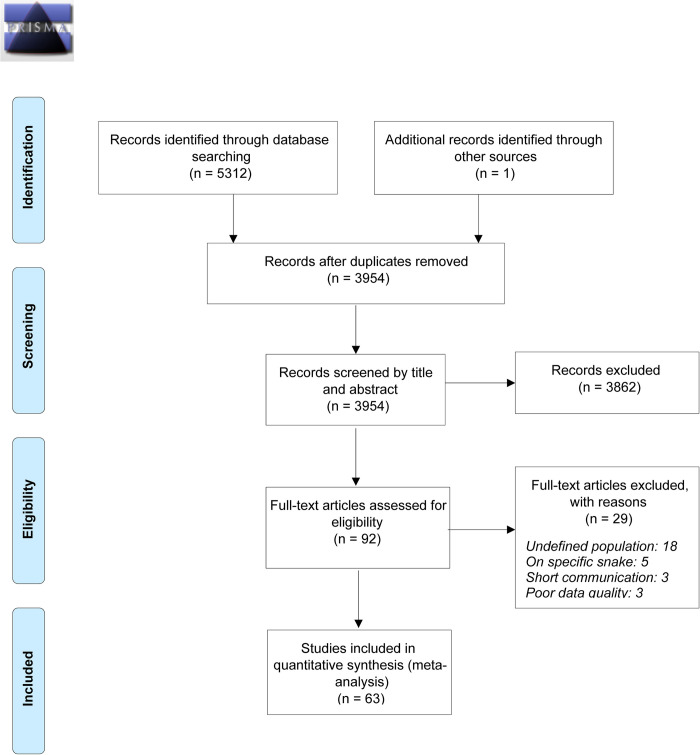
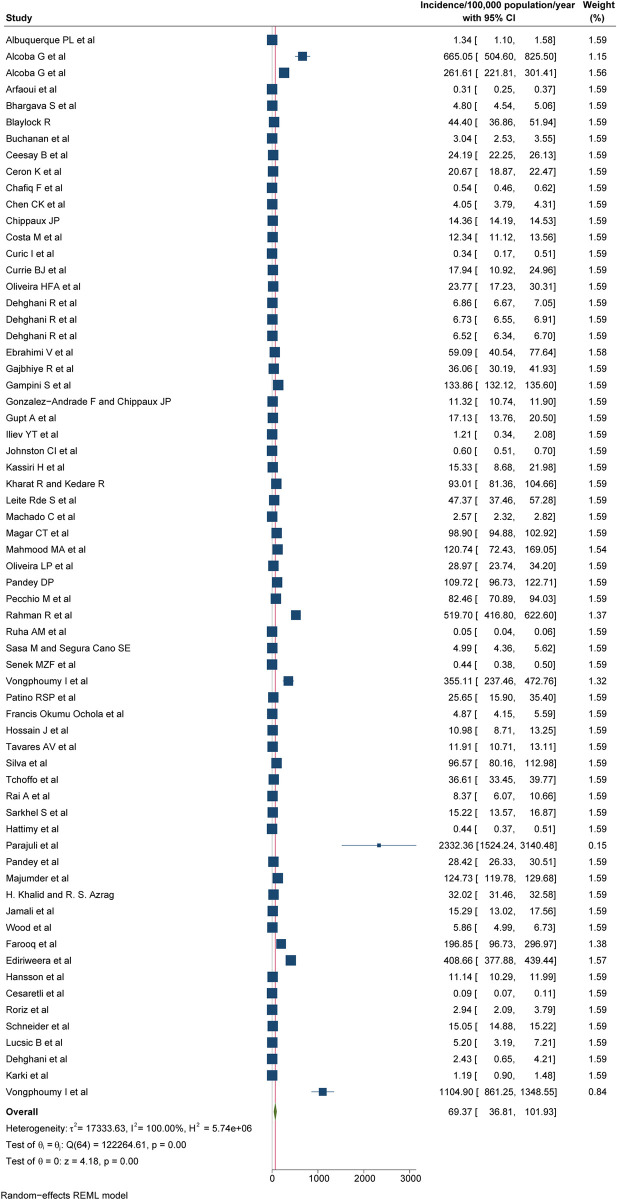
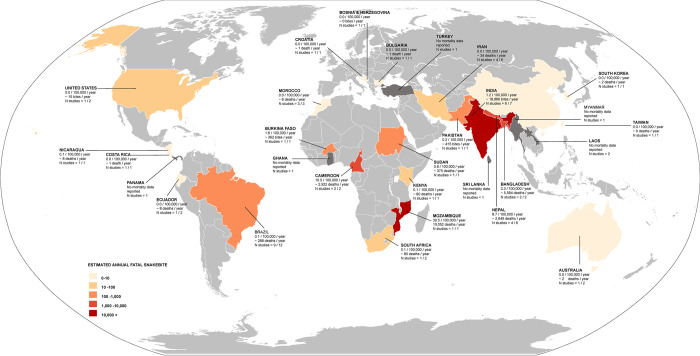
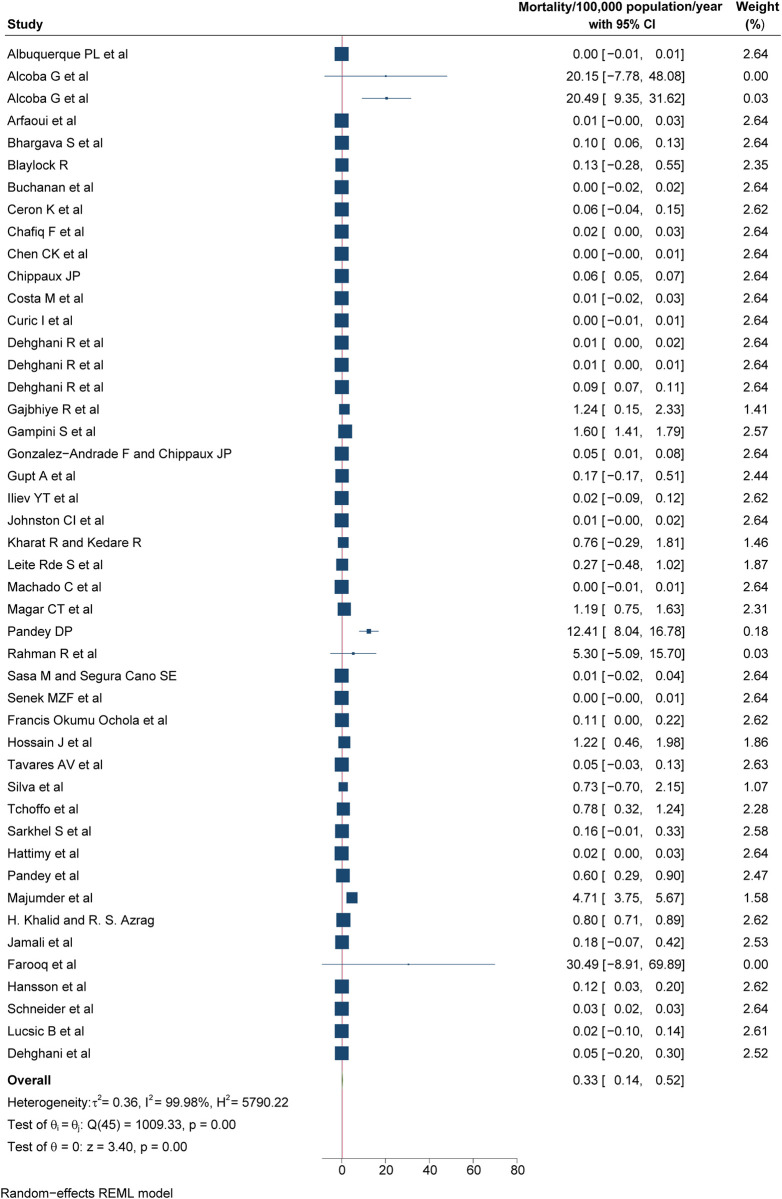
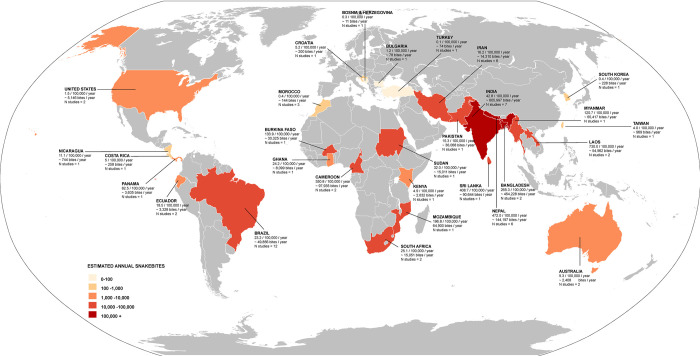
Out of the four databases, 5,312 articles were found. After removing duplicates, 3,953 articles were screened by title and abstract and 65 articles containing information on snakebite epidemiology, encompassing 663,460 snakebites, were selected for analysis. The people most at risk for snakebite were men (59%), engaged in agricultural labour (27.5%), and residing in rural areas (66.7%). More than half (57%) of the reported bites resulted in envenoming. Incidents occurred frequently in the summer season (38.5%), during daytime (56.7%), and bites were most often to the lower limb (56.4%). Envenoming severity was frequently mild (46.7%), treated in hospital (68.3%), and was treated with anti-venom (64.7%). The pooled global incidence and mortality was 69.4 /100,000 population (95%CI: 36.8 to 101.9) and 0.33/100,000 population (95%CI, 0.14 to 0.52) per year, respectively. Stratified by continents, Asia had the highest incidence of 130.7/100,000 population (95%CI: 48.3 to 213.1) while Europe has the lowest with 0.7/100,000 population (95%CI: -0.2 to 1.5). The highest mortality was reported in Asia at 0.96/100,000 population (95% CI: 0.22 to 1.70), and Africa 0.44/100,000 population (95%CI: -0.03 to 0.84). Incidence was highest among inhabitants of lower-middle-income countries 132.7/100,000 population (95%CI: 55.4 to 209.9) while mortality was highest in low-income countries at 0.85/100,000 population (95% CI: -0.06 to 2.31).
Incidence and mortality rates noted here highlight the global impact of snakebite and underscore the critical need to address the burden of snakebite envenoming. It also reveals that while reported snakebite incidence was higher in lower-middle-income countries, the burden of mortality was greatest among inhabitants of low-income countries, again emphasising the need for greater efforts to tackle this neglected tropical disease.
蛇伤中毒是一个重大且经常被忽视的公共卫生挑战,特别是在热带和亚热带地区的农村社区。据估计,每年有 125 万人至 550 万人被蛇咬伤。其中超过 125000 例咬伤是致命的,3-4 倍的咬伤会导致残疾/毁容。尽管蛇伤中毒很普遍,但收集其准确的流行病学数据具有挑战性。本系统综述和荟萃分析汇集了全球蛇伤发病率和死亡率的流行病学数据。
在 2001 年至 2022 年期间,检索了 Medline、Embase、Cochrane 和 CINAHL Plus 数据库中的文章。使用随机效应模型获得了汇总发病率和死亡率,测试了异质性(I2),并进行了敏感性分析。纽卡斯尔-渥太华量表评估了研究质量。
在这四个数据库中,共发现了 5312 篇文章。在去除重复项后,通过标题和摘要筛选了 3953 篇文章,有 65 篇文章包含了关于蛇伤流行病学的信息,共包含了 663460 例蛇伤,被选入分析。最容易受到蛇伤的人群是男性(59%)、从事农业劳动的人(27.5%)和居住在农村地区的人(66.7%)。超过一半(57%)的报告咬伤导致中毒。事件经常发生在夏季(38.5%)、白天(56.7%),咬伤最常见于下肢(56.4%)。中毒严重程度经常为轻度(46.7%),在医院接受治疗(68.3%),并使用抗蛇毒血清治疗(64.7%)。全球发病率和死亡率的汇总率分别为 69.4/100000 人口(95%CI:36.8 至 101.9)和 0.33/100000 人口(95%CI,0.14 至 0.52)/年。按大洲分层,亚洲的发病率最高,为 130.7/100000 人口(95%CI:48.3 至 213.1),而欧洲的发病率最低,为 0.7/100000 人口(95%CI:-0.2 至 1.5)。亚洲报告的死亡率最高,为 0.96/100000 人口(95%CI:0.22 至 1.70),非洲为 0.44/100000 人口(95%CI:-0.03 至 0.84)。中低收入国家居民的发病率最高,为 132.7/100000 人口(95%CI:55.4 至 209.9),而低收入国家的死亡率最高,为 0.85/100000 人口(95%CI:-0.06 至 2.31)。
这里记录的发病率和死亡率突出了蛇伤的全球影响,并强调了解决蛇伤中毒负担的迫切需要。它还表明,虽然报告的蛇咬伤发病率在中低收入国家较高,但死亡率的负担在低收入国家的居民中最高,再次强调需要更大的努力来解决这一被忽视的热带病。