Department of Health Sciences and Technology, Neuroscience Center Zürich (ZNZ), Swiss Federal Institute of Technology (ETH Zürich), Zürich 8092, Switzerland.
Department of Health Sciences and Technology, Neuroscience Center Zürich (ZNZ), Swiss Federal Institute of Technology (ETH Zürich), Zürich 8092, Switzerland
J Neurosci. 2024 May 22;44(21):e0015242024. doi: 10.1523/JNEUROSCI.0015-24.2024.
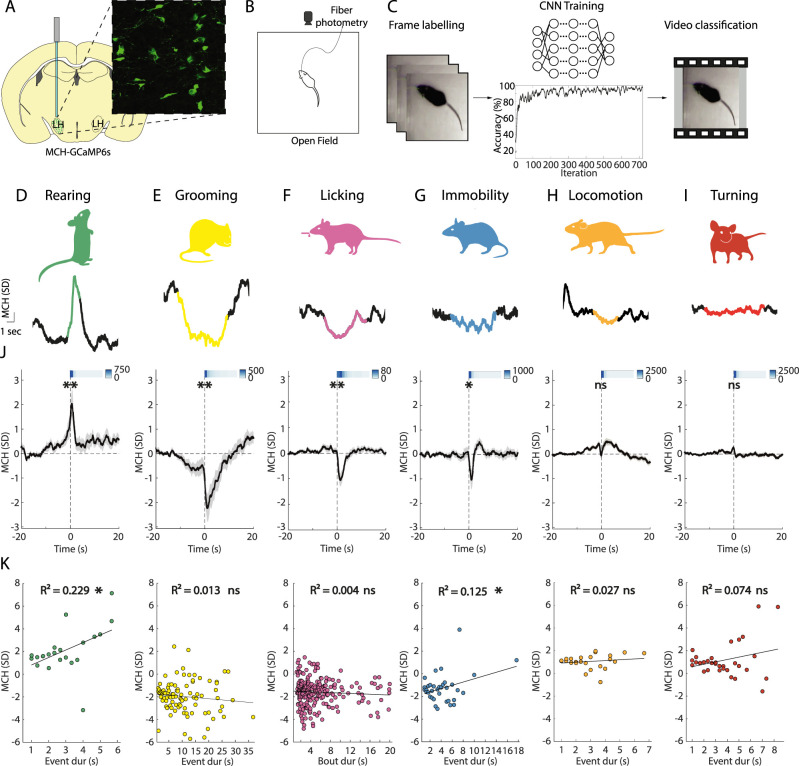
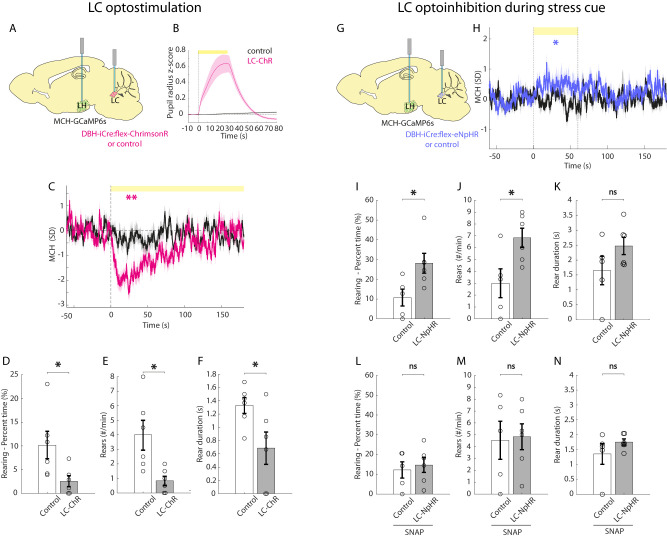
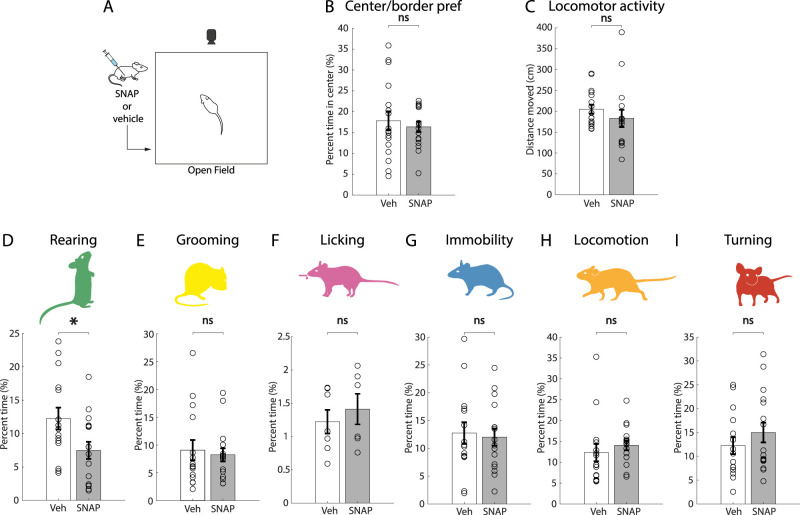
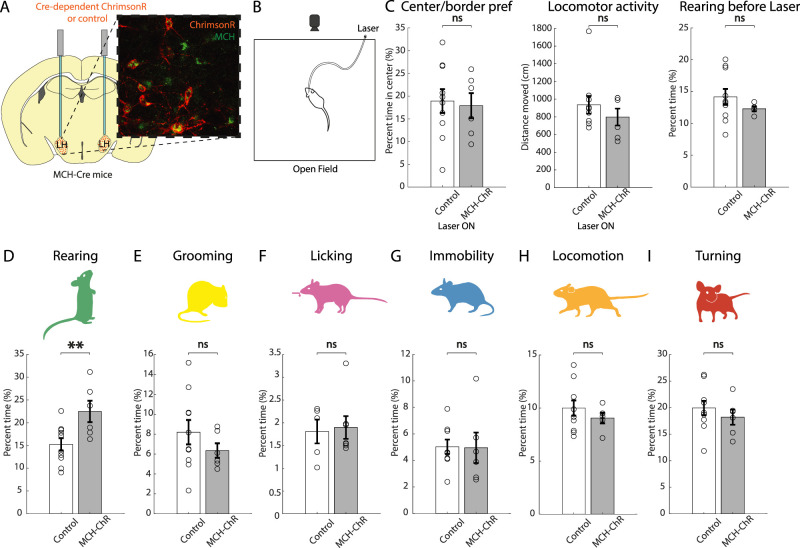
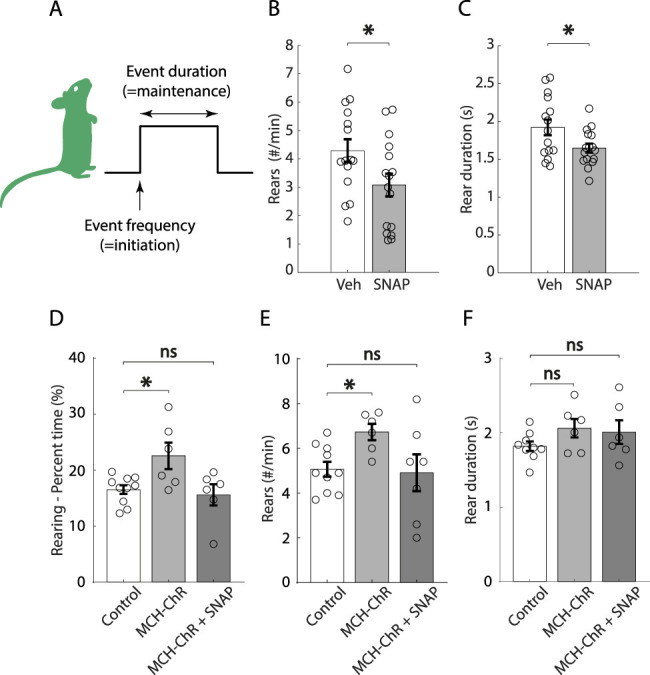
Information seeking, such as standing on tiptoes to look around in humans, is observed across animals and helps survival. Its rodent analog-unsupported rearing on hind legs-was a classic model in deciphering neural signals of cognition and is of intense renewed interest in preclinical modeling of neuropsychiatric states. Neural signals and circuits controlling this dedicated decision to seek information remain largely unknown. While studying subsecond timing of spontaneous behavioral acts and activity of melanin-concentrating hormone (MCH) neurons (MNs) in behaving male and female mice, we observed large MN activity spikes that aligned to unsupported rears. Complementary causal, loss and gain of function, analyses revealed specific control of rear frequency and duration by MNs and MCHR1 receptors. Activity in a key stress center of the brain-the locus ceruleus noradrenaline cells-rapidly inhibited MNs and required functional MCH receptors for its endogenous modulation of rearing. By defining a neural module that both tracks and controls rearing, these findings may facilitate further insights into biology of information seeking.
信息寻求,如人类踮起脚尖四处张望,在动物中随处可见,有助于生存。它的啮齿动物类似物——不支持后腿站立——是破译认知神经信号的经典模型,在神经精神状态的临床前模型中重新引起了强烈的兴趣。控制这种专门寻求信息的决策的神经信号和回路在很大程度上仍然未知。在研究雄性和雌性小鼠自发行为的亚秒级时间和黑色素浓缩激素 (MCH) 神经元 (MNs) 的活动时,我们观察到与不支持后腿站立对齐的大型 MN 活动尖峰。互补的因果、缺失和获得功能分析表明,MNs 和 MCHR1 受体特异性控制后腿的频率和持续时间。大脑中关键应激中心——蓝斑去甲肾上腺素细胞——的活动迅速抑制 MNs,并需要功能性 MCH 受体来对其自身的后腿站立进行调节。通过定义一个既能跟踪又能控制后腿站立的神经模块,这些发现可能有助于进一步了解信息寻求的生物学。