Centre for Molecular and Systems Biology, Lunenfeld-Tanenbaum Research Institute, Mount Sinai Hospital, Toronto, Ontario, M5G 1X5, Canada.
Department of Molecular Genetics, University of Toronto, Toronto, Ontario, M5S 1A8, Canada.
Mol Syst Biol. 2024 Jun;20(6):719-740. doi: 10.1038/s44320-024-00032-x. Epub 2024 Apr 5.
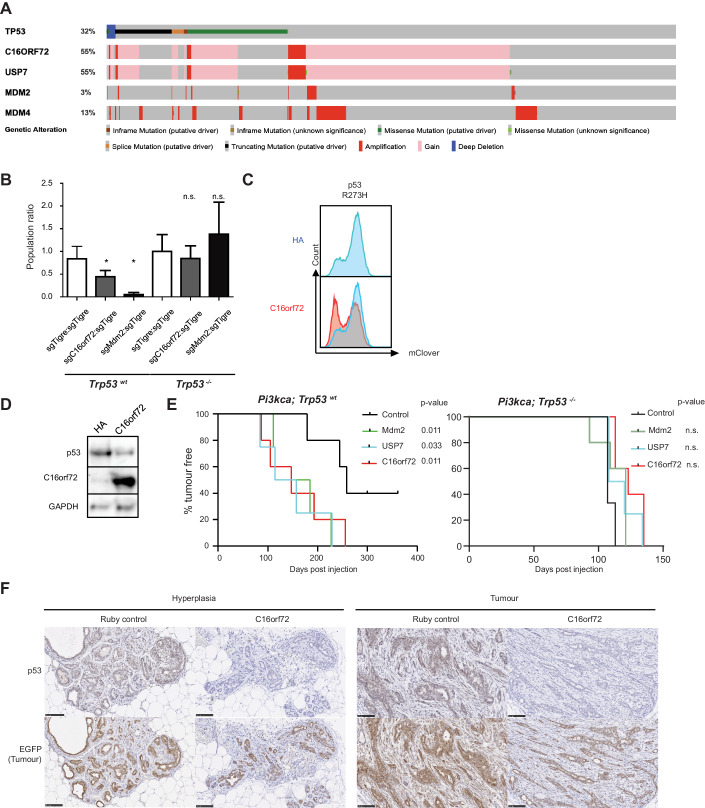
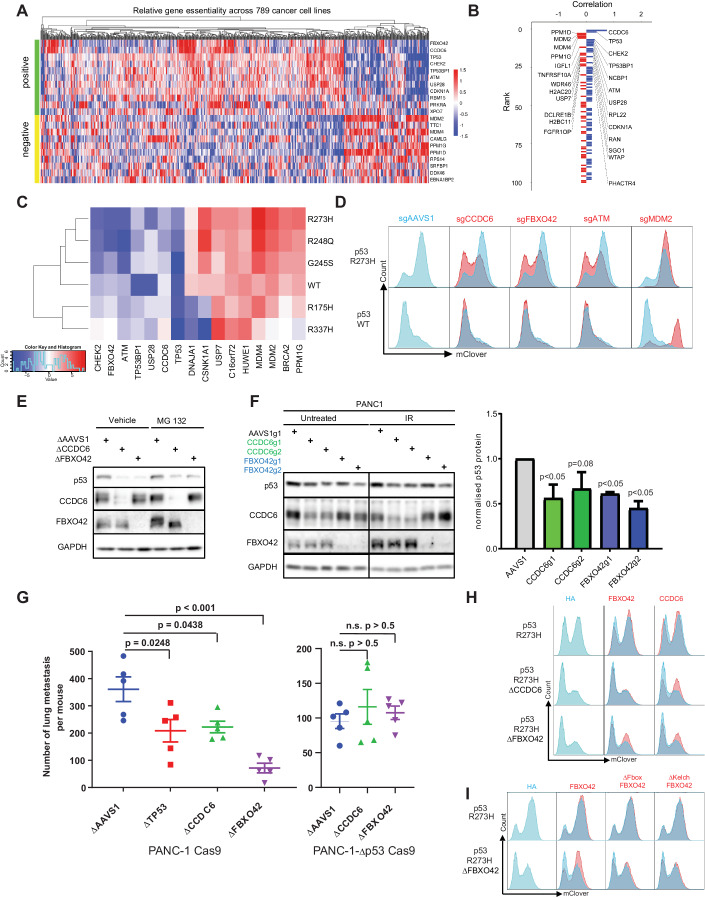
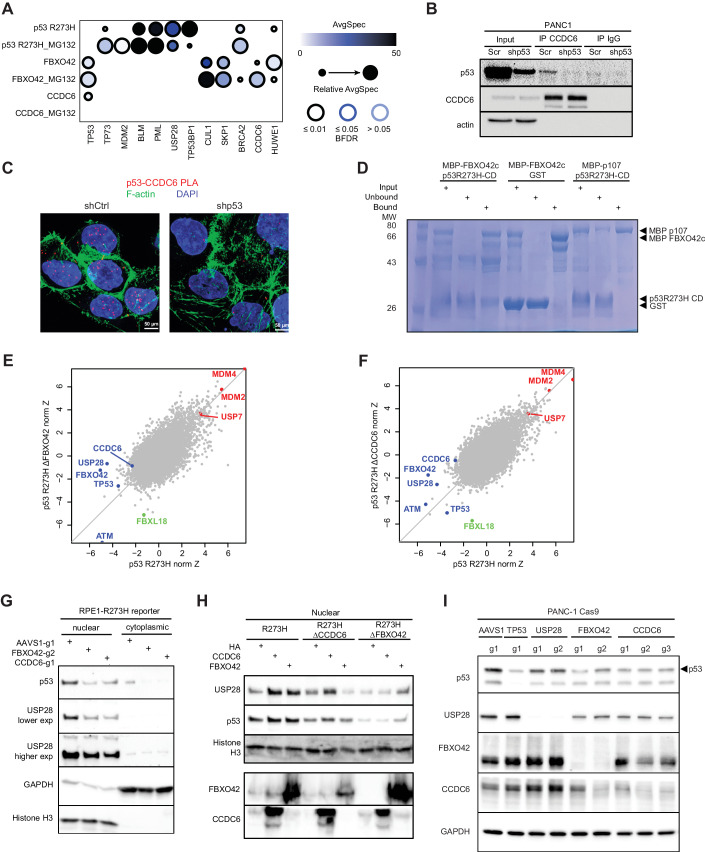
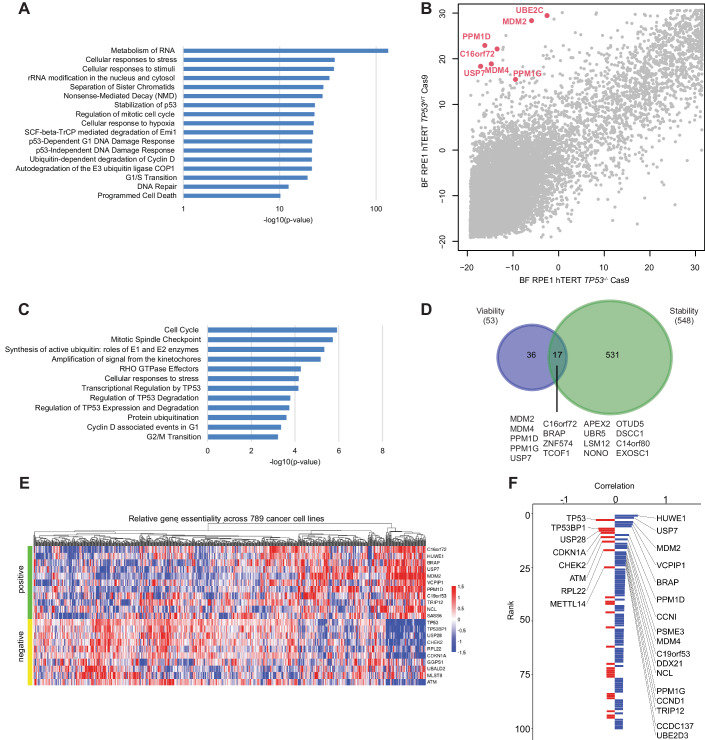
Tumor suppressor p53 (TP53) is frequently mutated in cancer, often resulting not only in loss of its tumor-suppressive function but also acquisition of dominant-negative and even oncogenic gain-of-function traits. While wild-type p53 levels are tightly regulated, mutants are typically stabilized in tumors, which is crucial for their oncogenic properties. Here, we systematically profiled the factors that regulate protein stability of wild-type and mutant p53 using marker-based genome-wide CRISPR screens. Most regulators of wild-type p53 also regulate p53 mutants, except for p53 R337H regulators, which are largely private to this mutant. Mechanistically, FBXO42 emerged as a positive regulator for a subset of p53 mutants, working with CCDC6 to control USP28-mediated mutant p53 stabilization. Additionally, C16orf72/HAPSTR1 negatively regulates both wild-type p53 and all tested mutants. C16orf72/HAPSTR1 is commonly amplified in breast cancer, and its overexpression reduces p53 levels in mouse mammary epithelium leading to accelerated breast cancer. This study offers a network perspective on p53 stability regulation, potentially guiding strategies to reinforce wild-type p53 or target mutant p53 in cancer.
肿瘤抑制因子 p53(TP53)在癌症中经常发生突变,通常不仅导致其肿瘤抑制功能丧失,还获得显性负和甚至致癌的功能获得特性。虽然野生型 p53 水平受到严格调控,但突变体在肿瘤中通常稳定存在,这对其致癌特性至关重要。在这里,我们使用基于标记的全基因组 CRISPR 筛选系统地分析了调节野生型和突变型 p53 蛋白稳定性的因素。大多数调节野生型 p53 的因素也调节 p53 突变体,除了 p53 R337H 的调节因子,这些调节因子在很大程度上是该突变体所特有的。从机制上讲,FBXO42 作为一组 p53 突变体的正调节剂出现,与 CCDC6 一起控制 USP28 介导的突变 p53 稳定。此外,C16orf72/HAPSTR1 负调节野生型 p53 和所有测试的突变体。C16orf72/HAPSTR1 在乳腺癌中普遍扩增,其过表达降低了小鼠乳腺上皮细胞中的 p53 水平,导致乳腺癌加速。这项研究提供了一个关于 p53 稳定性调节的网络视角,可能为增强野生型 p53 或靶向癌症中突变型 p53 提供策略。