Institute of Neurophysiology, Uniklinik RWTH Aachen University, Pauwelsstr. 30, 52074, Aachen, Germany.
Research Training Group 2416 MultiSenses-MultiScales, RWTH Aachen University, Aachen, Germany.
Stem Cell Res Ther. 2024 Apr 5;15(1):99. doi: 10.1186/s13287-024-03696-2.
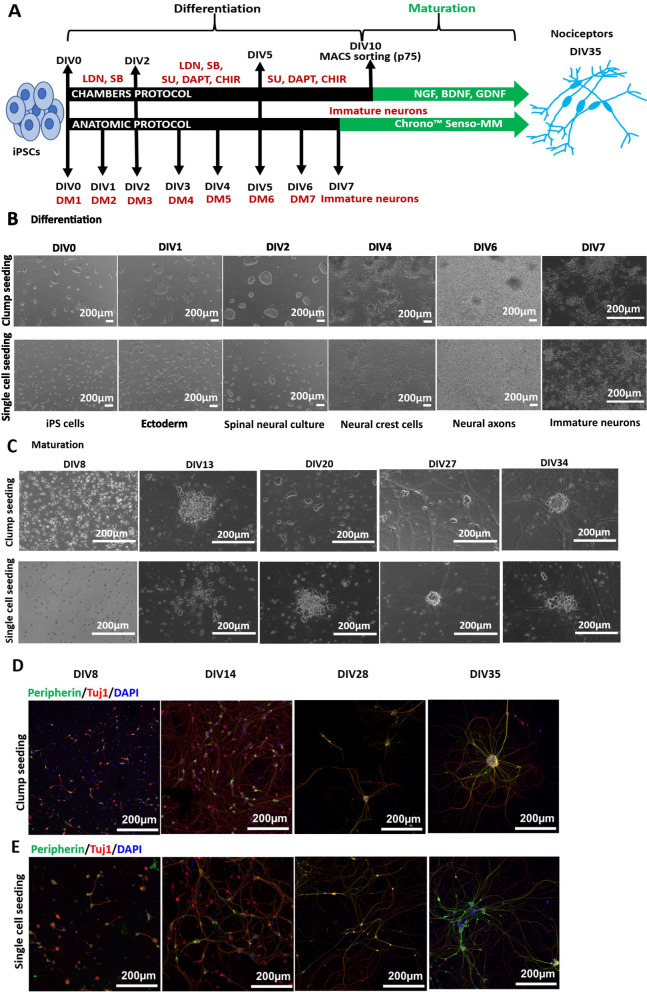
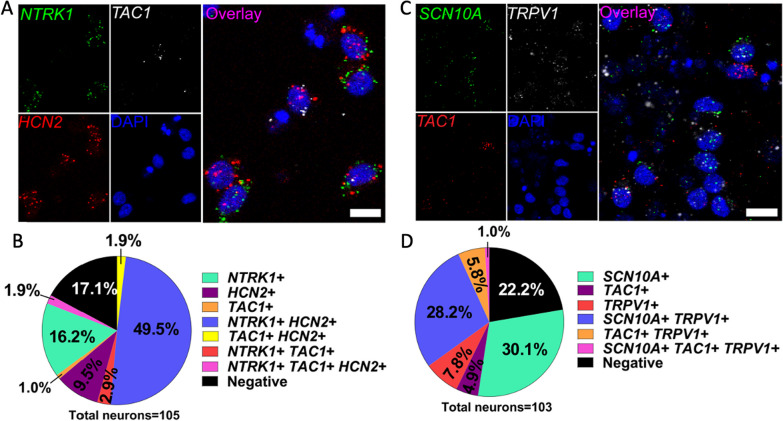
Human induced pluripotent stem cell (iPSC)-derived peripheral sensory neurons present a valuable tool to model human diseases and are a source for applications in drug discovery and regenerative medicine. Clinically, peripheral sensory neuropathies can result in maladies ranging from a complete loss of pain to severe painful neuropathic disorders. Sensory neurons are located in the dorsal root ganglion and are comprised of functionally diverse neuronal types. Low efficiency, reproducibility concerns, variations arising due to genetic factors and time needed to generate functionally mature neuronal populations from iPSCs remain key challenges to study human nociception in vitro. Here, we report a detailed functional characterization of iPSC-derived sensory neurons with an accelerated differentiation protocol ("Anatomic" protocol) compared to the most commonly used small molecule approach ("Chambers" protocol). Anatomic's commercially available RealDRG™ were further characterized for both functional and expression phenotyping of key nociceptor markers.
Multiple iPSC clones derived from different reprogramming methods, genetics, age, and somatic cell sources were used to generate sensory neurons. Manual patch clamp was used to functionally characterize both control and patient-derived neurons. High throughput techniques were further used to demonstrate that RealDRGs™ derived from the Anatomic protocol are amenable to high throughput technologies for disease modelling.
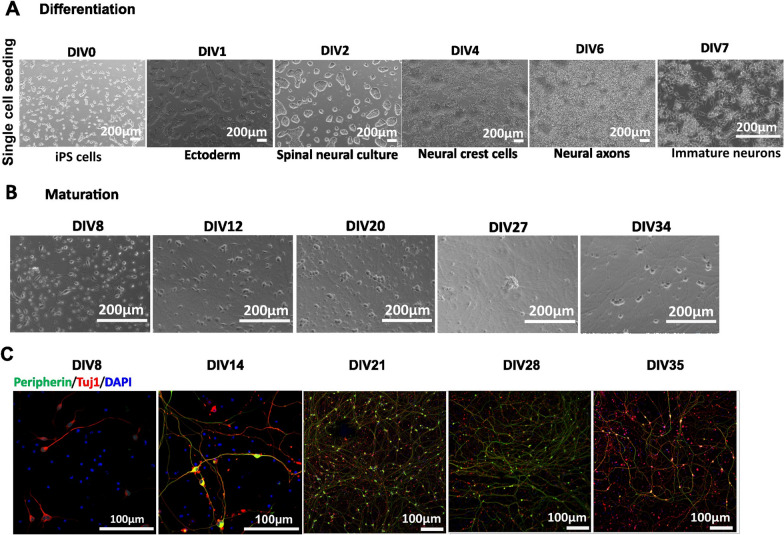
The Anatomic protocol rendered a purer culture without the use of mitomycin C to suppress non-neuronal outgrowth, while Chambers differentiations yielded a mix of cell types. Chambers protocol results in predominantly tonic firing when compared to Anatomic protocol. Patient-derived nociceptors displayed higher frequency firing compared to control subject with both, Chambers and Anatomic differentiation approaches, underlining their potential use for clinical phenotyping as a disease-in-a-dish model. RealDRG™ sensory neurons show heterogeneity of nociceptive markers indicating that the cells may be useful as a humanized model system for translational studies.
We validated the efficiency of two differentiation protocols and their potential application for functional assessment and thus understanding the disease mechanisms from patients suffering from pain disorders. We propose that both differentiation methods can be further exploited for understanding mechanisms and development of novel treatments in pain disorders.
人类诱导多能干细胞(iPSC)衍生的周围感觉神经元是一种有价值的工具,可以模拟人类疾病,并且是药物发现和再生医学应用的来源。临床上,周围感觉神经病变可导致从完全丧失疼痛到严重疼痛性神经病变等各种疾病。感觉神经元位于背根神经节,由功能多样的神经元类型组成。从 iPSC 生成功能成熟的神经元群体的效率低、可重复性问题、由于遗传因素引起的变化以及所需的时间仍然是体外研究人类伤害感受的关键挑战。在这里,我们报告了使用加速分化方案(“解剖”方案)与最常用的小分子方法(“腔室”方案)相比,iPSC 衍生的感觉神经元的详细功能特征。进一步对解剖学的市售 RealDRG™ 进行了功能和表达表型分析,以鉴定关键伤害感受器标志物。
使用来自不同重编程方法、遗传学、年龄和体细胞来源的多个 iPSC 克隆来生成感觉神经元。手动膜片钳用于对对照和患者来源的神经元进行功能特征分析。进一步使用高通量技术证明,源自解剖方案的 RealDRGs™ 适用于高通量技术进行疾病建模。
与 Chambers 分化相比,Anatomic 方案在不使用丝裂霉素 C 抑制非神经元生长的情况下产生更纯的培养物。Chambers 方案分化的结果主要是紧张性放电,而 Anatomic 方案则相反。与对照相比,使用两种分化方法(Chambers 和 Anatomic),患者来源的伤害感受器显示出更高的频率放电,这突出了它们作为疾病模型在临床表型中的潜在用途。RealDRG™感觉神经元显示出伤害感受器标志物的异质性,表明这些细胞可能是用于转化研究的人类模型系统的有用工具。
我们验证了两种分化方案的效率及其在功能评估中的潜在应用,从而理解了疼痛障碍患者的疾病机制。我们提出,这两种分化方法都可以进一步用于理解疼痛障碍的机制和开发新的治疗方法。