Research Group Molecular Nutritional Medicine and Department of Human Nutrition, German Institute of Human Nutrition Potsdam-Rehbruecke, Nuthetal, Germany.
German Center for Diabetes Research (DZD), München, Germany.
Front Endocrinol (Lausanne). 2024 Mar 22;15:1359772. doi: 10.3389/fendo.2024.1359772. eCollection 2024.
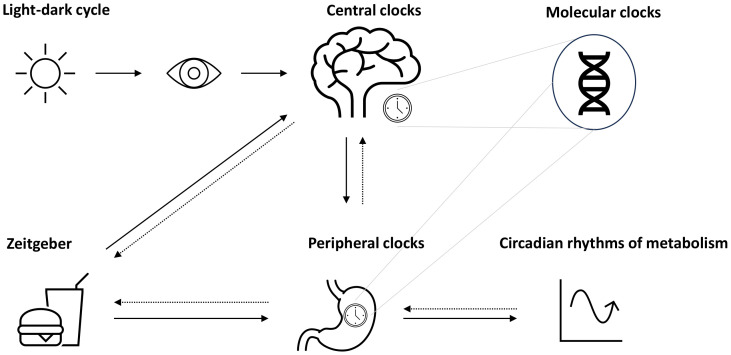
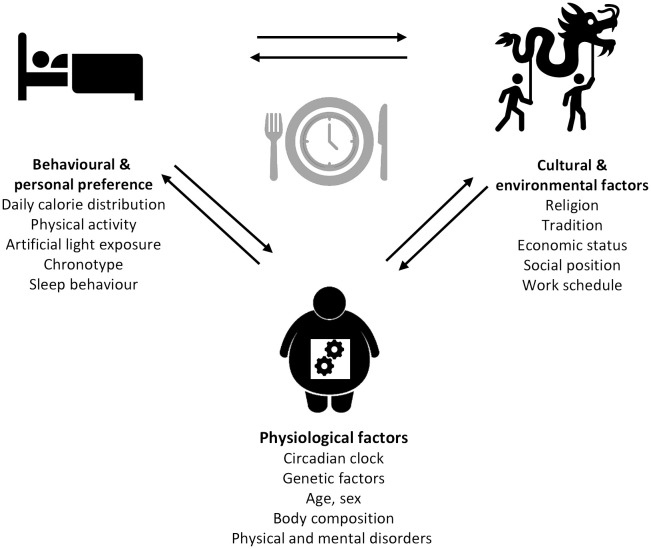
Meal timing emerges as a crucial factor influencing metabolic health that can be explained by the tight interaction between the endogenous circadian clock and metabolic homeostasis. Mistimed food intake, such as delayed or nighttime consumption, leads to desynchronization of the internal circadian clock and is associated with an increased risk for obesity and associated metabolic disturbances such as type 2 diabetes and cardiovascular diseases. Conversely, meal timing aligned with cellular rhythms can optimize the performance of tissues and organs. In this review, we provide an overview of the metabolic effects of meal timing and discuss the underlying mechanisms. Additionally, we explore factors influencing meal timing, including internal determinants such as chronotype and genetics, as well as external influences like social factors, cultural aspects, and work schedules. This review could contribute to defining meal-timing-based recommendations for public health initiatives and developing guidelines for effective lifestyle modifications targeting the prevention and treatment of obesity and associated metabolic diseases. Furthermore, it sheds light on crucial factors that must be considered in the design of future food timing intervention trials.
用餐时间是影响代谢健康的关键因素,这可以用内源性生物钟和代谢稳态之间的紧密相互作用来解释。不规律的进食时间,如延迟或夜间进食,会导致内部生物钟的失同步,并增加肥胖和相关代谢紊乱的风险,如 2 型糖尿病和心血管疾病。相反,与细胞节律相吻合的用餐时间可以优化组织和器官的性能。在这篇综述中,我们概述了用餐时间对代谢的影响,并讨论了潜在的机制。此外,我们还探讨了影响用餐时间的因素,包括内部决定因素,如昼夜节律和遗传,以及外部影响,如社会因素、文化方面和工作时间表。这篇综述有助于为公共卫生计划制定基于用餐时间的建议,并为预防和治疗肥胖和相关代谢疾病的有效生活方式改变制定指南。此外,它还揭示了在设计未来的食物时间干预试验时必须考虑的关键因素。