Lawrence Amelia S, Fei-Zhang David J, Hassett Leslie C, Carlson Matthew L, Wiedermann Joshua P
Elson S. Floyd College of Medicine Spokane Washington USA.
Northwestern University Feinberg School of Medicine Chicago Illinois USA.
Laryngoscope Investig Otolaryngol. 2024 Apr 9;9(2):e1246. doi: 10.1002/lio2.1246. eCollection 2024 Apr.
Online educational platforms with open access have seen a growing adoption in the field of medical education. However, the extent of their global usage is still unclear. To fill this knowledge gap, our objective is to examine the usage patterns of two renowned open-access resources in Otolaryngology. This includes identifying the most sought-after topics and understanding the demographics of their users.
Retrospective study of web analytics data between 2016 and 2021 extracted from the Headmirror.com and Mayo Clinic Otolaryngology YouTube channel platforms analyzing demographic and education topic trends via descriptive, geospatial, time-series, -tests, and ANOVA analyses.
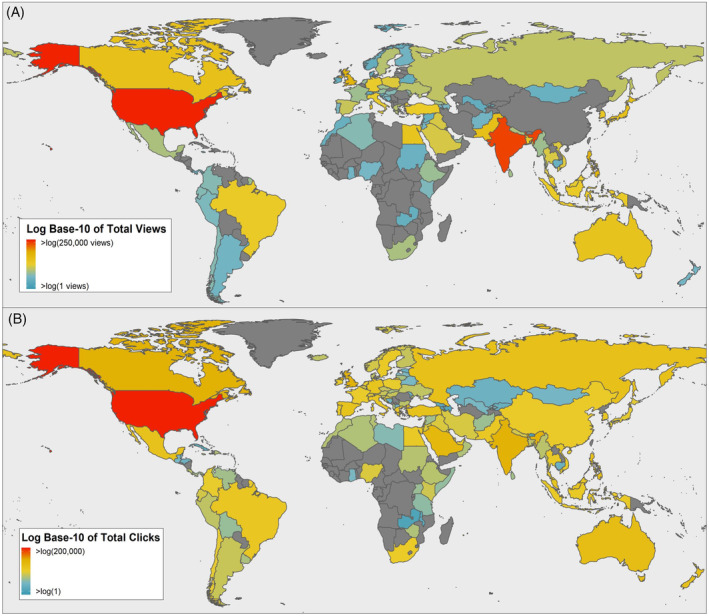
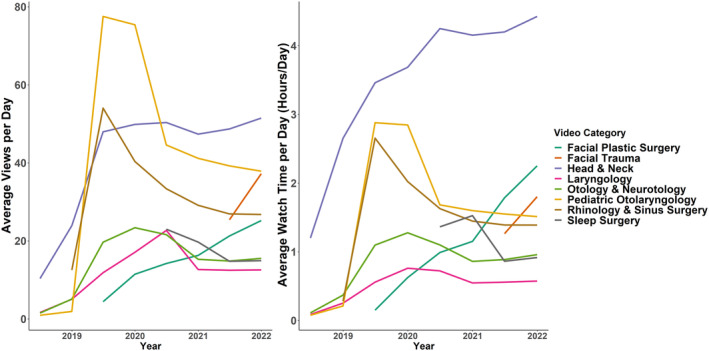
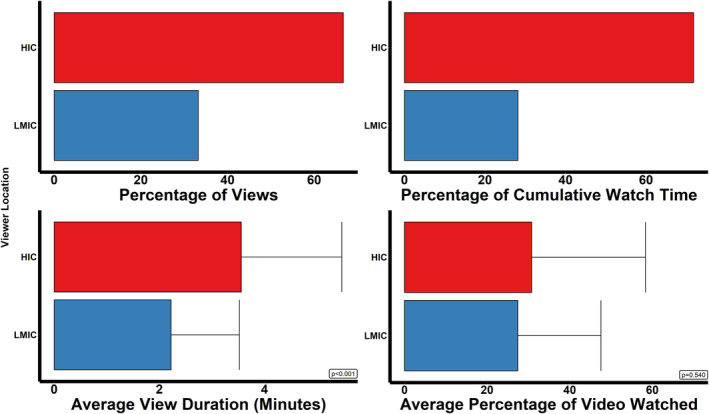
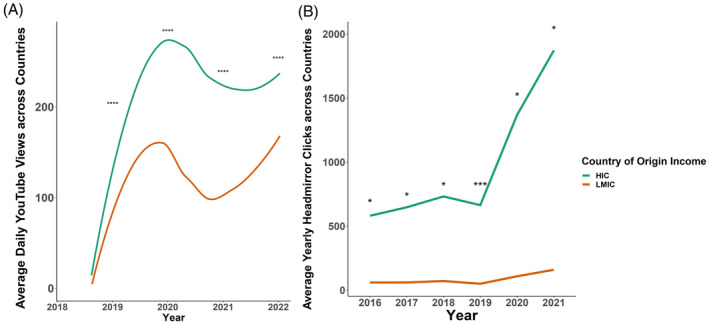
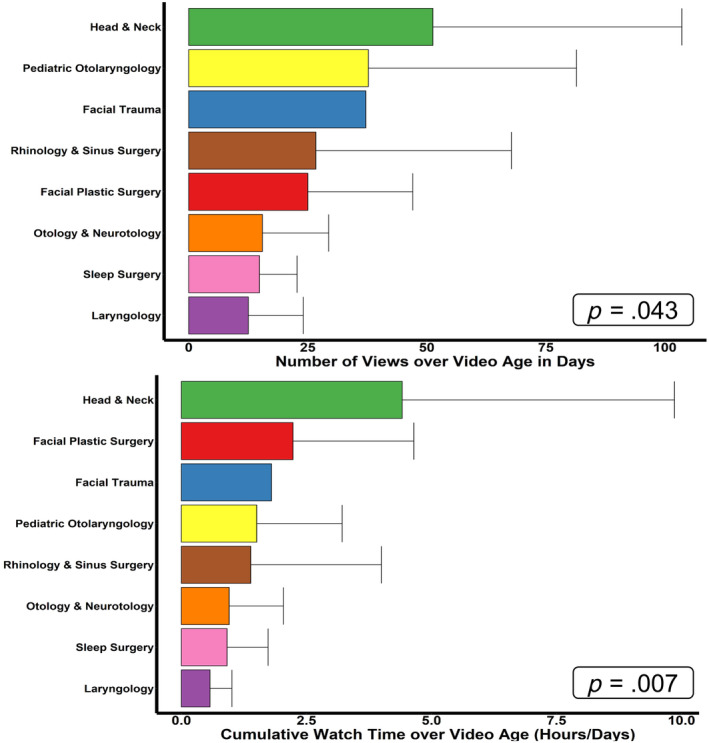
Viewership spanned 124 countries in 7 different geographic regions, with 72 countries comprising low- to middle-income countries, mostly represented ages of 25-34 years old, came from high-income countries rather than low-income ( < .001), and used mobile phones followed by computers for device access. Video-educational material comprised of subspecialty topics on Rhinology and Sinus Surgery (25%) at the highest end and Facial Trauma (1%) at the lowest. Controlling for the age of the video content, the most-accessed videos comprised of subspecialty topics on Head and Neck Surgery at the highest end and Laryngology at the lowest with significant differentiation across topics of interest ( < .044).
This assessment of web-analytics platforms from two widely used otolaryngology free, online-access materials showed increasing global usage trends with significant differentiating factors along viewership demographics, as well as sought-after subspecialty topics of interest. In turn, our results not only lay the groundwork for characterizing the global otolaryngology audience but also for future development of targeted educational materials and accessibility initiatives aimed at ameliorating global educational disparities in the field.
开放获取的在线教育平台在医学教育领域的应用日益广泛。然而,其全球使用范围仍不明确。为填补这一知识空白,我们的目标是研究耳鼻咽喉科两个著名的开放获取资源的使用模式。这包括确定最受关注的主题,并了解其用户的人口统计学特征。
对2016年至2021年期间从Headmirror.com和梅奥诊所耳鼻咽喉科YouTube频道平台提取的网络分析数据进行回顾性研究,通过描述性、地理空间、时间序列、t检验和方差分析来分析人口统计学和教育主题趋势。
观众来自7个不同地理区域的124个国家,其中72个国家为低收入至中等收入国家,大多数观众年龄在25 - 34岁之间,来自高收入国家而非低收入国家(P < 0.001),使用手机访问的人数仅次于使用电脑。视频教育材料中,鼻科学和鼻窦手术等亚专业主题的占比最高(25%),面部创伤主题的占比最低(1%)。在控制视频内容年龄的情况下,访问量最高的视频中,头颈外科亚专业主题的占比最高,喉科学主题的占比最低,不同感兴趣主题之间存在显著差异(P < 0.044)。
对两个广泛使用的耳鼻咽喉科免费在线访问材料的网络分析平台进行的评估显示,全球使用趋势不断增加,在观众人口统计学以及受欢迎的亚专业主题方面存在显著差异因素。反过来,我们的结果不仅为描述全球耳鼻咽喉科受众奠定了基础,也为未来开发有针对性的教育材料和可及性倡议奠定了基础,旨在改善该领域的全球教育差距。