Ye He, Zhao Yu, He Shilong, Wu Zhendan, Yue Mei, Hong Mei
Inner Mongolia Key Laboratory of Soil Quality and Nutrient Resources, College of Grassland, Resources and Environment, Inner Mongolia Agricultural University, Hohhot, China.
Key Laboratory of Agricultural Ecological Security and Green Development at Universities of Inner Mongolia Autonomous Region, Hohhot, China.
Front Microbiol. 2024 Mar 26;15:1369196. doi: 10.3389/fmicb.2024.1369196. eCollection 2024.
Nitrogen (N) deposition seriously affects the function of carbon (C) and N cycling in terrestrial ecosystems by altering soil microbial communities, especially in desert steppe ecosystems. However, there is a need for a comprehensive understanding of how microorganisms involved in each C and N cycle process respond to N deposition.
In this study, shotgun metagenome sequencing was used to investigate variations in soil C and N cycling-related genes in the desert steppe in northern China after 6 years of the following N deposition: N0 (control); N30 (N addition 30 kg ha year): N50 (N addition 50 kg ha year).
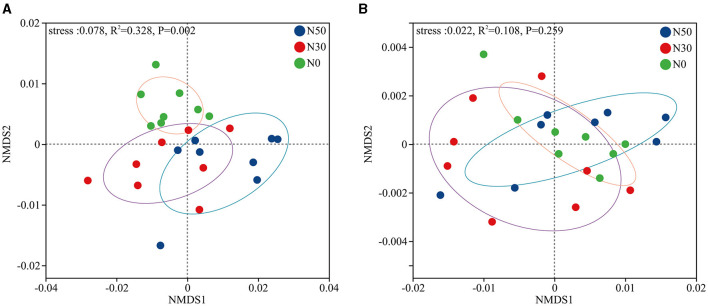
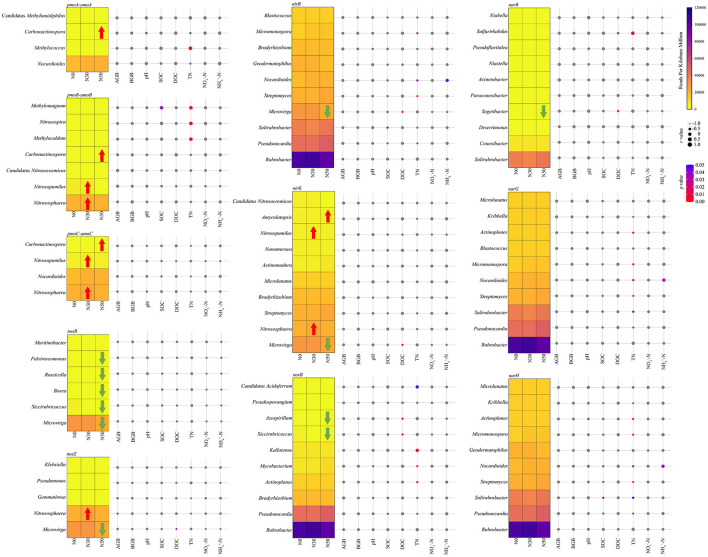
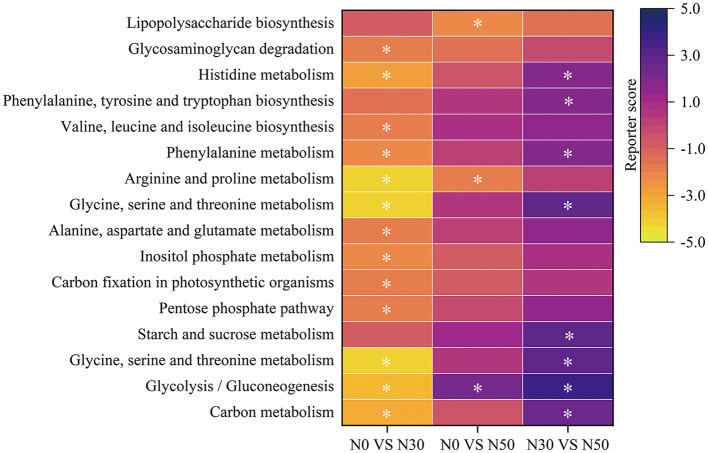
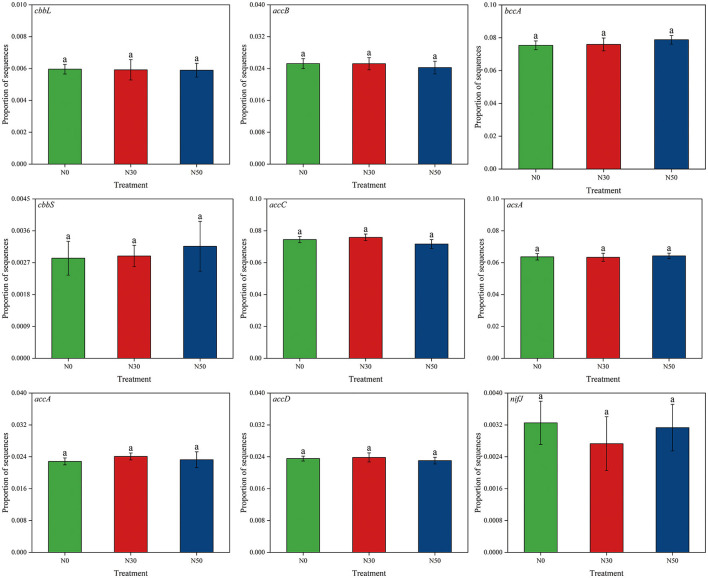
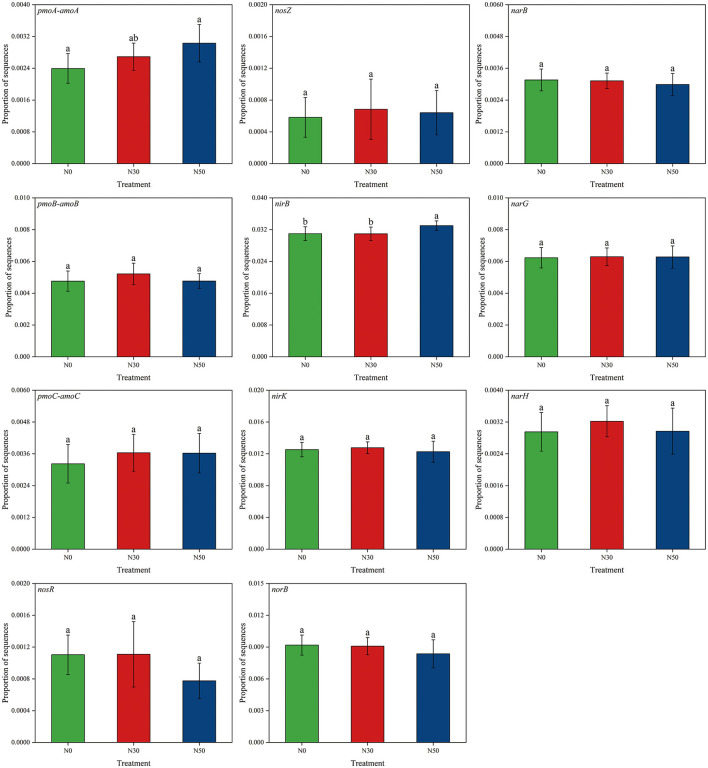
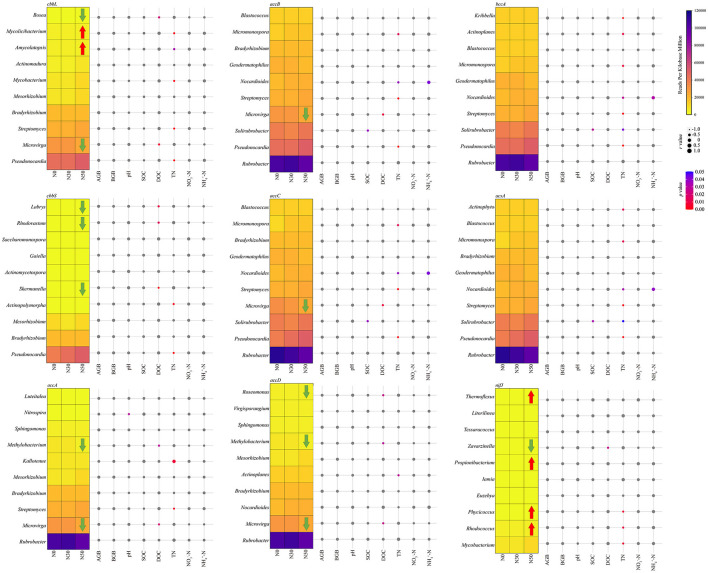
N deposition significantly increased the relative abundance of ( < 0.05) while significantly decreased the relative abundances of and ( < 0.05). This significantly impacted the microbial community composition in desert steppe soils. The annual addition or deposition of 50 kg ha year for up to 6 years did not affect the C cycle gene abundance but changed the C cycle-related microorganism community structure. The process of the N cycle in the desert steppe was affected by N deposition (50 kg ha year), which increased the abundance of the gene related to nitrification and the gene associated with assimilation nitrite reductase. There may be a niche overlap between microorganisms involved in the same C and N cycling processes.
This study provides new insights into the effects of N deposition on soil microbial communities and functions in desert steppe and a better understanding of the ecological consequences of anthropogenic N addition.
氮(N)沉降通过改变土壤微生物群落严重影响陆地生态系统中碳(C)和氮循环的功能,尤其是在荒漠草原生态系统中。然而,需要全面了解参与每个碳和氮循环过程的微生物如何响应氮沉降。
在本研究中,采用鸟枪法宏基因组测序来研究中国北方荒漠草原在经历以下氮沉降6年后土壤中与碳氮循环相关基因的变化:N0(对照);N30(每年添加氮30 kg·ha);N50(每年添加氮50 kg·ha)。
氮沉降显著增加了 的相对丰度( < 0.05),同时显著降低了 和 的相对丰度( < 0.05)。这对荒漠草原土壤中的微生物群落组成产生了显著影响。连续6年每年添加或沉降50 kg·ha的氮不会影响碳循环基因丰度,但改变了与碳循环相关的微生物群落结构。荒漠草原中的氮循环过程受到氮沉降(50 kg·ha·年)的影响,这增加了与硝化作用相关的 基因和与亚硝酸盐还原酶同化相关的 基因的丰度。参与相同碳和氮循环过程的微生物之间可能存在生态位重叠。
本研究为氮沉降对荒漠草原土壤微生物群落和功能的影响提供了新见解,并有助于更好地理解人为添加氮的生态后果。