Department of Laboratory Technology, Faculty of Health Sciences, Kumasi Technical University, Kumasi, Ghana.
Department of Biochemistry and Biotechnology, Faculty of Bioscience, College of Science, Kwame Nkrumah University of Science and Technology, Kumasi, Ghana.
Endocrinol Diabetes Metab. 2024 May;7(3):e00478. doi: 10.1002/edm2.478.
Gestational diabetes mellitus (GDM) remains a global public health problem, which affects the well-being of mothers and their children in sub-Saharan Africa (SSA). Studies conducted in different geographical areas provide varied results on its prevalence and predictors. Understanding the extent and predictors of GDM in SSA is important for developing effective interventions and policies. Thus, this review aimed to investigate the prevalence of GDM and its predictive factors in sub-Saharan Africa.
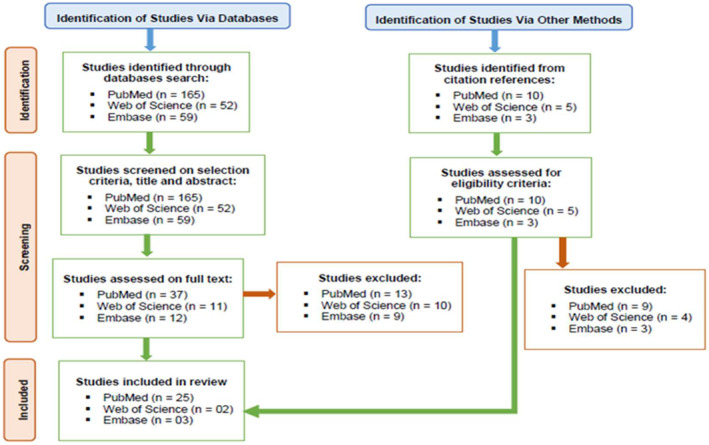
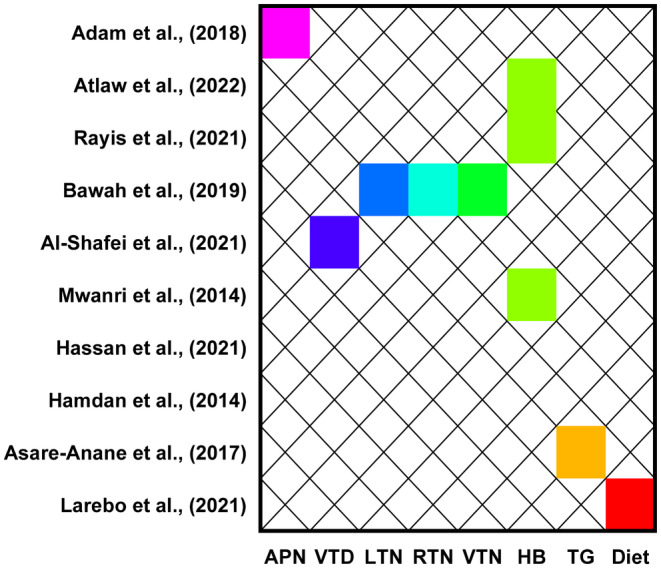
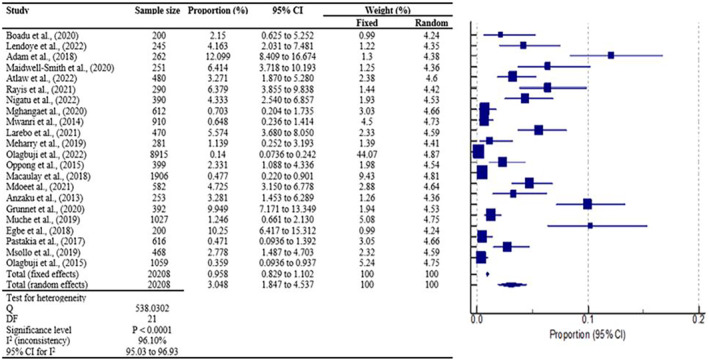
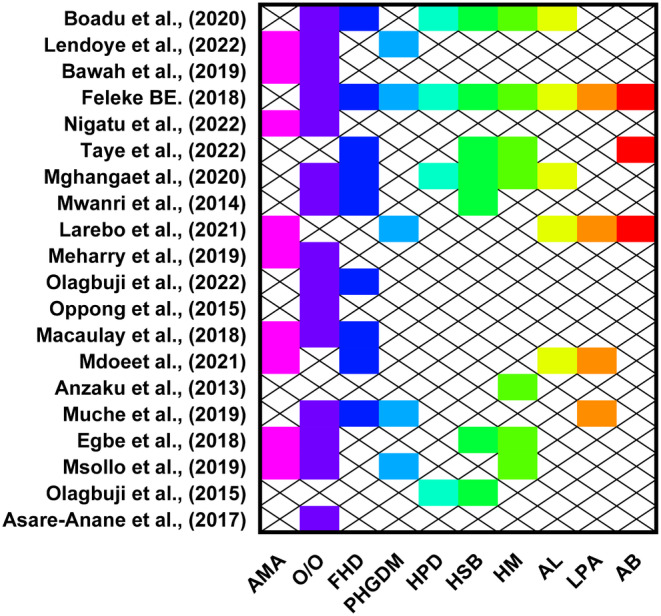
We followed the Preferred Reporting Items for Systematic Reviews and Meta-Analyses (PRISMA) standards in this review. An extensive search of the PubMed, Web of Sciences and EMBASE databases was carried out covering papers from 2012 to 2022 to assess the prevalence and predictors of GDM. Microsoft Excel 2019 was utilised for study management. GraphPad Prism Version 8.0 and the MedCalc statistical software were employed for data analysis. The findings were analysed using textual descriptions, tables, forest plots and heat maps.
Using 30 studies with 23,760 participants that satisfied the inclusion criteria, the review found the overall prevalence of GDM in SSA to be 3.05% (1.85%-4.54%). History of preterm delivery, alcohol consumption, family history of diabetes, history of stillbirths, history of macrosomia, overweight or obesity and advanced mother age were all significant predictors of gestational diabetes. Additionally, various biomarkers such as haemoglobin, adiponectin, leptin, resistin, visfatin, vitamin D, triglycerides and dietary intake type were identified as significant predictors of GDM.
In sub-Saharan Africa, there is a high pooled prevalence of gestational diabetes mellitus. In the light of the predictors of GDM identified in this review, it is strongly recommended to implement early screening for women at risk of developing gestational diabetes during their pregnancy. This proactive approach is essential for enhancing the overall well-being of both mothers and children.
妊娠糖尿病(GDM)仍然是一个全球性的公共卫生问题,它影响撒哈拉以南非洲(SSA)地区母亲及其子女的健康。在不同地理区域进行的研究对其流行率和预测因素得出了不同的结果。了解 SSA 地区 GDM 的程度和预测因素对于制定有效的干预措施和政策非常重要。因此,本综述旨在调查撒哈拉以南非洲地区 GDM 的流行率及其预测因素。
本综述遵循系统评价和荟萃分析(PRISMA)的首选报告项目标准。对 PubMed、Web of Sciences 和 EMBASE 数据库进行了广泛搜索,涵盖了 2012 年至 2022 年的论文,以评估 GDM 的流行率和预测因素。使用 Microsoft Excel 2019 进行研究管理。GraphPad Prism Version 8.0 和 MedCalc 统计软件用于数据分析。使用文字描述、表格、森林图和热图对结果进行分析。
使用符合纳入标准的 30 项研究(23760 名参与者),本综述发现 SSA 地区 GDM 的总体流行率为 3.05%(1.85%-4.54%)。早产史、饮酒史、糖尿病家族史、死产史、巨大儿史、超重或肥胖以及母亲年龄较大均是妊娠糖尿病的显著预测因素。此外,血红蛋白、脂联素、瘦素、抵抗素、内脂素、维生素 D、甘油三酯和饮食摄入类型等各种生物标志物被确定为 GDM 的显著预测因素。
在撒哈拉以南非洲地区,妊娠糖尿病的总体患病率较高。鉴于本综述中确定的 GDM 预测因素,强烈建议在孕妇怀孕期间对有发生妊娠糖尿病风险的妇女进行早期筛查。这种积极主动的方法对于提高母婴的整体健康水平至关重要。