School of Pharmacy, Monash University Malaysia, 47500, Bandar Sunway, Selangor, Malaysia.
Sci Rep. 2024 Apr 10;14(1):8421. doi: 10.1038/s41598-024-59195-0.
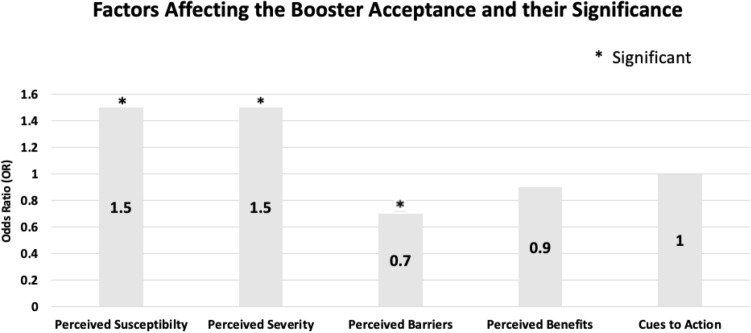
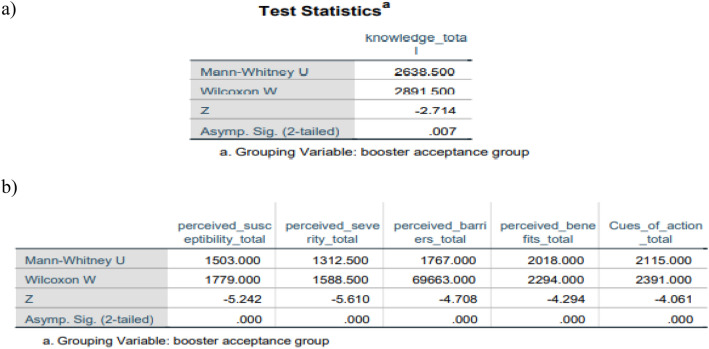
Despite the high efficacy and safety demonstrated in clinical trials, COVID-19 booster vaccination rates in Malaysia remain below 50% among the general public. This study explores the factors influencing public acceptance of the COVID-19 booster vaccine among the Malaysian population. The questionnaire included variables on sociodemographics, knowledge, and the Health Belief Model (HBM) constructs. Based on the Chi-squared test of contingencies, a t-test and multivariate logistic regression analysis on 411 collected responses, the findings revealed that older participants, individuals of Chinese ethnicity, and those with higher education levels and incomes were more willing to accept booster vaccinations. The analysis further identified perceived susceptibility, perceived severity and perceived barriers as significant predictors influencing booster vaccination acceptance rates. Healthcare policymakers may consider targeting interventions to diminish the obstacles associated with booster vaccinations. These intervention strategies include implementing health intervention programmes, such as public health awareness initiatives, to raise awareness of the risks and severity of COVID-19, ultimately encouraging higher uptake of booster vaccines.
尽管临床试验证明 COVID-19 加强疫苗接种具有高效性和安全性,但马来西亚普通公众的加强疫苗接种率仍低于 50%。本研究旨在探讨影响马来西亚公众对 COVID-19 加强疫苗接种接受度的因素。问卷包括社会人口统计学、知识和健康信念模型(HBM)结构的变量。基于 411 份收集到的回复的卡方检验、t 检验和多变量逻辑回归分析,结果表明,年龄较大的参与者、华族、受教育程度和收入较高的人更愿意接受加强疫苗接种。分析还确定了感知易感性、感知严重性和感知障碍是影响加强疫苗接种接受率的重要预测因素。医疗保健政策制定者可以考虑针对干预措施,以减少与加强疫苗接种相关的障碍。这些干预策略包括实施健康干预计划,如公共卫生宣传活动,以提高对 COVID-19 的风险和严重性的认识,最终鼓励更多人接种加强疫苗。