Ndung'u Anthony Irungu, Keriko Joseph Mungai, Kareru Patrick Gachoki, Wanakai Sammy Indire, Kisoi George Kiprono, Keddy Grace Gakii
Chemistry Department, Jomo Kenyatta University of Agriculture and Technology, P. O BOX 62,000-00200, Nairobi, Kenya.
Department of Biochemistry, Jomo Kenyatta University of Agriculture and Technology, P. O BOX 62,000-00200, Nairobi, Kenya.
Heliyon. 2024 Apr 2;10(7):e29012. doi: 10.1016/j.heliyon.2024.e29012. eCollection 2024 Apr 15.
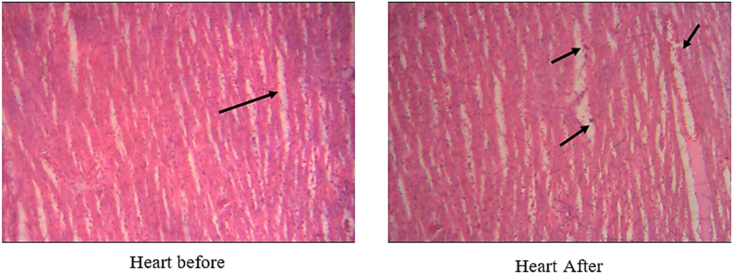
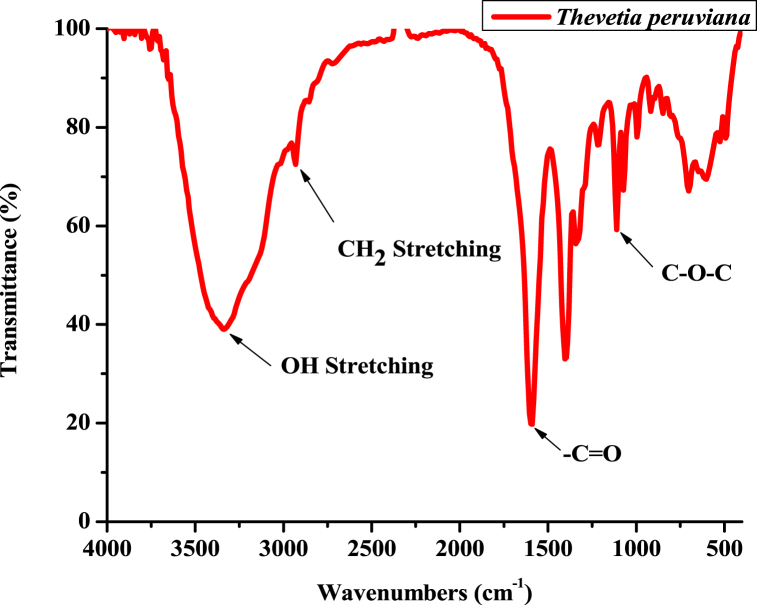
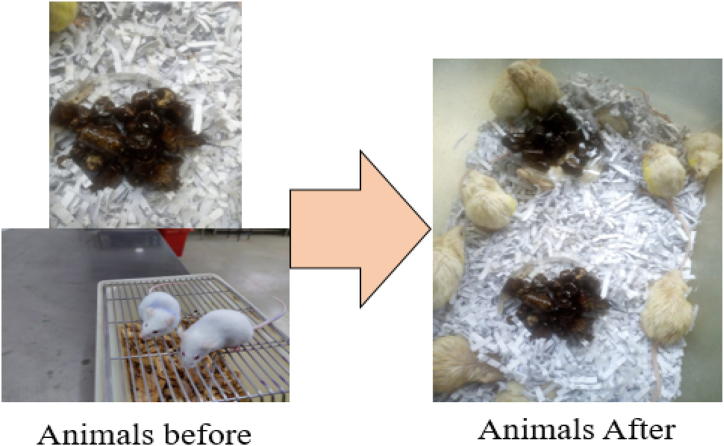
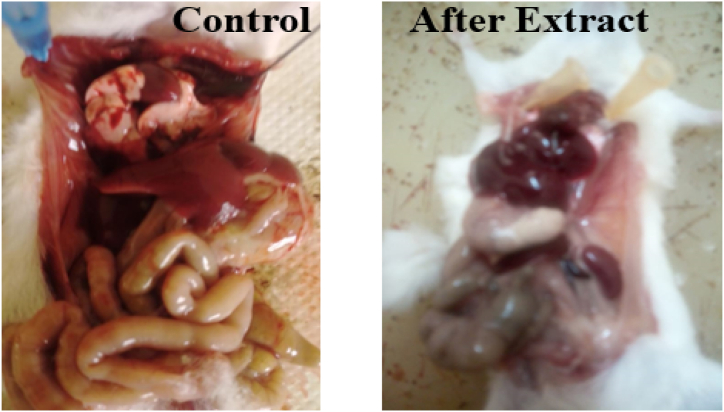
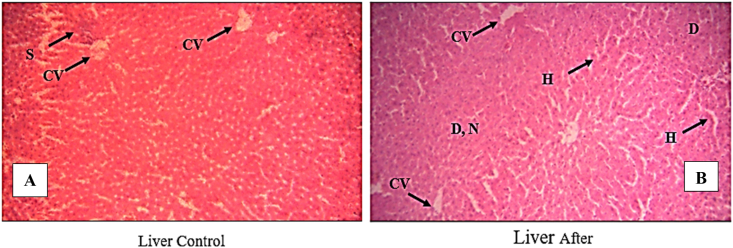
Rodents have remained a menace to humans, hence there is need to evaluate for anti-rodent activity of cheap and environment friendly control methods. This study aimed at evaluating the anti-rodenticidal activity of fruit methanol extract. fruit was sampled, dried and extracted using methanol/water in the ratio of 3:1 by volume. Phytochemicals; alkaloids, phenols, flavonoids, glycosides, saponins, and tannins were determined qualitatively and quantitatively in the fruit extract. The extract was then characterized using Fourier Transform Infrared (FTIR) and Gas Chromatography Mass Spectrophotometer (GC-MS). Anti-rodent activity of the extracts was determined on a total of 25 mice with body weights of 20-25 g. The animals 8-12 weeks' old were grouped into 5 cages (5 animals per cage), marked and allowed to acclimatize with laboratory conditions of 25 °C, warm or less humid for 5 days with enough water and food. Extract dose (between 0.3 and 0.5 g of extract/kg body weight) was then administered in a single dose by gavage using intubation canula for 7 days and the animals observed for any toxicity and mortality. The data was subjected to probit analysis and ANOVA. Phytochemical screening showed that the extracts contained glycosides, phenols, saponins, alkaloids, triterpenoids, and flavonoids in different abundance. fruit contained 125.13 1.04 mg/g in GAE phenolic content, 85.70 mg/g in RE of dry weight of flavonoids, 10.50 0.01 mg/g in TAE of Tannins, 16.50 0.21 mg/g alkaloid content, and 8.28 0.11 mg/g saponin content. The FTIR spectrophotometer depicted O - H, CH, C[bond, double bond]O, C-O-C functional groups in wave numbers of 3335, 2932, 1599, and 1001 cm respectively. The fruit methanol extracts depicted high acute toxicity with an average of 300 mg/kg upon oral administration in Balb C mice species. The fruit extract from revealed presence of alkaloids, phenols, glycosides, saponins, tannins. These participated synergistically in killing the rats and the postmortem examination report indicated that the tested extract induced a number of physical changes in the mice and therefore the 's fruit extract can be utilized as a natural alternative anti-rodent in agriculture production before and after harvesting.
啮齿动物一直是人类的一大威胁,因此有必要评估廉价且环保的控制方法的灭鼠活性。本研究旨在评估水果甲醇提取物的灭鼠活性。采集水果样本,干燥后用体积比为3:1的甲醇/水进行提取。对水果提取物中的植物化学物质(生物碱、酚类、黄酮类、糖苷、皂苷和单宁)进行了定性和定量测定。然后使用傅里叶变换红外光谱仪(FTIR)和气相色谱-质谱联用仪(GC-MS)对提取物进行表征。在总共25只体重为20 - 25克的小鼠身上测定提取物的灭鼠活性。将8 - 12周龄的动物分成5个笼子(每个笼子5只动物),做好标记,并使其在25°C、温暖或湿度较小的实验室条件下适应5天,提供足够的水和食物。然后通过插管灌胃以单剂量给予提取物(剂量为0.3至0.5克提取物/千克体重),持续7天,并观察动物是否有任何毒性和死亡情况。对数据进行概率分析和方差分析。植物化学筛选表明,提取物中含有不同含量的糖苷、酚类、皂苷、生物碱、三萜类和黄酮类。水果中总酚含量以没食子酸当量计为125.13±1.04毫克/克,黄酮类干重以芦丁当量计为85.70毫克/克,单宁以单宁酸当量计为10.50±0.01毫克/克,生物碱含量为16.50±0.21毫克/克,皂苷含量为8.28±0.11毫克/克。FTIR光谱仪在波数分别为3335、2932、1599和1001厘米处显示出O - H、CH、C = O、C - O - C官能团。在Balb C小鼠品种中,该水果甲醇提取物经口服给药后显示出高急性毒性,平均半数致死量为300毫克/千克。来自[水果名称未明确]的水果提取物显示含有生物碱、酚类、糖苷、皂苷、单宁。这些物质协同作用杀死了大鼠,尸检报告表明,受试提取物在小鼠身上引起了一些生理变化,因此[水果名称未明确]的水果提取物可在农业生产收获前后用作天然的替代灭鼠剂。