Department of Environmental Health Sciences, Robert Stempel College of Public Health & Social Work, Florida International University, Miami, FL, USA.
First Ascent Biomedical, Inc, Miami, FL, USA.
Nat Med. 2024 Apr;30(4):990-1000. doi: 10.1038/s41591-024-02848-4. Epub 2024 Apr 11.
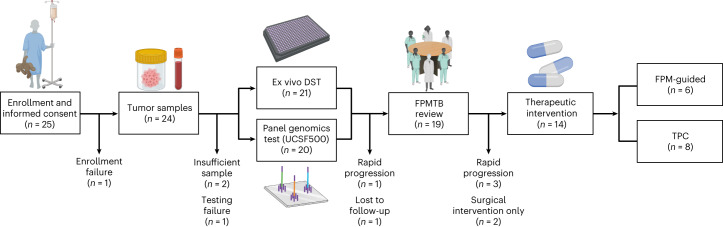
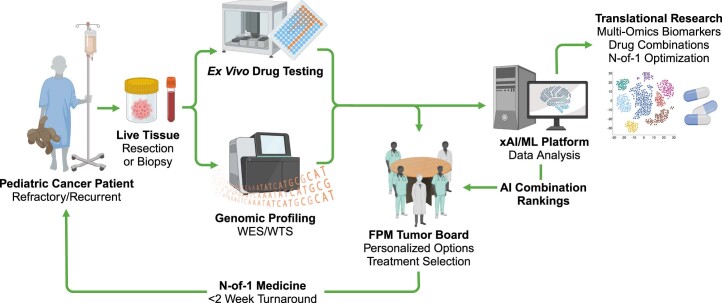
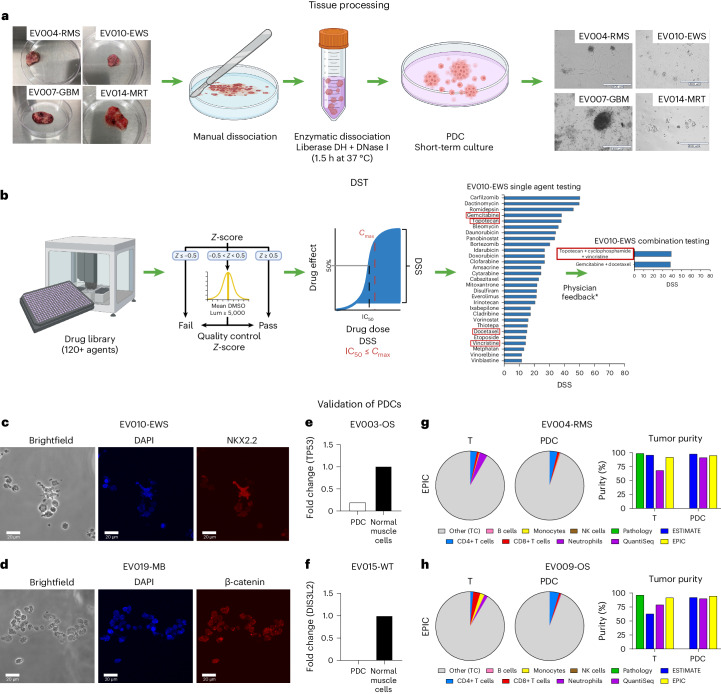
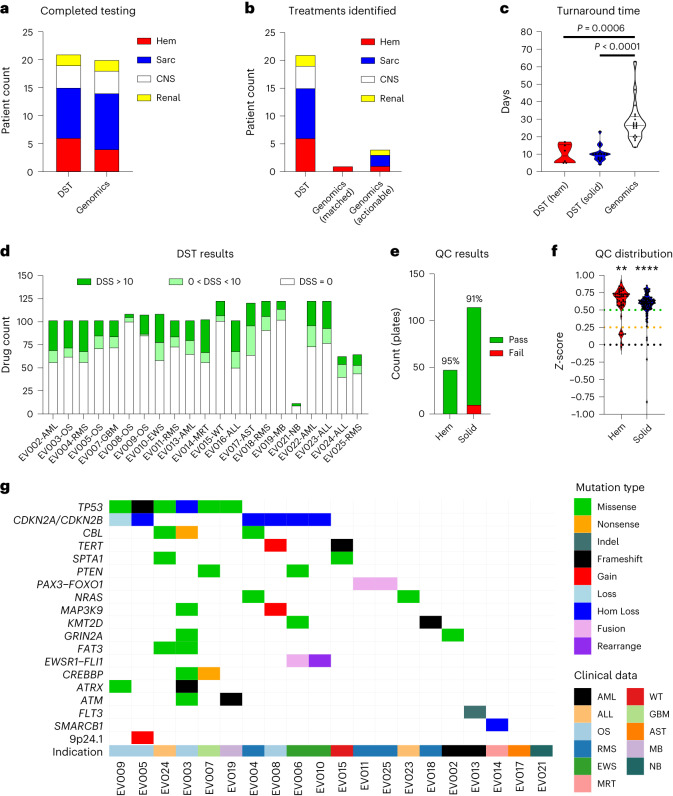
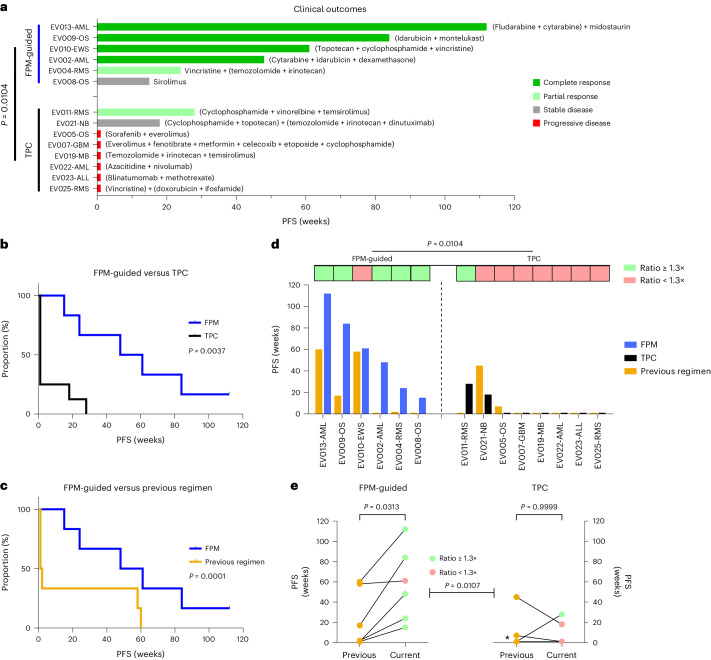
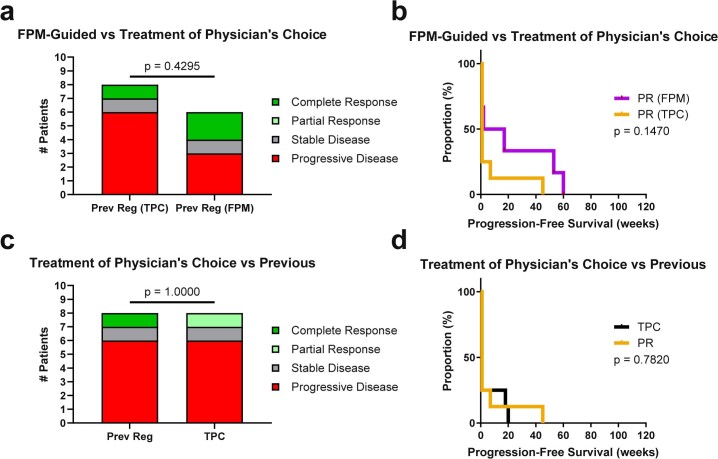
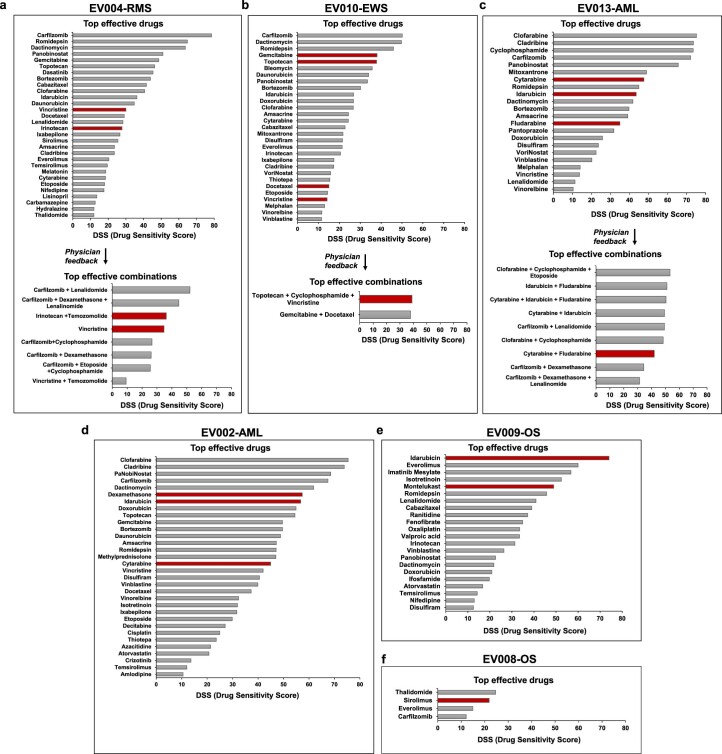
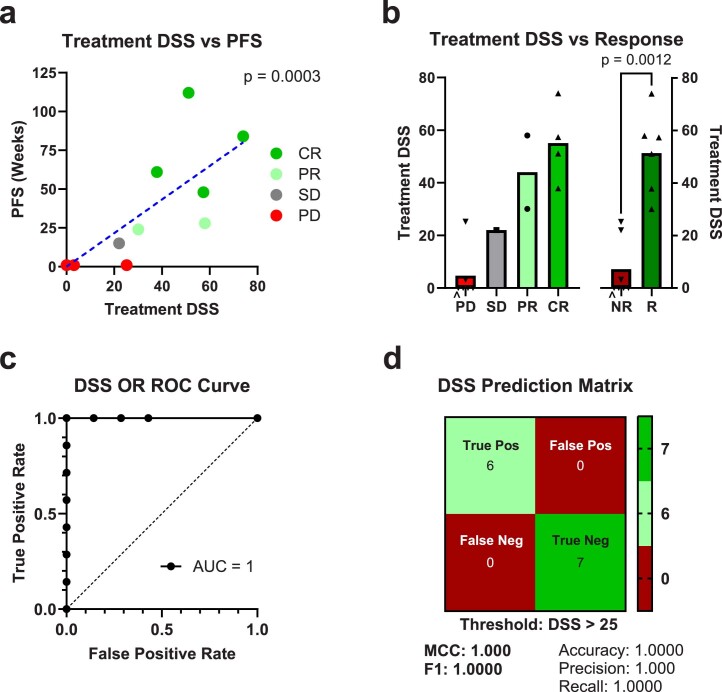
Children with rare, relapsed or refractory cancers often face limited treatment options, and few predictive biomarkers are available that can enable personalized treatment recommendations. The implementation of functional precision medicine (FPM), which combines genomic profiling with drug sensitivity testing (DST) of patient-derived tumor cells, has potential to identify treatment options when standard-of-care is exhausted. The goal of this prospective observational study was to generate FPM data for pediatric patients with relapsed or refractory cancer. The primary objective was to determine the feasibility of returning FPM-based treatment recommendations in real time to the FPM tumor board (FPMTB) within a clinically actionable timeframe (<4 weeks). The secondary objective was to assess clinical outcomes from patients enrolled in the study. Twenty-five patients with relapsed or refractory solid and hematological cancers were enrolled; 21 patients underwent DST and 20 also completed genomic profiling. Median turnaround times for DST and genomics were within 10 days and 27 days, respectively. Treatment recommendations were made for 19 patients (76%), of whom 14 received therapeutic interventions. Six patients received subsequent FPM-guided treatments. Among these patients, five (83%) experienced a greater than 1.3-fold improvement in progression-free survival associated with their FPM-guided therapy relative to their previous therapy, and demonstrated a significant increase in progression-free survival and objective response rate compared to those of eight non-guided patients. The findings from our proof-of-principle study illustrate the potential for FPM to positively impact clinical care for pediatric and adolescent patients with relapsed or refractory cancers and warrant further validation in large prospective studies. ClinicalTrials.gov registration: NCT03860376 .
患有罕见、复发或难治性癌症的儿童通常面临有限的治疗选择,并且可用的预测生物标志物很少,无法提供个性化的治疗建议。实施功能精准医学(FPM),将基因组分析与患者来源的肿瘤细胞药物敏感性测试(DST)相结合,有可能在标准治疗方法用尽时确定治疗选择。这项前瞻性观察性研究的目的是为复发或难治性癌症的儿科患者生成 FPM 数据。主要目标是确定在临床可行的时间范围内(<4 周)实时向 FPM 肿瘤委员会(FPMTB)返回基于 FPM 的治疗建议的可行性。次要目标是评估入组研究的患者的临床结果。共招募了 25 名患有复发或难治性实体瘤和血液系统恶性肿瘤的患者;21 名患者接受了 DST,20 名患者还完成了基因组分析。DST 和基因组学的中位周转时间分别为 10 天和 27 天。为 19 名患者(76%)提出了治疗建议,其中 14 名患者接受了治疗干预。6 名患者接受了随后的 FPM 指导治疗。在这些患者中,5 名(83%)患者的无进展生存期相对于之前的治疗方案有超过 1.3 倍的改善,与 8 名未接受指导的患者相比,无进展生存期和客观缓解率均显著提高。这项初步研究的结果表明,FPM 有可能对复发或难治性癌症的儿科和青少年患者的临床护理产生积极影响,值得在大型前瞻性研究中进一步验证。临床试验注册:NCT03860376。