Pediatric Onco-Hematology Department, University Hospitals of Strasbourg, 1 Avenue Molière, Strasbourg, France.
Department of Cancer Molecular Genetics, Laboratory of Biochemistry and Molecular Biology, University Hospitals of Strasbourg, Strasbourg, France.
BMC Cancer. 2024 Oct 21;24(1):1296. doi: 10.1186/s12885-024-13034-7.
Faced to the growing development of collecting systematic molecular analyses in relapsed pediatric cancers to transform their targeted matched therapies, this study aimed to assess the clinical and therapeutic indications of systematic diagnostic genomic explorations performed in pediatric solid cancers to determine which type of screening and if it afford at relapse time an accurate targeted strategy.
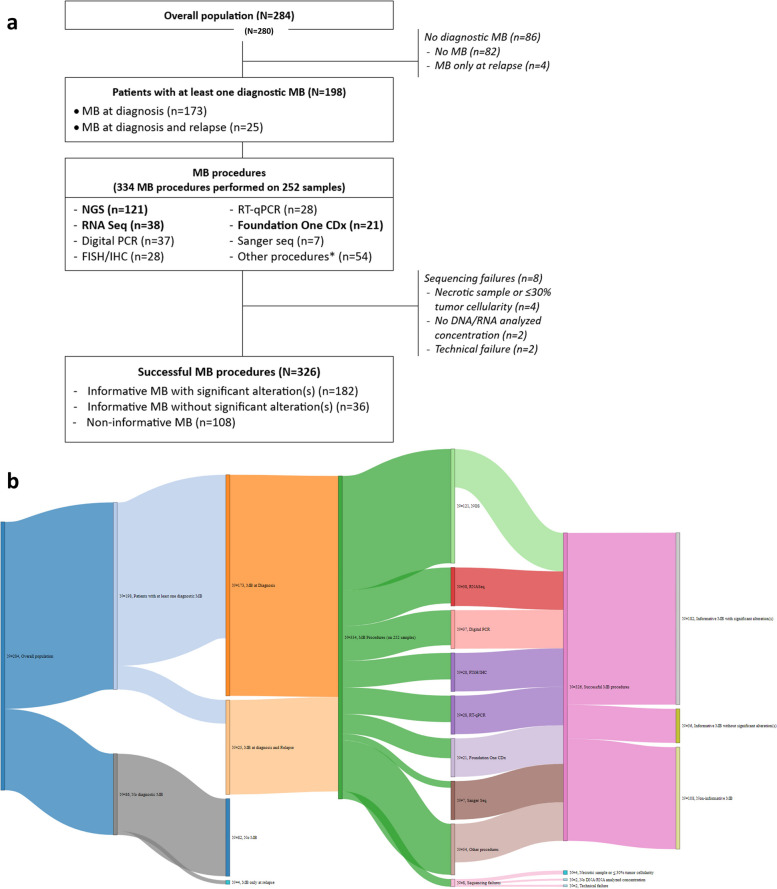
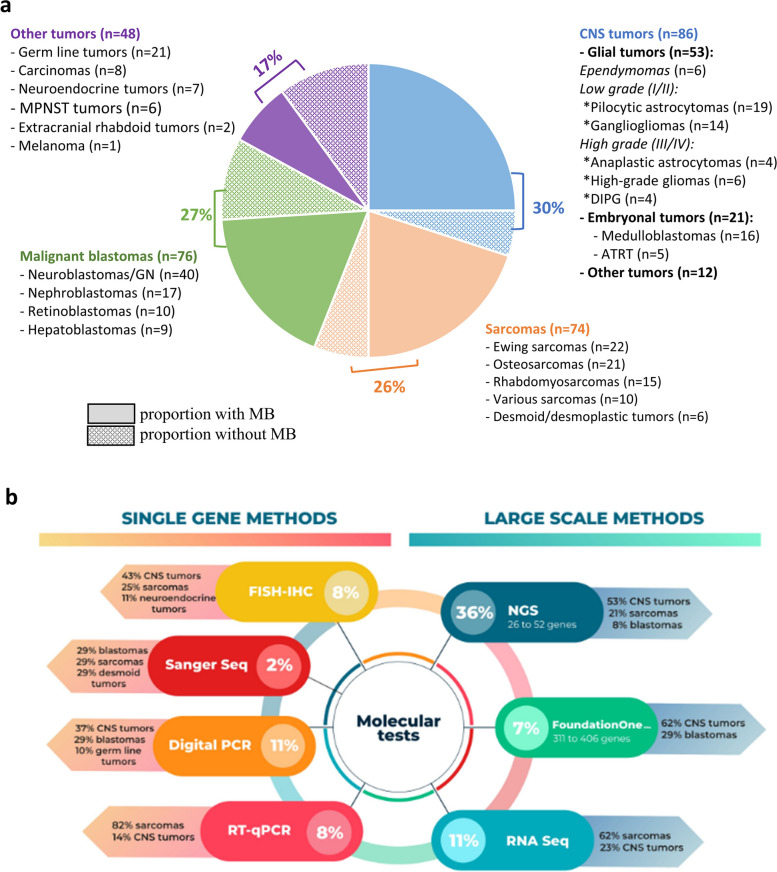
A total of 280 patients less than 22 years, referred at the University Hospitals of Strasbourg for a newly diagnosed solid tumor from January 2015 to December 2021, were prospectively genomically investigated since diagnosis. Using 7 different molecular tests going from single-gene methods (IHC, FISH, RT-PCR, Sanger sequencing, droplet digital PCR) to largescale analyses (Next-Generation sequencing, RNAsequencing and FoundationOne®CDx), we explored retrospectively the molecular findings in those pediatric solid tumors (except hematolymphoid cancers) to improve diagnosis, prognosis assessment and relapse therapeutics.
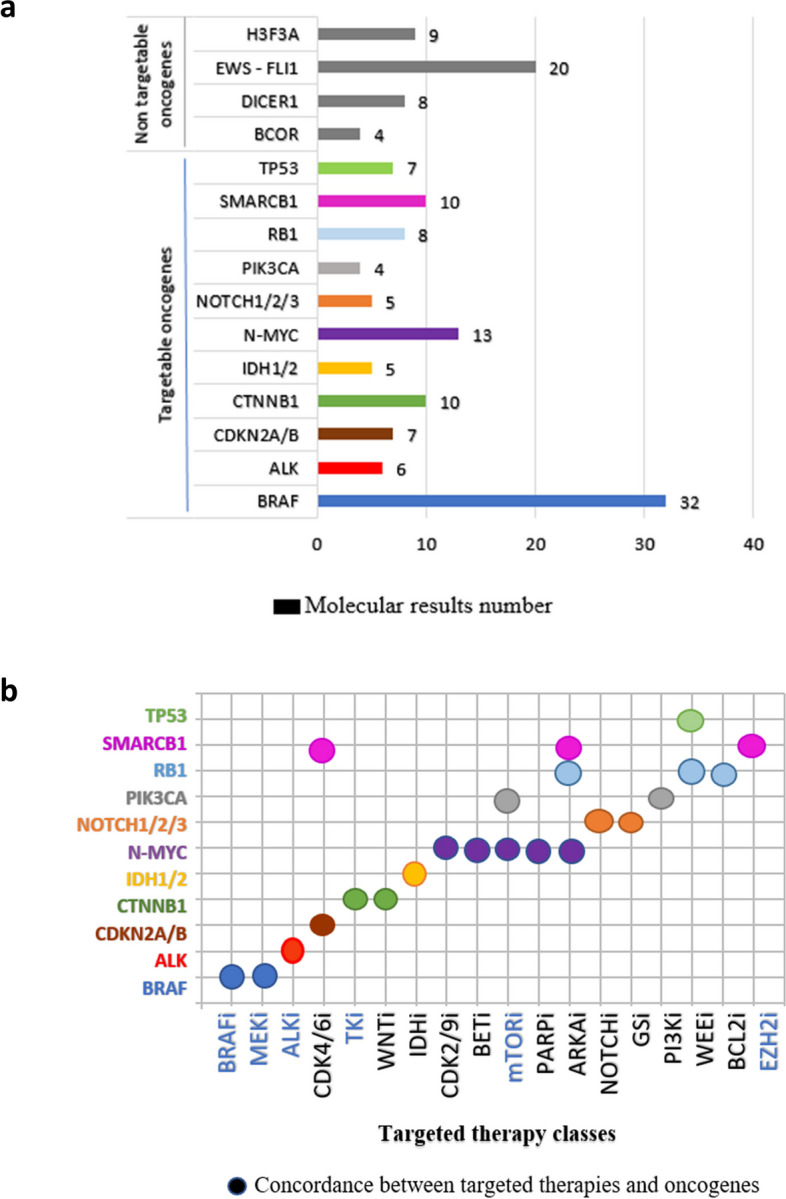
One hundred and ninety-eight patients (71%) underwent molecular biology (MB) at diagnosis. Thirty-eight different histologies were grouped into cerebral tumors (30%), sarcomas (26%, bone and soft tissues), various blastomas (27%), and other entities (17%). Over a median 40-month follow-up, the overall survival rate of patients was 85% and the relapse rate 28%. Of the 326 analyses carried out, 245 abnormalities (single nucleotide variations: 50%, fusions: 25%, copy number alteration: 20%) concerning 70 oncogenes were highlighted. The overall clinical impact rate was 84%. Broad-spectrum analyses had a higher therapeutic impact (57%) than the targeted analyses (28%). 75% of broad-spectrum tests found an actionable variant conducting 23% of patients to receive rapidly a matched targeted therapy since first relapse.
Our experience highlighted the clinical utility of molecular profiling of solid tumors as soon as at diagnosis in children to expect improving access to innovative agents at relapse.
面对复发儿科癌症中不断发展的系统分子分析收集,以改变其靶向匹配治疗,本研究旨在评估在儿科实体瘤中进行系统诊断性基因组探索的临床和治疗适应症,以确定哪种类型的筛查,如果在复发时提供准确的靶向策略。
2015 年 1 月至 2021 年 12 月,共有 280 名年龄小于 22 岁的患者在斯特拉斯堡大学医院新诊断为实体瘤后被前瞻性地进行基因组研究。使用 7 种不同的分子检测方法,从单基因方法(IHC、FISH、RT-PCR、Sanger 测序、液滴数字 PCR)到大规模分析(下一代测序、RNA 测序和 FoundationOne®CDx),我们回顾性地探索了这些儿科实体瘤(血液淋巴癌除外)的分子发现,以提高诊断、预后评估和复发治疗。
198 名患者(71%)在诊断时接受了分子生物学(MB)检查。38 种不同的组织学分为脑肿瘤(30%)、肉瘤(26%,骨骼和软组织)、各种胚细胞瘤(27%)和其他实体瘤(17%)。在中位数为 40 个月的随访中,患者的总生存率为 85%,复发率为 28%。在进行的 326 项分析中,245 项异常(单核苷酸变异:50%,融合:25%,拷贝数改变:20%)涉及 70 个癌基因。总体临床影响率为 84%。广谱分析的治疗影响高于靶向分析(57%对 28%)。75%的广谱检测发现了一种可操作的变异,使 23%的患者在首次复发后立即接受了匹配的靶向治疗。
我们的经验强调了在儿童中尽早进行实体瘤的分子分析在诊断时的临床实用性,以提高在复发时获得创新药物的机会。