Mogavero Maria P, Salemi Michele, Lanza Giuseppe, Rinaldi Antonio, Marchese Giovanna, Ravo Maria, Salluzzo Maria Grazia, Antoci Amedeo, DelRosso Lourdes M, Bruni Oliviero, Ferini-Strambi Luigi, Ferri Raffaele
Vita-Salute San Raffaele University, 20132 Milan, Italy.
San Raffaele Scientific Institute, Division of Neuroscience, Sleep Disorders Center, 20127 Milan, Italy.
iScience. 2024 Mar 26;27(4):109568. doi: 10.1016/j.isci.2024.109568. eCollection 2024 Apr 19.
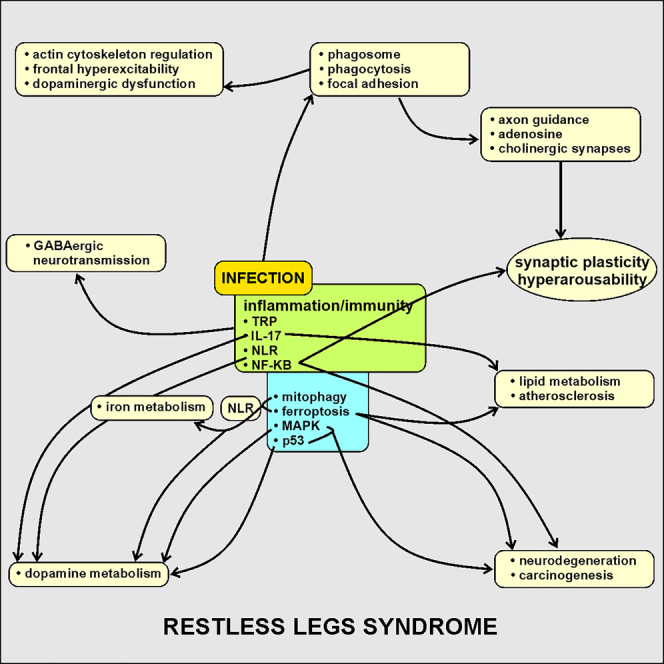
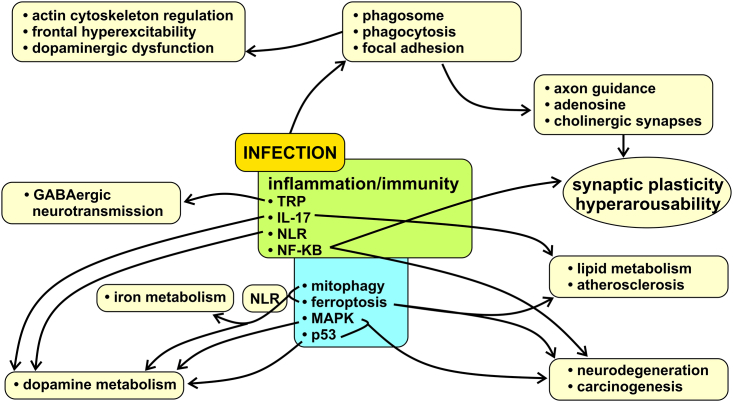
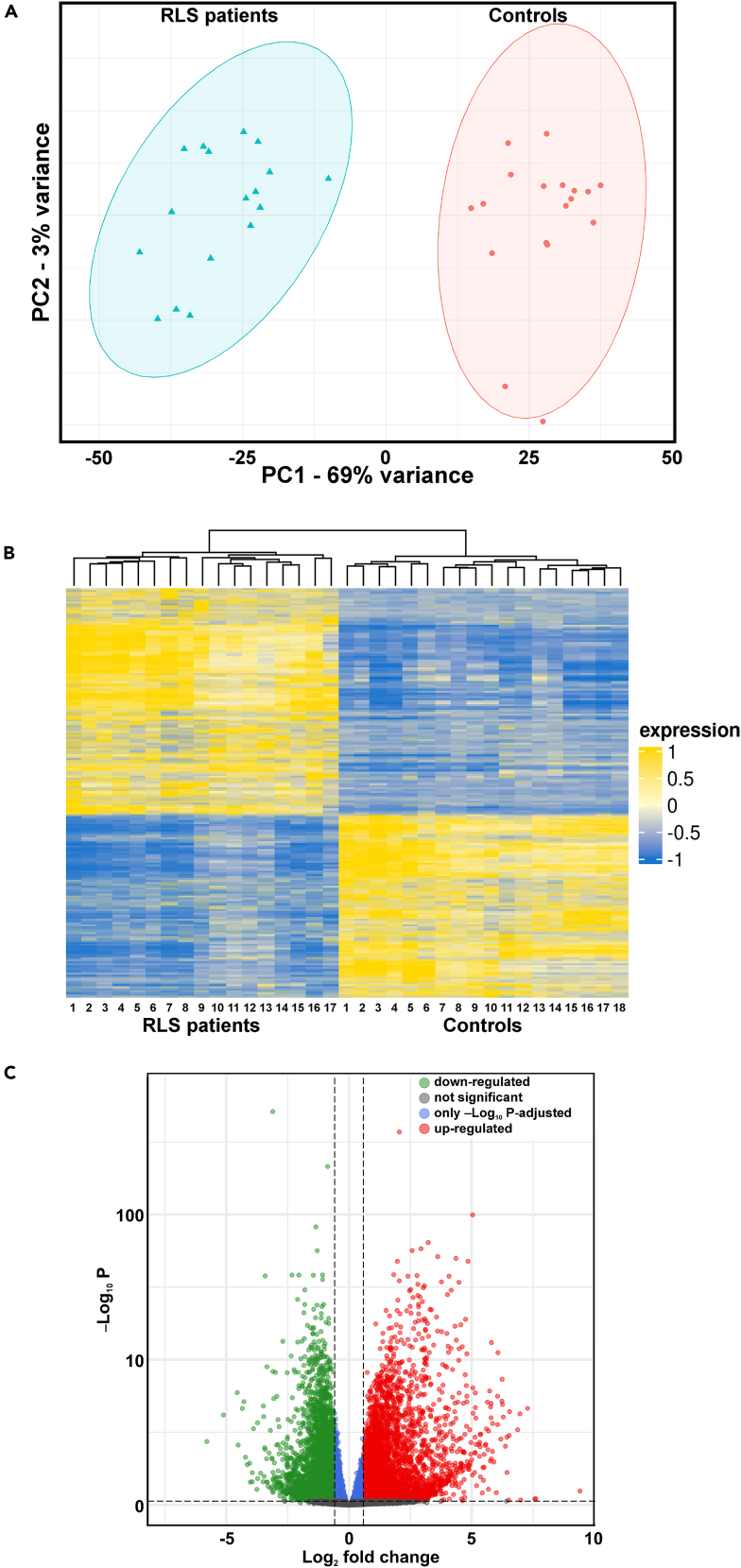
The aim of this study was to analyze signaling pathways associated with differentially expressed messenger RNAs in people with restless legs syndrome (RLS). Seventeen RLS patients and 18 controls were enrolled. Coding RNA expression profiling of 12,857 gene transcripts by next-generation sequencing was performed. Enrichment analysis by pathfindR tool was carried-out, with p-adjusted ≤0.001 and fold-change ≥2.5. Nine main different network groups were significantly dysregulated in RLS: infections, inflammation, immunology, neurodegeneration, cancer, neurotransmission and biological, blood and metabolic mechanisms. Genetic predisposition plays a key role in RLS and evidence indicates its inflammatory nature; the high involvement of mainly neurotropic viruses and the TORCH complex might trigger inflammatory/immune reactions in genetically predisposed subjects and activate a series of biological pathways-especially IL-17, receptor potential channels, nuclear factor kappa-light-chain-enhancer of activated B cells, NOD-like receptor, mitogen-activated protein kinase, p53, mitophagy, and ferroptosis-involved in neurotransmitter mechanisms, synaptic plasticity, axon guidance, neurodegeneration, carcinogenesis, and metabolism.
本研究旨在分析与不宁腿综合征(RLS)患者中差异表达的信使核糖核酸相关的信号通路。纳入了17例RLS患者和18例对照。通过下一代测序对12857个基因转录本进行编码RNA表达谱分析。使用pathfindR工具进行富集分析,调整后p值≤0.001且变化倍数≥2.5。RLS中有9个主要的不同网络组存在显著失调:感染、炎症、免疫学、神经退行性变、癌症、神经传递以及生物学、血液和代谢机制。遗传易感性在RLS中起关键作用,有证据表明其具有炎症性质;主要亲神经病毒和TORCH复合体的高度参与可能在遗传易感性个体中引发炎症/免疫反应,并激活一系列生物学途径,尤其是参与神经递质机制、突触可塑性、轴突导向、神经退行性变、致癌作用和代谢的白细胞介素-17、受体电位通道、活化B细胞核因子κ轻链增强子、NOD样受体、丝裂原活化蛋白激酶、p53、线粒体自噬和铁死亡。