Yao Maosheng
State Key Joint Laboratory of Environmental Simulation and Pollution Control, College of Environmental Sciences and Engineering, Peking University, Beijing 100871, China.
J Aerosol Sci. 2018 May;119:91-96. doi: 10.1016/j.jaerosci.2018.01.009. Epub 2018 Mar 2.
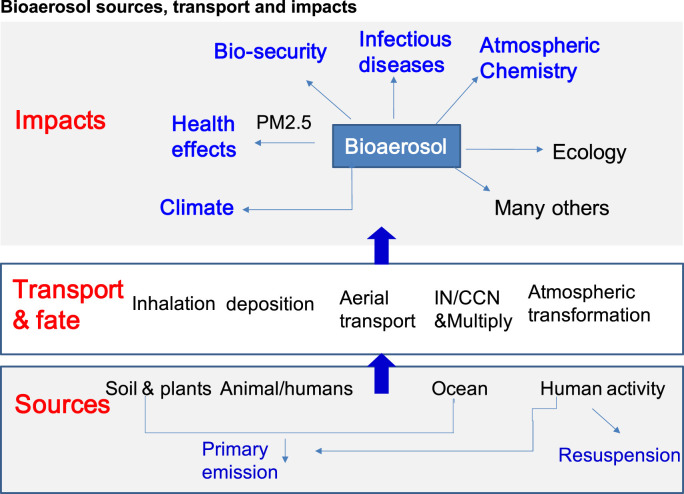
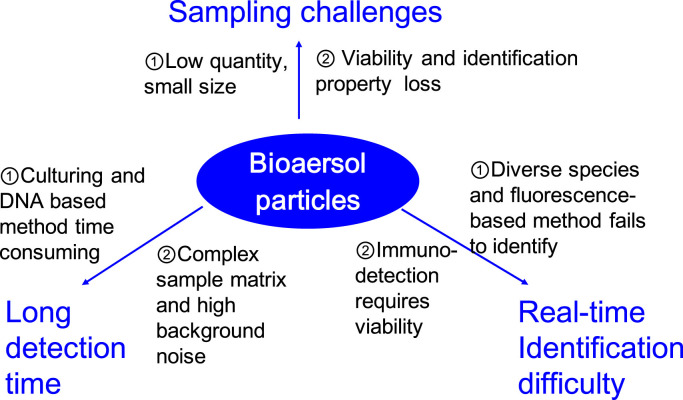
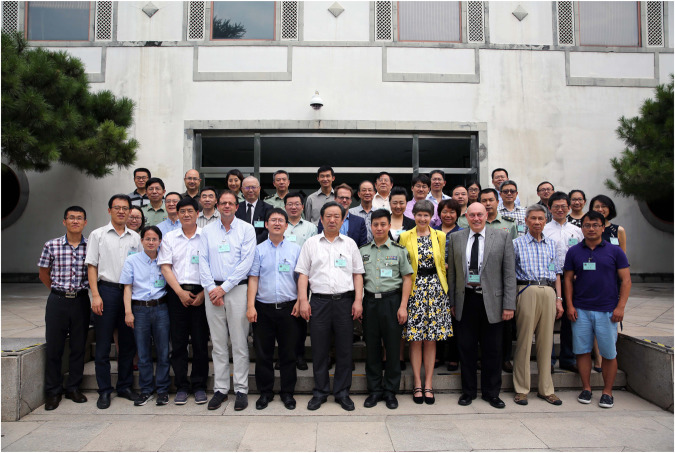
Bioaerosol is a concept that is used to describe all biological materials suspended in the air, including bacteria, fungi, viruses, pollen, and their derivatives such as allergens, endotoxin, mycotoxins and etc. In some studies, primary biological aerosol particle (PBAP) is also coined to refer to intact microbes in the air. Bioaerosol is a multidisciplinary research subject, involving many different fields such as microbiology, mechanical engineering, air pollution, medical science, epidemiology, immunological science, biochemistry, physics, nanotechnologies and etc. The bioaerosol field has undergone about 200 years' research history since 1833 when mold spores were first detected in the air by Charles Darwin on the Cape Verde Islands. In recent decades, there has been a research boom in bioaerosol field, thus triggering many outstanding research opportunities. Visible progress has already been made in understanding bioaerosol roles in human health, atmospheric and ecological impacts as well as their respective technologies: bioaerosol capture, monitoring and also inactivation. Most recently, researchers from different fields start to bridge together for solving bioaerosol challenges and addressing key scientific problems, e.g., bioaerosol spread, real-time detection, indoor microbes, human bioaerosol emissions, and bio-defense. Toward this effort, a "Bioaerosol Xiangshan Science Conference-the 600th" has been successfully held in the summer in Beijing, China. A total of 47 scientists and funding agency officials including leading bioaerosol experts from overseas were invited and two-day long extensive discussions on bioaerosol progress and problems were carried out. Future bioaerosol directions have been outlined by the attendees during the conference. Some of the participants have also contributed to this bioaerosol special issue. This special issue consists of a total of 20 bioaerosol articles from eight countries including one review, and contributes to the advances in bioaerosol emission, transmission, health effects, ambient bioaerosols, method development and instrumentation, and control. Through this special issue, the bioaerosol community has obtained a better understanding of bioaerosol health risks and developed the corresponding strategies to confront the threats. This special issue might serve as a starting point to not only link bioaerosol scientists from different continents, but also bring together people from various fields yet with an interest in bioaerosol to collectively advance the field further.
生物气溶胶是一个用于描述悬浮在空气中的所有生物材料的概念,包括细菌、真菌、病毒、花粉及其衍生物,如过敏原、内毒素、霉菌毒素等。在一些研究中,还创造了“初级生物气溶胶粒子(PBAP)”一词来指代空气中完整的微生物。生物气溶胶是一个多学科的研究课题,涉及微生物学、机械工程、空气污染、医学、流行病学、免疫科学、生物化学、物理学、纳米技术等许多不同领域。自1833年查尔斯·达尔文在佛得角群岛首次在空气中检测到霉菌孢子以来,生物气溶胶领域已经经历了大约200年的研究历史。近几十年来,生物气溶胶领域出现了研究热潮,从而引发了许多突出的研究机会。在理解生物气溶胶在人类健康、大气和生态影响以及它们各自的技术(生物气溶胶捕获、监测和灭活)方面已经取得了明显进展。最近,来自不同领域的研究人员开始携手合作,以解决生物气溶胶挑战并应对关键科学问题,例如生物气溶胶传播、实时检测、室内微生物、人类生物气溶胶排放和生物防御。为此,“第600次生物气溶胶香山科学会议”于夏季在中国北京成功举行。共邀请了47位科学家和资助机构官员,包括来自海外的顶尖生物气溶胶专家,并就生物气溶胶的进展和问题进行了为期两天的广泛讨论。与会者在会议期间勾勒了生物气溶胶的未来发展方向。一些参与者也为本期生物气溶胶特刊做出了贡献。本期特刊共有来自八个国家的20篇生物气溶胶文章,包括一篇综述,有助于生物气溶胶排放、传播、健康影响、环境生物气溶胶、方法开发与仪器以及控制等方面的进展。通过本期特刊,生物气溶胶界对生物气溶胶健康风险有了更好的理解,并制定了应对威胁的相应策略。本期特刊不仅可以作为连接来自不同大陆的生物气溶胶科学家的起点,还可以将对生物气溶胶感兴趣的各个领域的人聚集在一起,共同推动该领域进一步发展。