Li Jiayu, Leavey Anna, Wang Yang, O'Neil Caroline, Wallace Meghan A, Burnham Carey-Ann D, Boon Adrianus Cm, Babcock Hilary, Biswas Pratim
Aerosol and Air Quality Research Laboratory, Department of Energy, Environmental, and Chemical Engineering, Washington University School of Engineering and Applied Science, St. Louis, MO, USA.
Department of Medicine, Division of Infectious Diseases, Washington University School of Medicine, St. Louis, MO, USA.
J Aerosol Sci. 2018 Jan;115:133-145. doi: 10.1016/j.jaerosci.2017.08.007. Epub 2017 Aug 24.
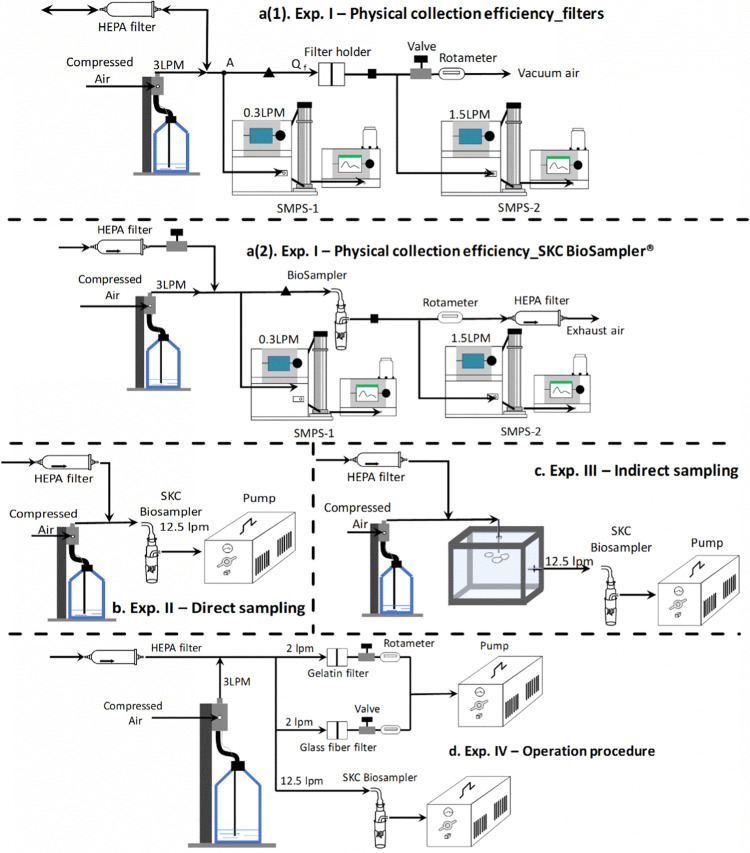
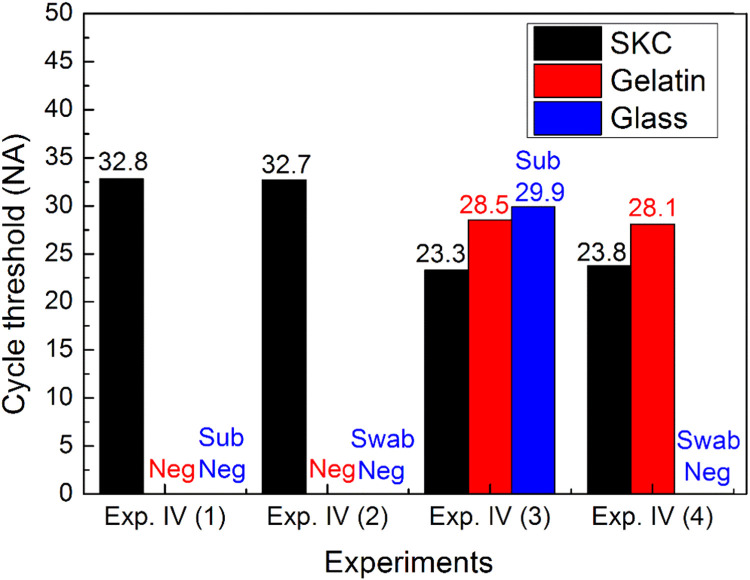
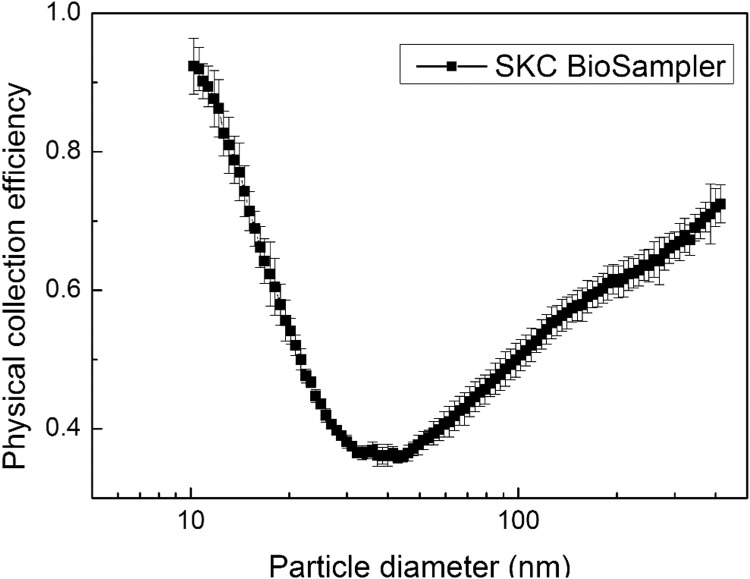
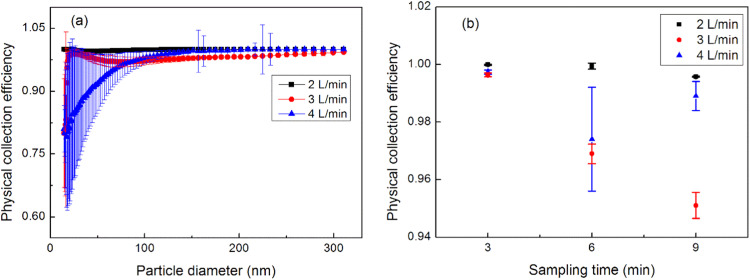
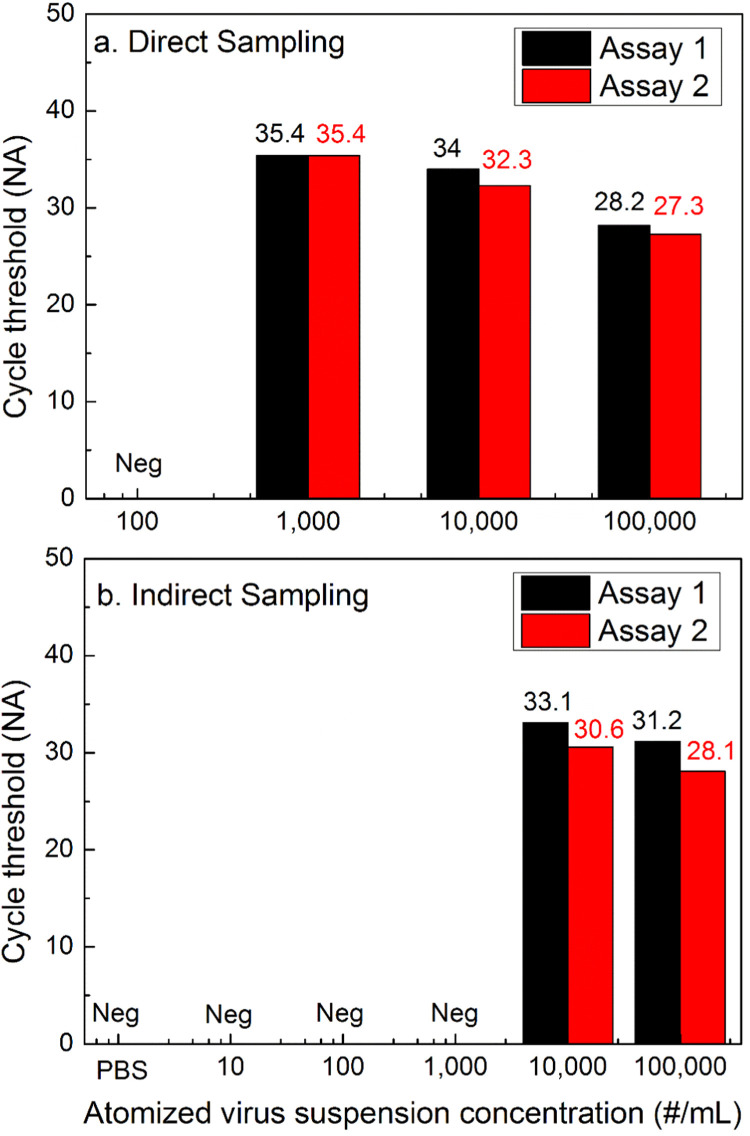
Respiratory viral diseases can be spread when a virus-containing particle (droplet) from one individual is aerosolized and subsequently comes into either direct or indirect contact with another individual. Increasing numbers of studies are examining the occupational risk to healthcare workers due to proximity to patients. Selecting the appropriate air sampling method is a critical factor in assuring the analytical performance characteristics of a clinical study. The objective of this study was to compare the physical collection efficiency and virus collection efficiency of a 5 mL compact SKC BioSampler, a gelatin filter, and a glass fiber filter, in a laboratory setting. The gelatin filter and the glass fiber filter were housed in a home-made filter holder. Submersion (with vortexing and subsequent centrifugation) was used for the gelatin and glass fiber filters. Swabbing method was also tested to retrieve the viruses from the glass fiber filter. Experiments were conducted using the H1N1 influenza A virus A/Puerto Rico/8/1934 (IAV-PR8), and viral recovery was determined using culture and commercial real-time-PCR (BioFire and Xpert). An atomizer was used to aerosolize a solution of influenza virus in PBS for measurement, and two Scanning Mobility Particle Sizers were used to determine particle size distributions. The SKC BioSampler demonstrated a U-shaped physical collection efficiency, lowest for particles around 30-50 nm, and highest at 10 nm and 300-350 nm within the size range examined. The physical collection efficiency of the gelatin filter was strongly influenced by air flow and time: a stable collection across all particle sizes was only observed at 2 L/min for the 9 min sampling time, otherwise, degradation of the filter was observed. The glass fiber filter demonstrated the highest physical collection efficiency (100% for all sizes) of all tested samplers, however, its overall virus recovery efficiency fared the worst (too low to quantify). The highest viral collection efficiencies for the SKC BioSampler and gelatin filter were 5% and 1.5%, respectively. Overall, the SKC BioSampler outperformed the filters. It is important to consider the total concentration of viruses entering the sampler when interpreting the results.
当来自一个人的含病毒颗粒(飞沫)被雾化并随后直接或间接接触到另一个人时,呼吸道病毒性疾病就会传播。越来越多的研究正在考察医护人员因与患者近距离接触而面临的职业风险。选择合适的空气采样方法是确保临床研究分析性能特征的关键因素。本研究的目的是在实验室环境中比较5毫升紧凑型SKC生物采样器、明胶滤器和玻璃纤维滤器的物理采集效率和病毒采集效率。明胶滤器和玻璃纤维滤器安装在自制的滤器支架中。明胶滤器和玻璃纤维滤器采用浸没(涡旋并随后离心)的方法。还测试了擦拭法从玻璃纤维滤器中提取病毒。使用甲型H1N1流感病毒A/波多黎各/8/1934(IAV-PR8)进行实验,并使用培养法和商业实时聚合酶链反应(BioFire和Xpert)测定病毒回收率。使用雾化器将流感病毒在磷酸盐缓冲盐水中的溶液雾化以进行测量,并使用两台扫描迁移率粒径分析仪测定粒径分布。SKC生物采样器的物理采集效率呈U形,在所检测的粒径范围内,对于30-50纳米左右的颗粒最低,在10纳米和300-350纳米时最高。明胶滤器的物理采集效率受气流和时间的强烈影响:仅在9分钟采样时间内以2升/分钟的流速观察到所有粒径的稳定采集,否则,观察到滤器降解。玻璃纤维滤器在所有测试采样器中显示出最高的物理采集效率(所有粒径均为100%),然而,其总体病毒回收效率最差(太低以至于无法量化)。SKC生物采样器和明胶滤器的最高病毒采集效率分别为5%和1.5%。总体而言,SKC生物采样器的性能优于滤器。在解释结果时,考虑进入采样器的病毒总浓度很重要。