Alrahbeni Tahani, Mahal Ahmed, Alkhouri Anas, Alotaibi Hadil F, Rajagopal Vineet, Behera Ashish, Al-Mugheed Khalid, Khatib Mahalaqua N, Gaidhane Shilpa, Zahiruddin Quazi S, Shabil Muhammed, Bushi Ganesh, Rustagi Sarvesh, Kukreti Neelima, Satapathy Prakasini, Mohapatra Ranjan K, Dziedzic Arkadiusz, Padhi Bijaya K
Molecular Toxicology and Genetics, Riyadh Elm University.
Department of Medical Biochemical Analysis, College of Health Technology, Cihan University-Erbil, Erbil, Kurdistan Region, Iraq.
Int J Surg. 2024 Oct 1;110(10):6306-6313. doi: 10.1097/JS9.0000000000001480.
Migraine affects ~14-15% of the global population, contributing to nearly 5% of the world's health burden. When drug treatments prove ineffective for intractable migraines, highly specific surgical interventions emerge as potential solutions. The authors aimed to analyze surgical approaches for these refractory or intractable migraines through a systematic review and meta-analysis.
The authors conducted a literature search across databases such as PubMed, Scopus, Web of Science, and Embase, focusing on studies related to migraines and surgical outcomes. The authors considered clinical trials or observational studies that included any surgical intervention for refractory or intractable migraines, emphasizing key outcomes such as reductions in migraine intensity, Migraine Disability Assessment scores (MIDAS), and 50% Migraine Headache Index (MHI) reduction rates. Statistical analyses were performed using R version 4.3.
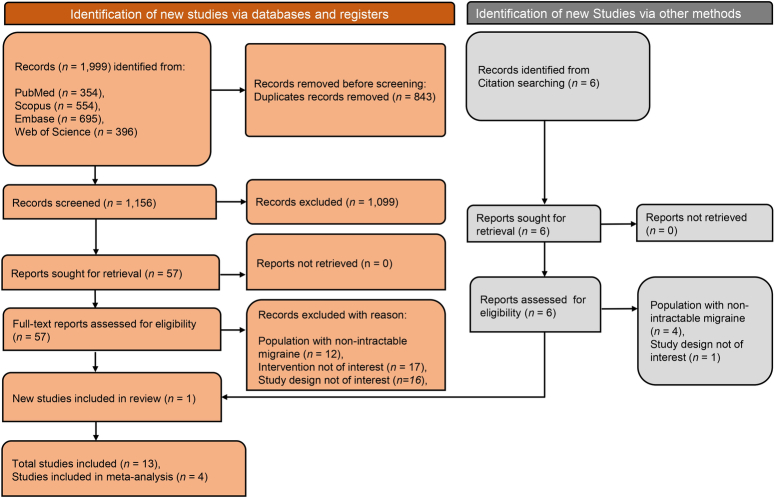
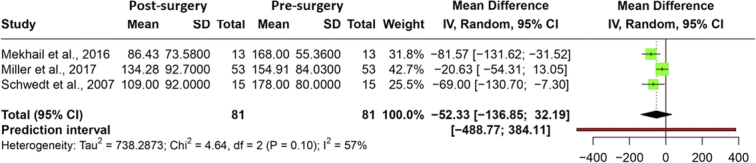
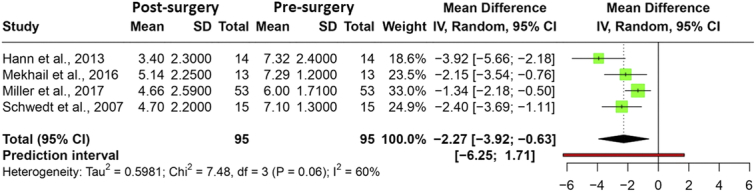
Eleven studies were included in the systematic review. A meta-analysis of four studies involving overall 95 patients showed a significant reduction in mean migraine intensity scores using ONS (-2.27, 95% CI: -3.92 to -0.63, P =0.021). Three studies with 85 patients showed an average MIDAS score reduction of -52.3, though this was not statistically significant (95% CI: -136.85 to 32.19, P =0.116). Two additional studies corroborated these reductions in MIDAS scores. Nerve decompression surgery showed a substantial decrease in the average migraine intensity (from 8.31 down to 4.06). Median MIDAS score dropped from 57 to 20. Two studies indicated a success rate of 40 and 82%, respectively, in achieving a 50% reduction in the migraine MHI through nerve decompression. Findings from two studies suggest that septorhinoplasty and sinus surgery effectively decrease migraine intensity scores.
The existing evidence emphasizes the potential advantages of surgical interventions as a promising approach to managing intractable or refractory migraines. However, robust and comprehensive research is crucial to refine and solidify the efficacy of these surgical methods, aiming for widespread benefits for patients, considering cost-effectiveness factors.
偏头痛影响着全球约14%-15%的人口,造成了近5%的全球健康负担。当药物治疗对顽固性偏头痛无效时,高度特异性的外科手术干预成为潜在的解决方案。作者旨在通过系统评价和荟萃分析来分析这些难治性或顽固性偏头痛的手术方法。
作者在PubMed、Scopus、Web of Science和Embase等数据库中进行文献检索,重点关注与偏头痛和手术结果相关的研究。作者考虑了包括任何针对难治性或顽固性偏头痛的手术干预的临床试验或观察性研究,强调关键结果,如偏头痛强度的降低、偏头痛残疾评估评分(MIDAS)以及50%偏头痛头痛指数(MHI)降低率。使用R 4.3版本进行统计分析。
系统评价纳入了11项研究。对涉及95名患者的4项研究进行的荟萃分析显示,使用枕神经刺激(ONS)后平均偏头痛强度评分显著降低(-2.27,95%置信区间:-3.92至-0.63,P =0.021)。对85名患者的3项研究显示,MIDAS评分平均降低了-52.3,但这在统计学上不显著(95%置信区间:-136.85至32.19,P =0.116)。另外两项研究证实了MIDAS评分的这些降低。神经减压手术显示平均偏头痛强度大幅下降(从8.31降至4.06)。MIDAS评分中位数从57降至20。两项研究分别表明,通过神经减压使偏头痛MHI降低50%的成功率为40%和82%。两项研究的结果表明,鼻中隔成形术和鼻窦手术可有效降低偏头痛强度评分。
现有证据强调了手术干预作为治疗顽固性或难治性偏头痛的一种有前景的方法的潜在优势。然而,进行强有力且全面的研究对于完善和巩固这些手术方法的疗效至关重要,在考虑成本效益因素的同时,为患者谋求广泛的益处。