Department of Ophthalmology, University of Oklahoma Health Sciences Center, Oklahoma City, Oklahoma, United States.
Department of Microbiology and Immunology, University of Oklahoma Health Sciences Center, Oklahoma City, Oklahoma, United States.
Invest Ophthalmol Vis Sci. 2024 Apr 1;65(4):31. doi: 10.1167/iovs.65.4.31.
The poor visual outcomes associated with fungal keratitis (FK) underscore a need to identify fungal pathways that can serve as novel antifungal targets. In this report, we investigated whether hypoxia develops in the FK cornea and, by extension, if fungal hypoxia adaptation is essential for virulence in this setting.
C57BL/6J mice were inoculated with Aspergillus fumigatus and Fusarium solani var. petroliphilum via topical overlay or intrastromal injection. At various time points post-inoculation (p.i.), animals were injected with pimonidazole for the detection of tissue hypoxia through immunofluorescence imaging. The A. fumigatus srbA gene was deleted through Cas9-mediated homologous recombination and its virulence was assessed in the topical infection model using slit-lamp microscopy and optical coherence tomography (OCT).
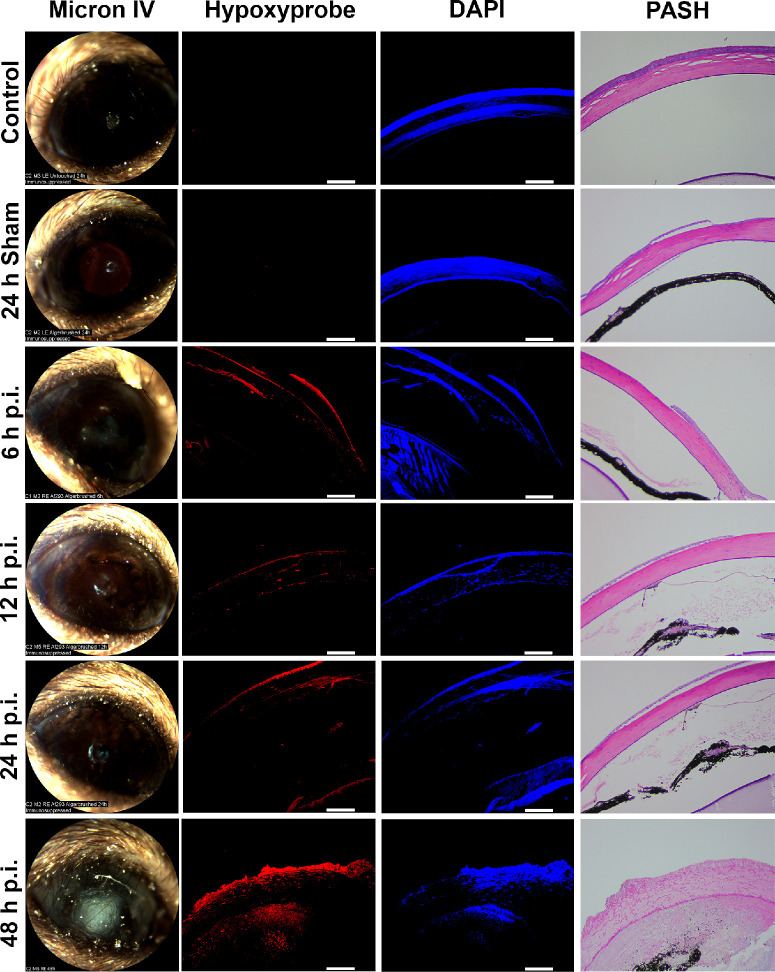
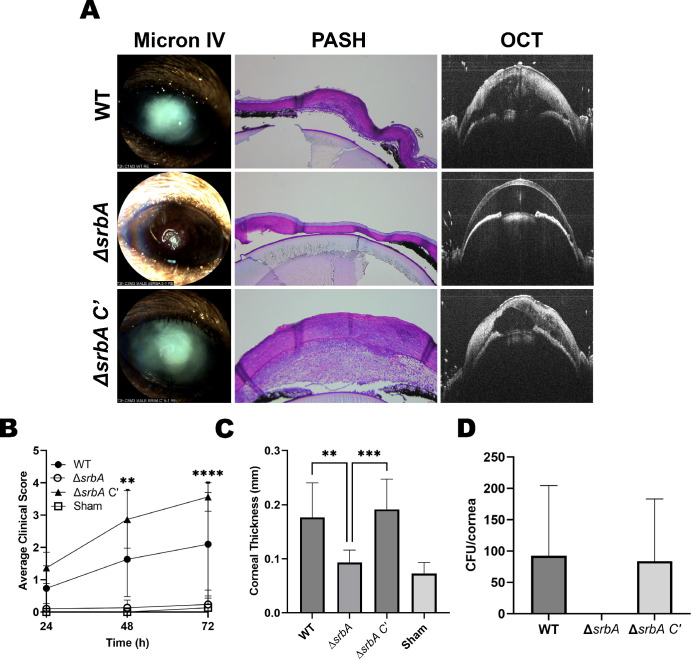
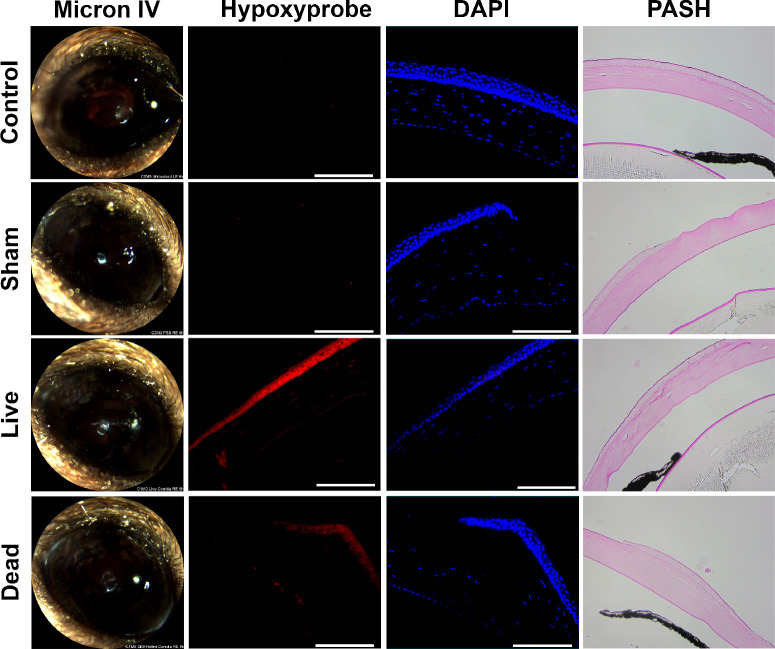
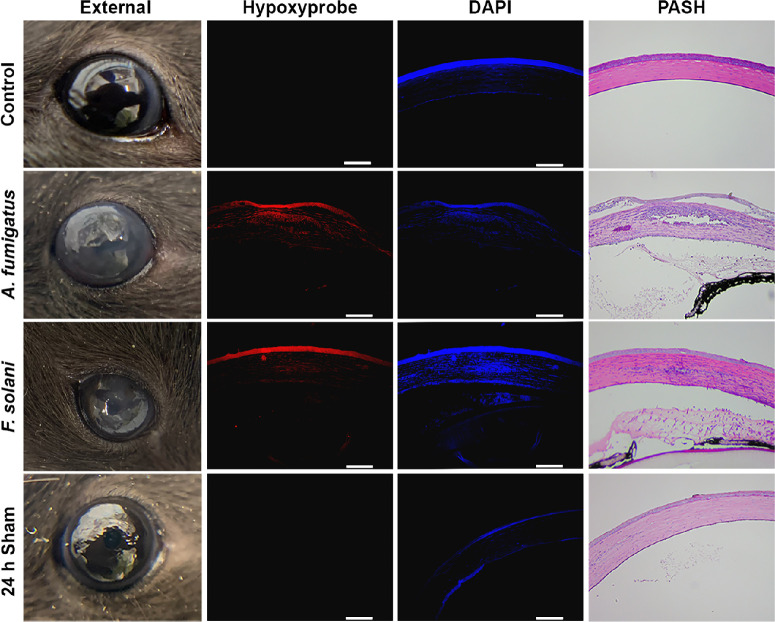
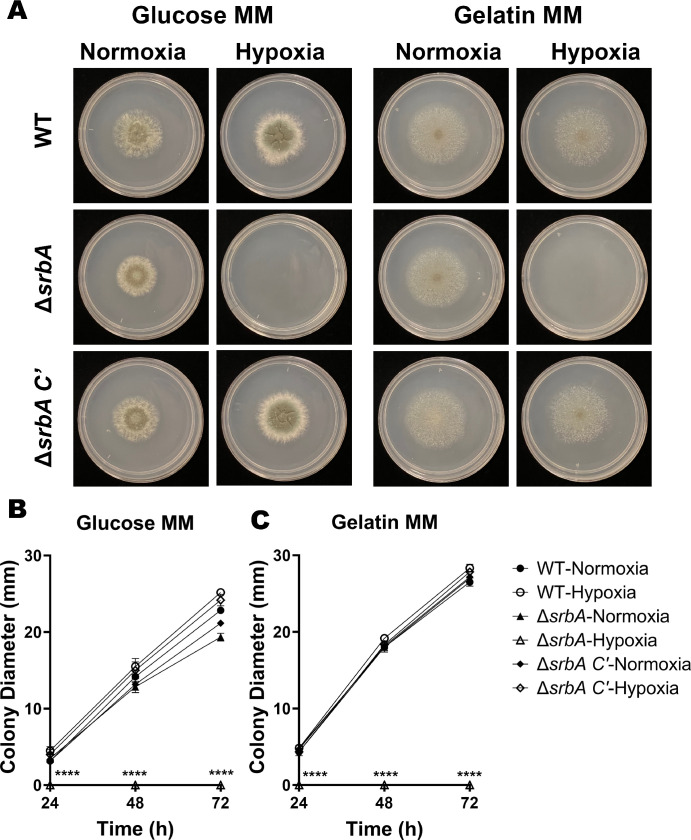
Topical inoculation with A. fumigatus resulted in diffuse pimonidazole staining across the epithelial and endothelial layers within 6 hours. Stromal hypoxia was evident by 48 hours p.i., which corresponded to leukocytic infiltration. Intrastromal inoculation with either A. fumigatus or F. solani similarly led to diffuse staining patterns across all corneal cell layers. The A. fumigatus srbA deletion mutant was unable to grow at oxygen levels below 3% in vitro, and corneas inoculated with the mutant failed to develop signs of corneal opacification, inflammation, or fungal burden.
These results suggest that fungal antigen rapidly drives the development of corneal hypoxia, thus rendering fungal SrbA or related pathways essential for the establishment of infection. Such pathways may therefore serve as targets for novel antifungal intervention.
真菌角膜炎(FK)导致的不良视觉结果突显了需要确定可作为新型抗真菌靶标的真菌途径。在本报告中,我们研究了 FK 角膜是否会发生缺氧,以及真菌缺氧适应是否对该环境中的毒力至关重要。
通过局部覆盖或基质内注射,将烟曲霉和嗜石油枝孢镰刀菌接种到 C57BL/6J 小鼠中。在接种后不同时间点(p.i.),通过免疫荧光成像用 pimonidazole 注射动物,以检测组织缺氧。通过 Cas9 介导的同源重组敲除烟曲霉 srbA 基因,并在角膜局部感染模型中使用裂隙灯显微镜和光学相干断层扫描(OCT)评估其毒力。
局部接种烟曲霉导致上皮和内皮层内的 pimonidazole 弥漫性染色,在 6 小时内。48 小时时可见基质缺氧,伴有白细胞浸润。用烟曲霉或嗜石油枝孢镰刀菌进行基质内接种同样导致所有角膜细胞层的弥漫性染色模式。烟曲霉 srbA 缺失突变体在体外低于 3%的氧气水平下无法生长,接种突变体的角膜未能出现角膜混浊、炎症或真菌负荷的迹象。
这些结果表明,真菌抗原迅速导致角膜缺氧的发展,从而使真菌 SrbA 或相关途径对感染的建立至关重要。因此,这些途径可以作为新型抗真菌干预的靶点。