Department of Educational Foundations, University of Education, Winneba, Ghana.
Department of Health, Physical Education, Recreation and Sports, University of Education, Winneba, Ghana.
Front Public Health. 2024 Apr 4;12:1325441. doi: 10.3389/fpubh.2024.1325441. eCollection 2024.
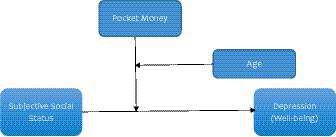
Although the relationship between subjective social status and depression in university students has been well-established, this association could be seen as a spurious one. Previous studies have shown that key variables like financial resources and age could play key roles in explaining the variances in social status and mental health outcomes. In this research, we assessed the complex interrelationships between subjective social status, financial resources at their disposal and depressive symptoms among university students within their young and middle adulthood stages.
A cross-sectional survey was conducted in a university in Ghana to sample 1134 university students through accidental sampling. The McArthur Scale and WHO-5 Well-being measure were used for the data collection.
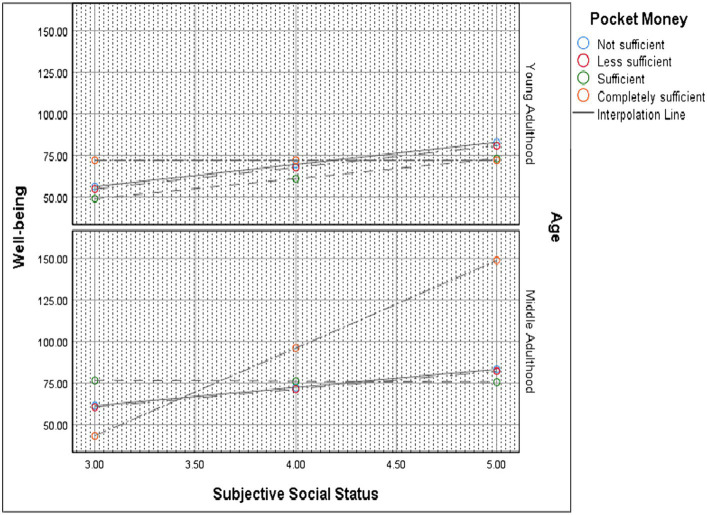
The results revealed that higher levels of subjective social status were associated with lower levels of depression. It was further found that the interaction between students' pocket money and age played unique roles in the relationship between subjective social status and depression.
The study findings call on stakeholders in education to explore funding opportunities and to examine ways of empowering parents (financially) to adequately support the students. Health educationists and promoters, including psychologists, school counsellors and parents could compliment these efforts by helping to train and empower students through self-regulation or management skills to help improve their well-being. Continuous efforts are required to improve the financial status and mental health of students.
尽管大学生主观社会地位与抑郁之间的关系已得到充分证实,但这种关联可能是虚假的。先前的研究表明,关键变量如财务资源和年龄在解释社会地位和心理健康结果的差异方面起着关键作用。在这项研究中,我们评估了主观社会地位、可支配的财务资源和大学生在青年和中年阶段抑郁症状之间的复杂相互关系。
在加纳的一所大学进行了一项横断面调查,通过偶然抽样对 1134 名大学生进行了抽样。使用麦克阿瑟量表和世界卫生组织-5 幸福感量表进行数据收集。
研究结果表明,较高的主观社会地位与较低的抑郁水平相关。进一步发现,学生零花钱和年龄之间的相互作用在主观社会地位和抑郁之间的关系中发挥了独特的作用。
研究结果呼吁教育利益相关者探索供资机会,并研究增强家长(经济上)权力的方法,以充分支持学生。健康教育者和推动者,包括心理学家、学校辅导员和家长,可以通过自我调节或管理技能来帮助培训和赋予学生权力,帮助改善他们的幸福感,从而补充这些努力。需要持续努力来改善学生的财务状况和心理健康。