Chen Liang, Li Haotong, Liu Xiaorui, Zhang Ningning, Wang Kui, Shi Anteng, Gao Hang, Akdis Deniz, Saguner Ardan M, Xu Xinjie, Osto Elena, Van de Veen Willem, Li Guangyu, Bayés-Genís Antoni, Duru Firat, Song Jiangping, Li Xiangjie, Hu Shengshou
State Key Laboratory of Cardiovascular Disease, Fuwai Hospital, National Center for Cardiovascular Diseases, Chinese Academy of Medical Sciences and Peking Union Medical College, Beijing, P. R. China.
School of Statistics and Data Science, Nankai University, Tianjin, China.
Signal Transduct Target Ther. 2024 Apr 22;9(1):94. doi: 10.1038/s41392-024-01804-5.
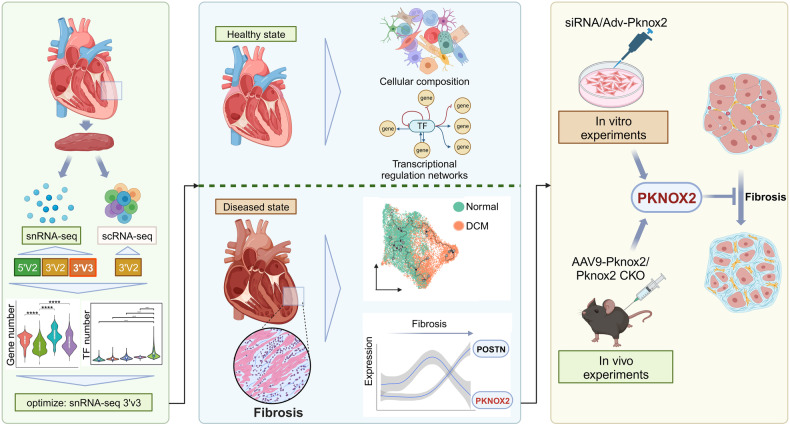
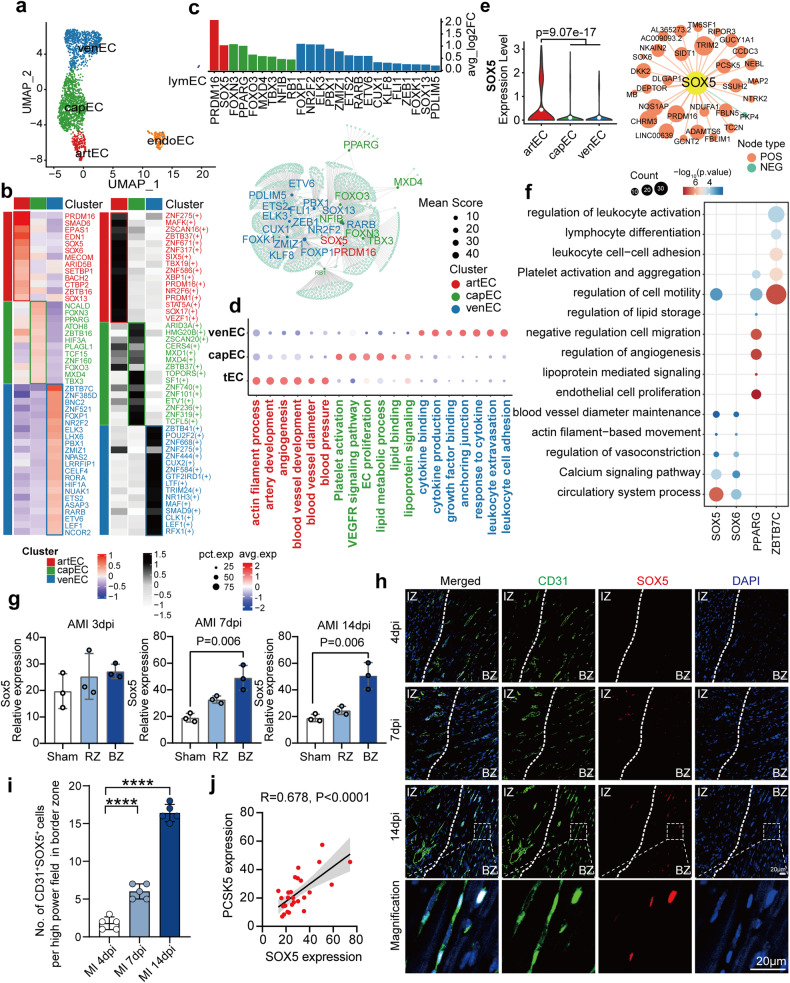
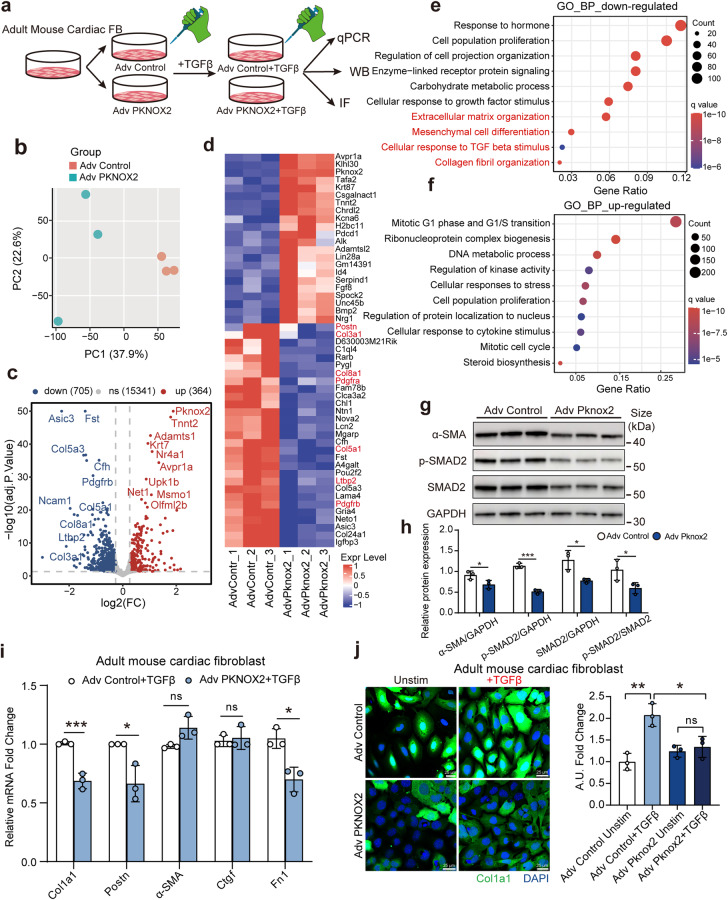
Much effort has been made to uncover the cellular heterogeneities of human hearts by single-nucleus RNA sequencing. However, the cardiac transcriptional regulation networks have not been systematically described because of the limitations in detecting transcription factors. In this study, we optimized a pipeline for isolating nuclei and conducting single-nucleus RNA sequencing targeted to detect a higher number of cell signal genes and an optimal number of transcription factors. With this unbiased protocol, we characterized the cellular composition of healthy human hearts and investigated the transcriptional regulation networks involved in determining the cellular identities and functions of the main cardiac cell subtypes. Particularly in fibroblasts, a novel regulator, PKNOX2, was identified as being associated with physiological fibroblast activation in healthy hearts. To validate the roles of these transcription factors in maintaining homeostasis, we used single-nucleus RNA-sequencing analysis of transplanted failing hearts focusing on fibroblast remodelling. The trajectory analysis suggested that PKNOX2 was abnormally decreased from fibroblast activation to pathological myofibroblast formation. Both gain- and loss-of-function in vitro experiments demonstrated the inhibitory role of PKNOX2 in pathological fibrosis remodelling. Moreover, fibroblast-specific overexpression and knockout of PKNOX2 in a heart failure mouse model induced by transverse aortic constriction surgery significantly improved and aggravated myocardial fibrosis, respectively. In summary, this study established a high-quality pipeline for single-nucleus RNA-sequencing analysis of heart muscle. With this optimized protocol, we described the transcriptional regulation networks of the main cardiac cell subtypes and identified PKNOX2 as a novel regulator in suppressing fibrosis and a potential therapeutic target for future translational studies.
通过单核RNA测序,人们付出了巨大努力来揭示人类心脏的细胞异质性。然而,由于检测转录因子存在局限性,心脏转录调控网络尚未得到系统描述。在本研究中,我们优化了一个流程,用于分离细胞核并进行单核RNA测序,旨在检测更多的细胞信号基因和最佳数量的转录因子。通过这种无偏倚的方案,我们对健康人类心脏的细胞组成进行了表征,并研究了参与确定主要心脏细胞亚型的细胞身份和功能的转录调控网络。特别是在成纤维细胞中,一种新的调节因子PKNOX2被确定与健康心脏中生理性成纤维细胞激活相关。为了验证这些转录因子在维持内环境稳定中的作用,我们对移植的衰竭心脏进行了单核RNA测序分析,重点关注成纤维细胞重塑。轨迹分析表明,从成纤维细胞激活到病理性肌成纤维细胞形成,PKNOX2异常减少。功能获得和功能丧失的体外实验均证明了PKNOX2在病理性纤维化重塑中的抑制作用。此外,在经主动脉缩窄手术诱导的心力衰竭小鼠模型中,成纤维细胞特异性过表达和敲除PKNOX2分别显著改善和加重了心肌纤维化。总之,本研究建立了一种用于心肌单核RNA测序分析的高质量流程。通过这种优化方案,我们描述了主要心脏细胞亚型的转录调控网络,并确定PKNOX2是抑制纤维化的新型调节因子和未来转化研究的潜在治疗靶点。