Le-Bert Carolina R, Bukoski Alex, Downs John, Hodgson David S, Thombs Lori, Ridgway Sam H, Bailey James
U.S. Navy Marine Mammal Program, Naval Information Warfare Center Pacific, San Diego, CA, United States.
Department of Veterinary Medicine and Surgery, College of Veterinary Medicine, University of Missouri, Columbia, MO, United States.
Front Vet Sci. 2024 Apr 5;11:1287478. doi: 10.3389/fvets.2024.1287478. eCollection 2024.
Use of mechanical ventilation during general anesthesia is a necessary practice in the anesthetization of small cetaceans as spontaneous ventilation fails to provide adequate gas exchange. Currently available methods of ventilation do not account for the intermittent breathing strategy of representative species within this infraorder of fully aquatic mammals and may have a significant effect on cardiac and respiratory physiology.
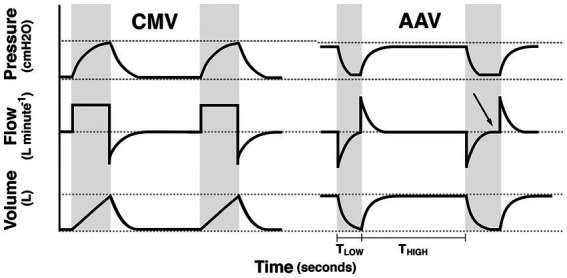
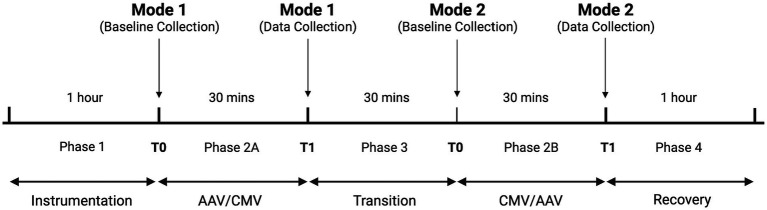
To understand the impact of mechanical ventilation on cardiopulmonary function in one small species of cetacean, the bottlenose dolphin (), we compared controlled mechanical ventilation (CMV) to a novel ventilation method known as apneustic anesthesia ventilation (AAV). AAV simulates the normal inspiratory breath-hold pattern of dolphins. Ten anesthetic procedures (dental procedure, = 9; bronchoscopy, = 2) were performed on nine dolphins (age range: 10-42 years; mean = 32 years; median = 37 years; female = 3, 40%; male = 6, 60%). In a cross-over study design, dolphins were instrumented and randomly assigned to AAV or CMV as the initial mode of ventilation, then switched to the alternate mode. Baseline cardiopulmonary data were collected and again after 30 min on each mode of ventilation. Cardiac index, stroke volume index, systemic vascular resistance, alveolar dead space, alveolar-arterial oxygen tension gradient, arterial oxygen content, oxygen delivery index, and dynamic respiratory system compliance index were calculated at each of the four time points.
During AAV, dolphins had higher arterial oxygen tension, higher mean airway pressure, reduced alveolar dead space ventilation and lower alveolar-arterial oxygen difference. Cardiovascular performance was not statistically different between the two modes.
Our study suggests AAV, which more closely resembles the conscious intermittent respiratory pattern phenotype of dolphins, improves ventilation and pulmonary function in the anesthetized dolphin. Future studies should evaluate the cardiopulmonary effects of neutral buoyancy and cardiopulmonary sparing drug protocols to reduce the need for hemodynamic support of current protocols.
在对小型鲸类动物进行麻醉时,由于自主呼吸无法提供足够的气体交换,因此在全身麻醉期间使用机械通气是必要的操作。目前可用的通气方法并未考虑到这一完全水生哺乳动物亚目代表性物种的间歇性呼吸策略,并且可能对心脏和呼吸生理产生重大影响。
为了解机械通气对一种小型鲸类动物——宽吻海豚心肺功能的影响,我们将控制性机械通气(CMV)与一种名为长吸式麻醉通气(AAV)的新型通气方法进行了比较。AAV模拟了海豚正常的吸气屏气模式。对9只宽吻海豚(年龄范围:10 - 42岁;平均 = 32岁;中位数 = 37岁;雌性 = 3只,占40%;雄性 = 6只,占60%)进行了10次麻醉手术(牙科手术,n = 9;支气管镜检查,n = 2)。在交叉研究设计中,海豚被安装监测仪器,并随机分配接受AAV或CMV作为初始通气模式,然后切换到另一种模式。在每种通气模式下,分别在基线时以及通气30分钟后收集心肺数据。在四个时间点的每一个时间点都计算心脏指数、每搏量指数、全身血管阻力、肺泡死腔、肺泡 - 动脉氧分压差、动脉血氧含量、氧输送指数和动态呼吸系统顺应性指数。
在AAV期间,海豚的动脉血氧分压更高、平均气道压更高、肺泡死腔通气减少且肺泡 - 动脉氧差更低。两种模式下的心血管性能在统计学上无差异。
我们的研究表明,更接近海豚清醒时间歇性呼吸模式表型的AAV可改善麻醉海豚的通气和肺功能。未来的研究应评估中性浮力和心肺保护药物方案对心肺的影响,以减少当前方案对血流动力学支持的需求。