Niu Yuxin, Liu Yunhui, Huang Lanyue, Liu Wei, Cheng Qiuyu, Liu Tingting, Ning Qin, Chen Tao
Department of Infectious Diseases, Tongji Hospital, Tongji Medical College and State Key Laboratory for Diagnosis and Treatment of Severe Zoonostic Infectious Disease, Huazhong University of Science and Technology, Wuhan, Hubei, China.
Front Immunol. 2024 Apr 5;15:1348836. doi: 10.3389/fimmu.2024.1348836. eCollection 2024.
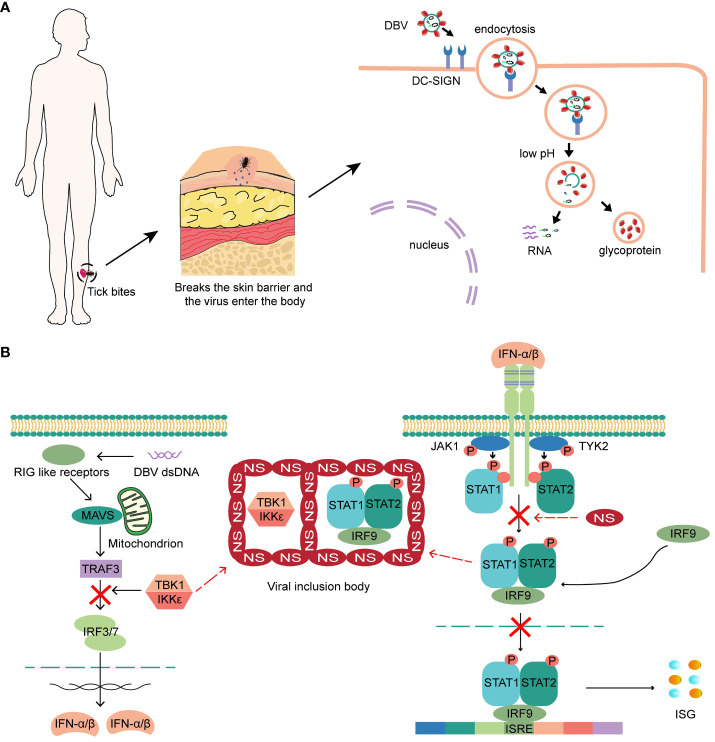
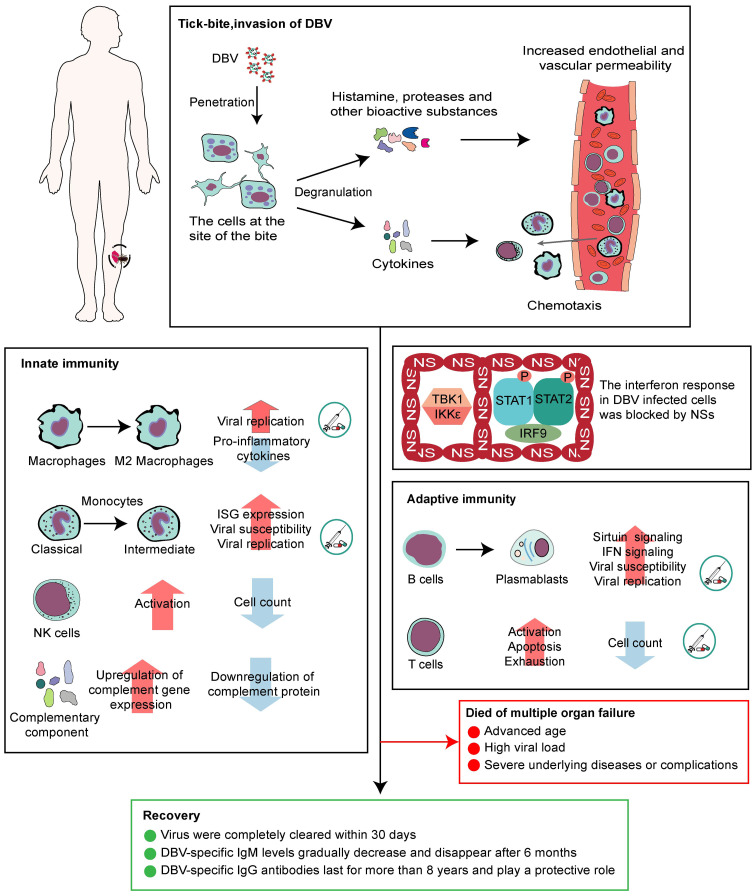
Dabie Banda virus (DBV), a tick-borne pathogen, was first identified in China in 2009 and causes profound symptoms including fever, leukopenia, thrombocytopenia and multi-organ dysfunction, which is known as severe fever with thrombocytopenia syndrome (SFTS). In the last decade, global incidence and mortality of SFTS increased significantly, especially in East Asia. Though previous studies provide understandings of clinical and immunological characteristics of SFTS development, comprehensive insight of antiviral immunity response is still lacking. Here, we intensively discuss the antiviral immune response after DBV infection by integrating previous ex- and in-vivo studies, including innate and adaptive immune responses, anti-viral immune responses and long-term immune characters. A comprehensive overview of potential immune targets for clinical trials is provided as well. However, development of novel strategies for improving the prognosis of the disease remains on challenge. The current review may shed light on the establishment of immunological interventions for the critical disease SFTS.
大别山病毒(DBV)是一种蜱传病原体,于2009年在中国首次被发现,可引起包括发热、白细胞减少、血小板减少和多器官功能障碍等严重症状,即称为严重发热伴血小板减少综合征(SFTS)。在过去十年中,SFTS的全球发病率和死亡率显著增加,尤其是在东亚地区。尽管先前的研究对SFTS发病的临床和免疫学特征有所了解,但对抗病毒免疫反应仍缺乏全面认识。在此,我们通过整合先前的体外和体内研究,深入探讨DBV感染后的抗病毒免疫反应,包括固有免疫和适应性免疫反应、抗病毒免疫反应及长期免疫特征。同时还提供了临床试验潜在免疫靶点的全面概述。然而,开发改善该疾病预后的新策略仍面临挑战。本综述可能为建立针对严重疾病SFTS的免疫干预措施提供思路。