iPSC-based Drug discovery and Development Team, RIKEN BioResource Research Center, Kyoto, Japan.
Center for iPS Cell Research and Application (CiRA), Kyoto University, Kyoto, Japan.
JCI Insight. 2024 Apr 22;9(8):e174179. doi: 10.1172/jci.insight.174179.
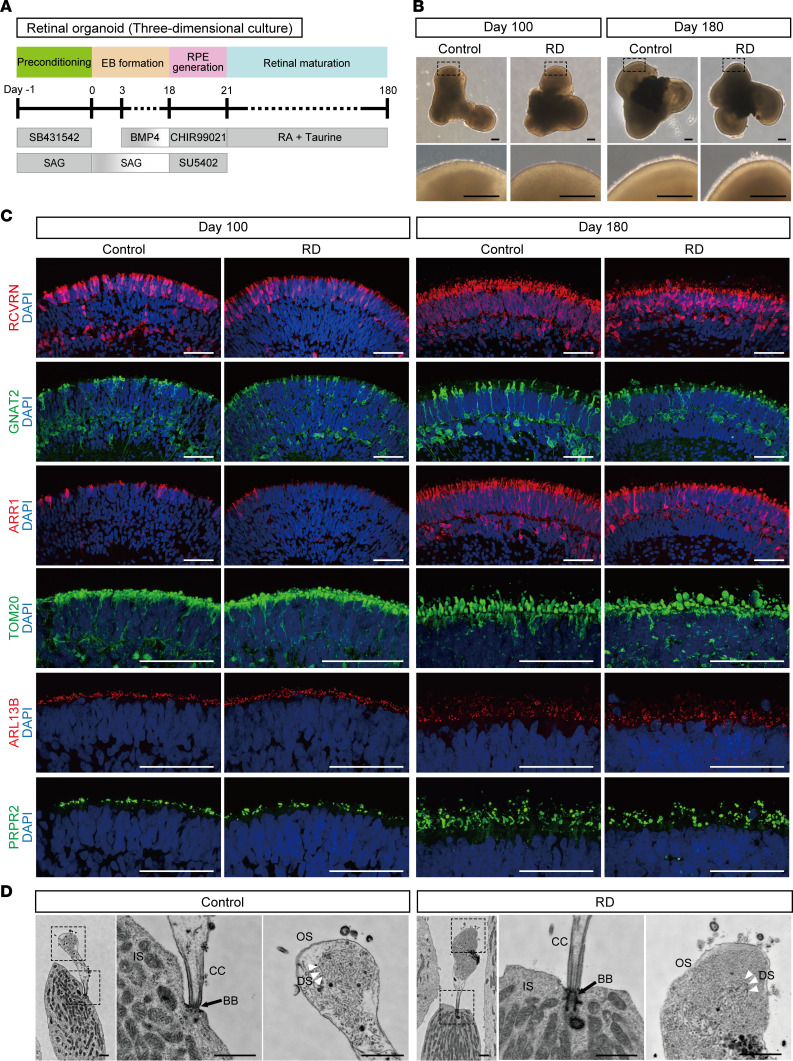
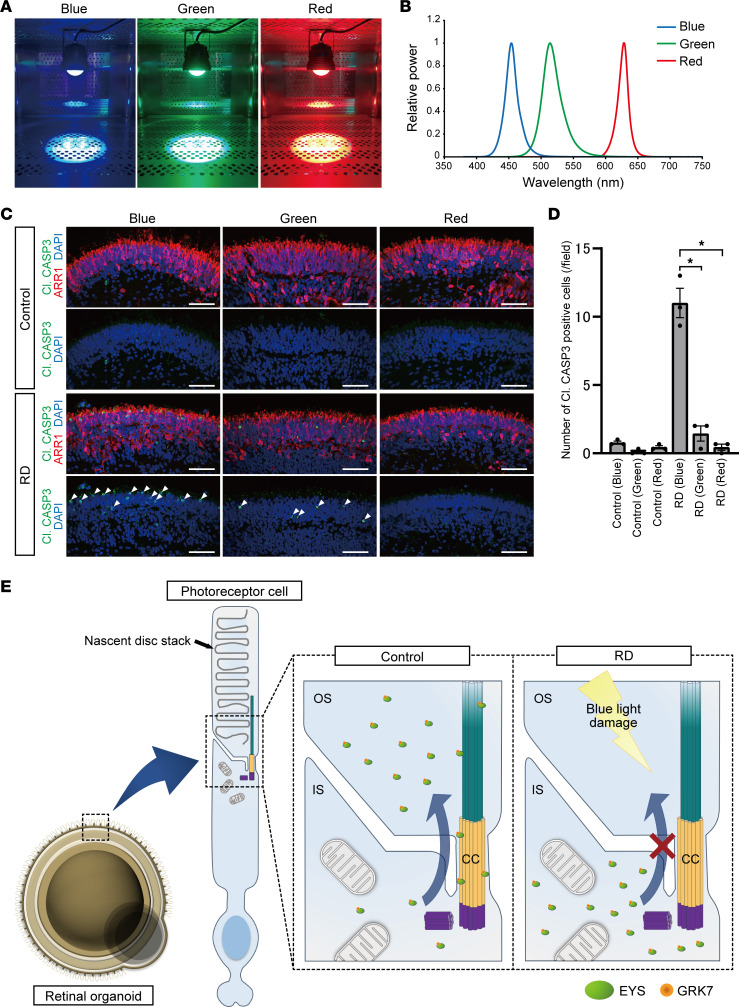
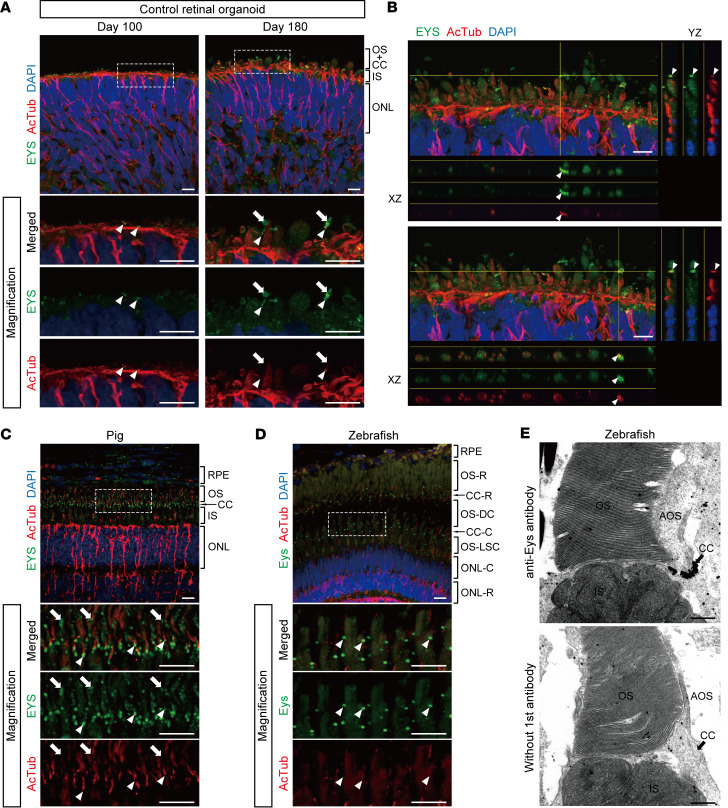
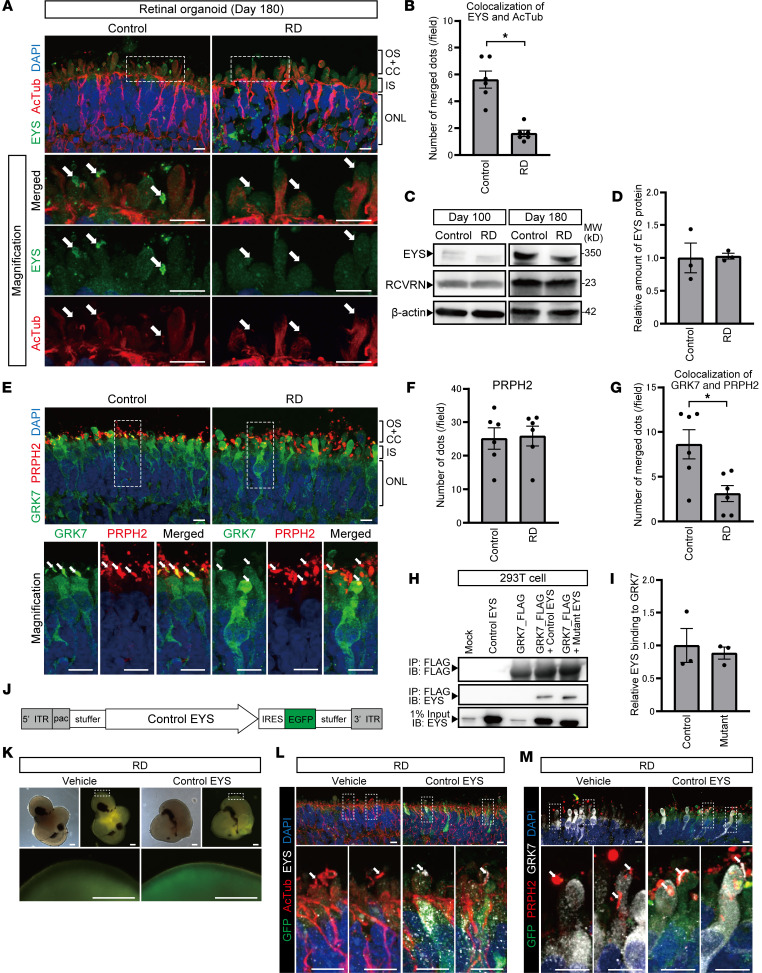
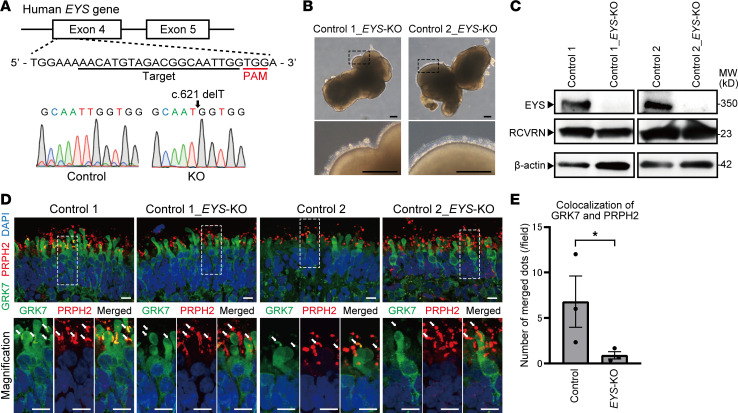
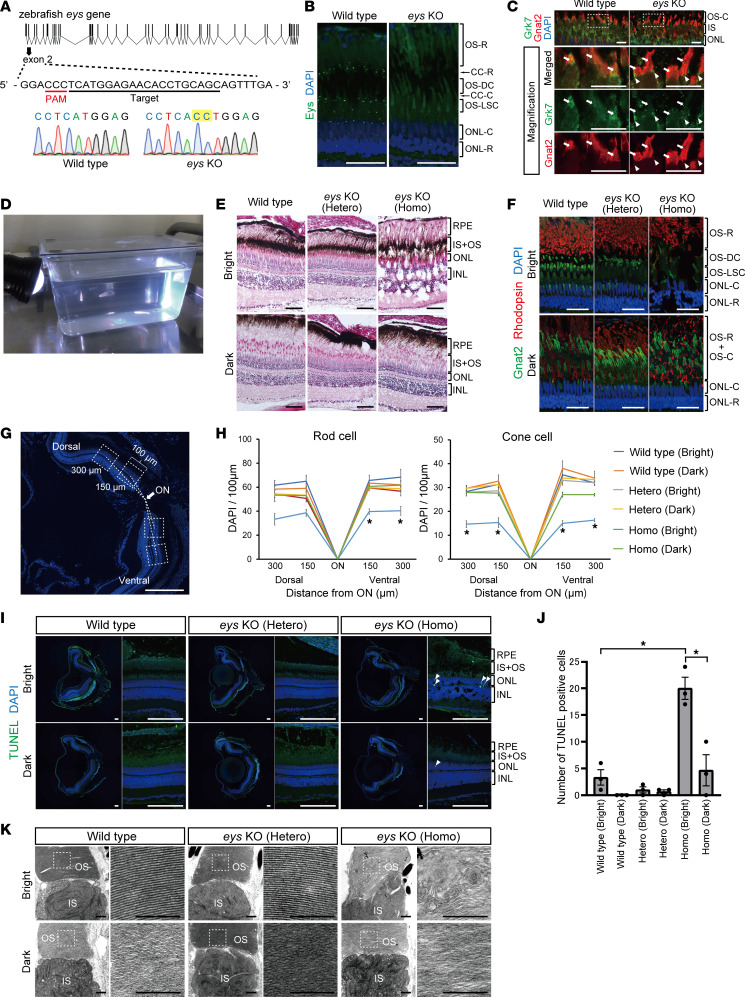
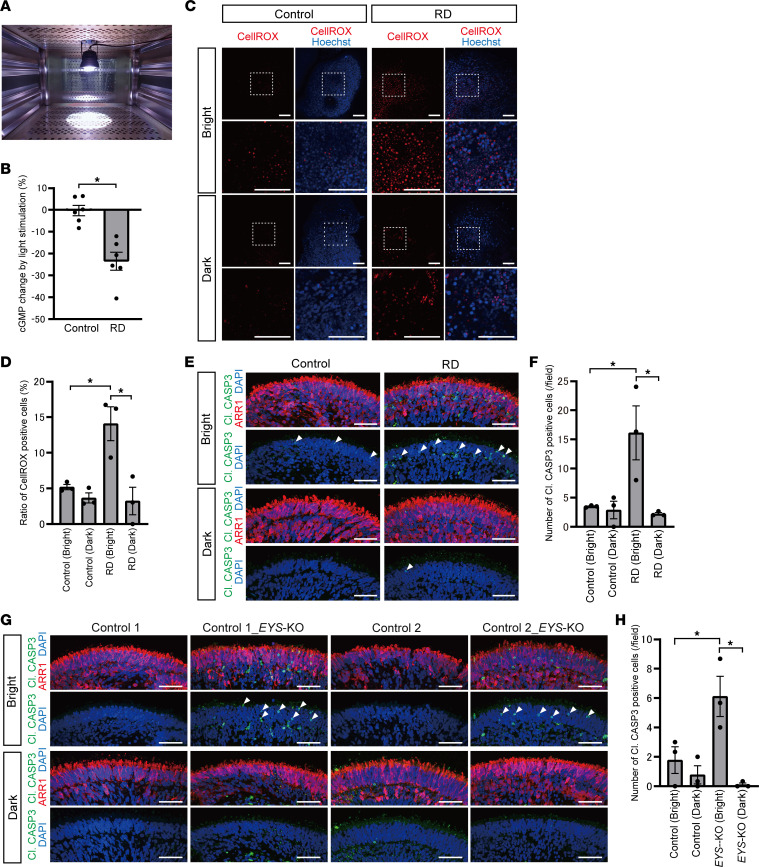
Inherited retinal dystrophies (IRDs) are progressive diseases leading to vision loss. Mutation in the eyes shut homolog (EYS) gene is one of the most frequent causes of IRD. However, the mechanism of photoreceptor cell degeneration by mutant EYS has not been fully elucidated. Here, we generated retinal organoids from induced pluripotent stem cells (iPSCs) derived from patients with EYS-associated retinal dystrophy (EYS-RD). In photoreceptor cells of RD organoids, both EYS and G protein-coupled receptor kinase 7 (GRK7), one of the proteins handling phototoxicity, were not in the outer segment, where they are physiologically present. Furthermore, photoreceptor cells in RD organoids were vulnerable to light stimuli, and especially to blue light. Mislocalization of GRK7, which was also observed in eys-knockout zebrafish, was reversed by delivering control EYS into photoreceptor cells of RD organoids. These findings suggest that avoiding phototoxicity would be a potential therapeutic approach for EYS-RD.
遗传性视网膜病变(IRDs)是导致视力丧失的进行性疾病。眼睛关闭同源物(EYS)基因突变是 IRD 最常见的原因之一。然而,突变型 EYS 引起光感受器细胞变性的机制尚未完全阐明。在这里,我们从与 EYS 相关的视网膜营养不良(EYS-RD)患者的诱导多能干细胞(iPSC)中生成了视网膜类器官。在 RD 类器官的光感受器细胞中,EYS 和 G 蛋白偶联受体激酶 7(GRK7)——一种处理光毒性的蛋白质之一——都不在外节中,而在外节中它们是生理性存在的。此外,RD 类器官中的光感受器细胞对光刺激很敏感,特别是对蓝光。GRK7 的定位错误也在 eys 敲除斑马鱼中观察到,通过将对照 EYS 递送至 RD 类器官的光感受器细胞中可以逆转。这些发现表明,避免光毒性可能是 EYS-RD 的一种潜在治疗方法。