Department of Pathology, University Medical Center Hamburg-Eppendorf, Hamburg, Germany.
Department of Pathology, Clinical Center Osnabrueck, Osnabrueck, Germany.
Am J Surg Pathol. 2024 Jun 1;48(6):637-651. doi: 10.1097/PAS.0000000000002213. Epub 2024 Apr 18.
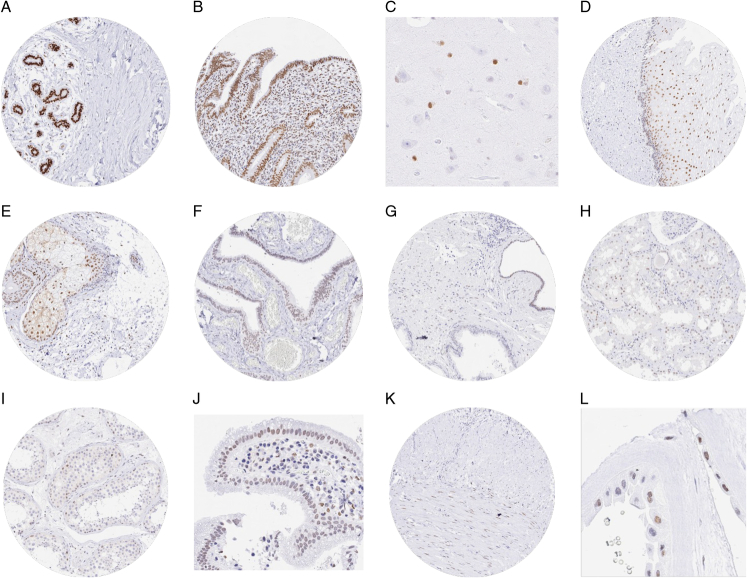
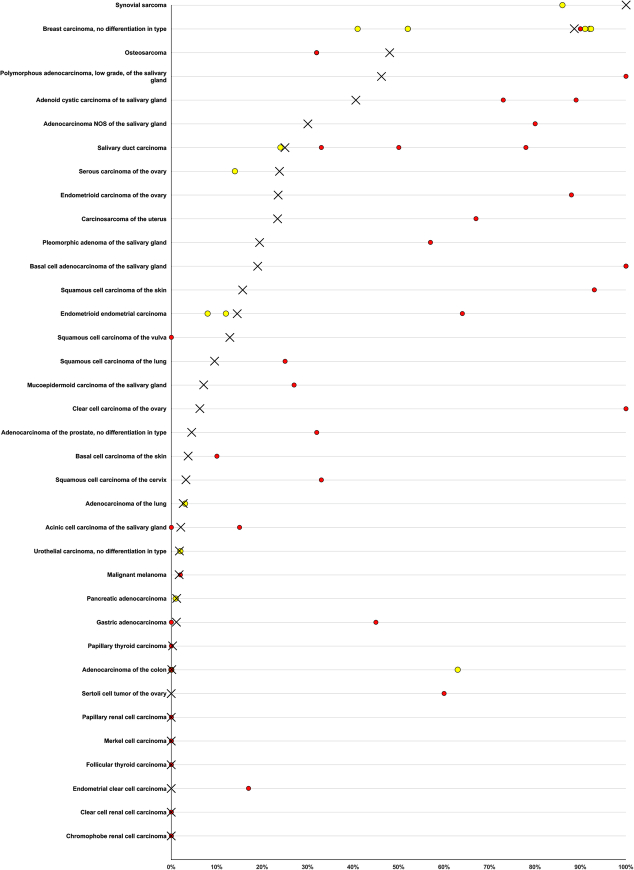
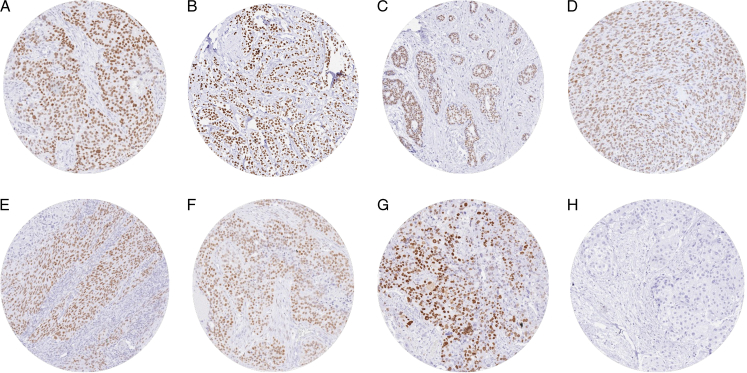
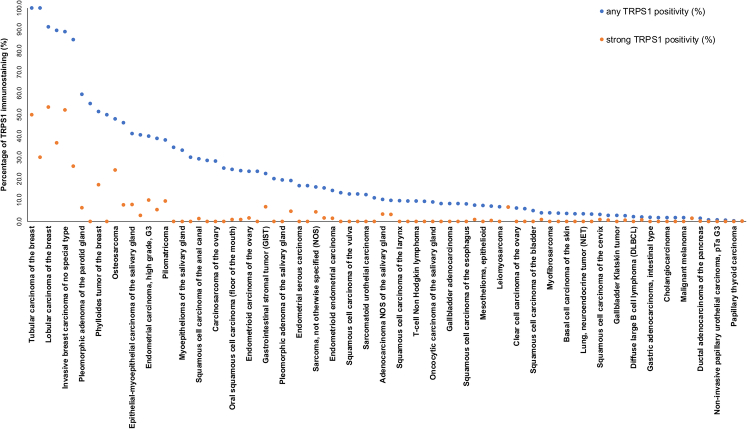
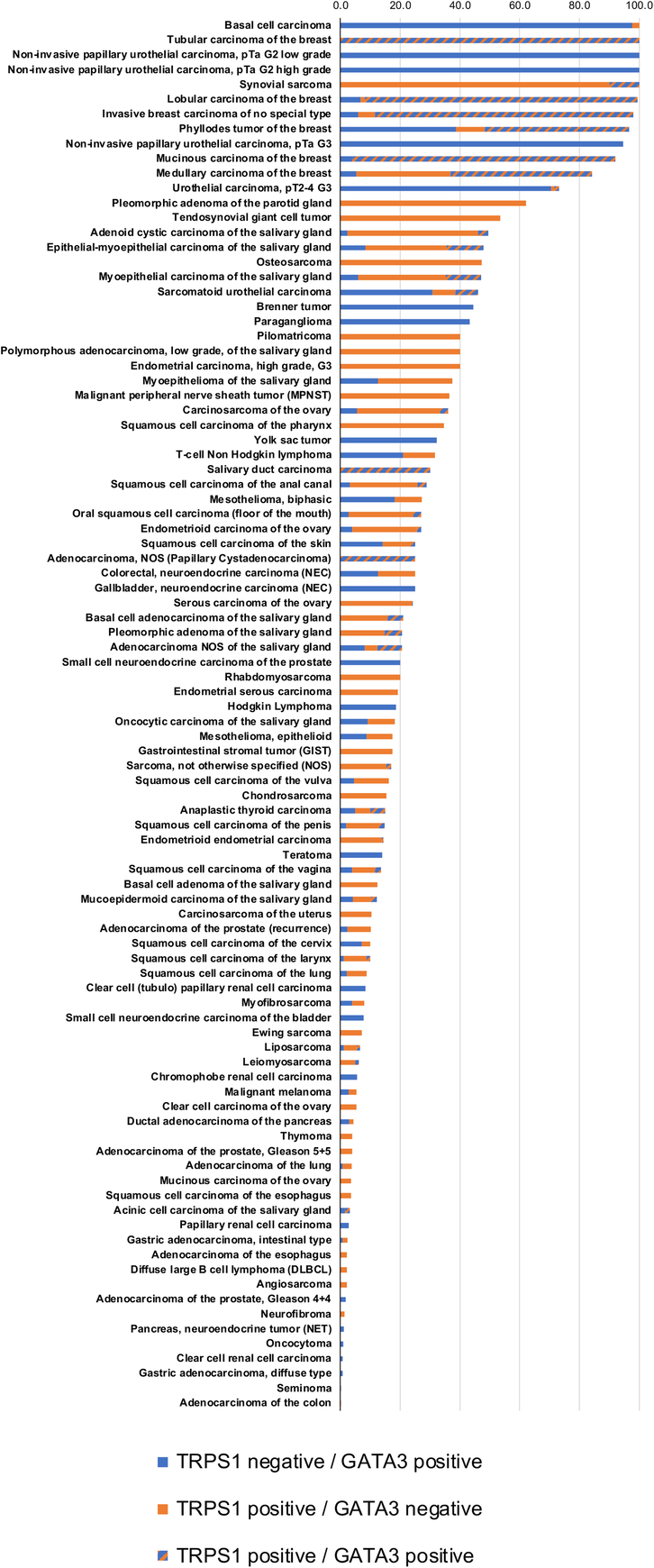
Trichorhinophalangeal syndrome 1 (TRPS1) is a nuclear protein highly expressed in breast epithelial cells. TRPS1 immunohistochemistry (IHC) has been suggested as a breast cancer marker. To determine the diagnostic and prognostic utility of TRPS1 IHC, tissue microarrays containing 19,201 samples from 152 different tumor types and subtypes were analyzed. GATA3 IHC was performed in a previous study. TRPS1 staining was seen in 86 of 152 tumor categories with 36 containing at least one strongly positive case. TRPS1 staining predominated in various types of breast carcinomas (51%-100%), soft tissue tumors (up to 100%), salivary gland tumors (up to 46%), squamous cell carcinomas (up to 35%), and gynecological cancers (up to 40%). TRPS1 positivity occurred in 1.8% of 1083 urothelial neoplasms. In invasive breast carcinoma of no special type, low TRPS1 expression was linked to high grade ( P = 0.0547), high pT ( P < 0.0001), nodal metastasis ( P = 0.0571), loss of estrogen receptor and progesterone receptor expression ( P < 0.0001 each), and triple-negative status ( P < 0.0001) but was unrelated to patient survival ( P = 0.8016). In squamous cell carcinomas from 11 different sites, low TRPS1 expression was unrelated to tumor phenotype. Positivity for both TRPS1 and GATA3 occurred in 47.4% to 100% of breast cancers, up to 30% of salivary gland tumors, and 29 (0.3%) of 9835 tumors from 134 other cancer entities. TRPS1 IHC has high utility for the identification of cancers of breast (or salivary gland) origin, especially in combination with GATA3. The virtual absence of TRPS1 positivity in urothelial neoplasms is useful for the distinction of GATA3-positive urothelial carcinoma from breast cancer.
三指并趾综合征 1 型(TRPS1)是一种在乳腺上皮细胞中高度表达的核蛋白。TRPS1 免疫组化(IHC)已被提议作为乳腺癌标志物。为了确定 TRPS1 IHC 的诊断和预后效用,分析了包含来自 152 种不同肿瘤类型和亚型的 19201 个样本的组织微阵列。在之前的研究中进行了 GATA3 IHC。在 152 种肿瘤类别中的 86 种中观察到 TRPS1 染色,其中 36 种至少有一个强阳性病例。TRPS1 染色主要见于各种类型的乳腺癌(51%-100%)、软组织肿瘤(高达 100%)、唾液腺肿瘤(高达 46%)、鳞状细胞癌(高达 35%)和妇科癌症(高达 40%)。TRPS1 阳性发生在 1083 例尿路上皮肿瘤中的 1.8%。在非特殊类型的浸润性乳腺癌中,低 TRPS1 表达与高级别(P=0.0547)、高 pT(P<0.0001)、淋巴结转移(P=0.0571)、雌激素受体和孕激素受体表达缺失(P<0.0001)和三阴性状态(P<0.0001)相关,但与患者生存无关(P=0.8016)。在来自 11 个不同部位的鳞状细胞癌中,低 TRPS1 表达与肿瘤表型无关。TRPS1 和 GATA3 的阳性率在 47.4%至 100%的乳腺癌、高达 30%的唾液腺肿瘤和 9835 个肿瘤中的 29 个(0.3%)来自 134 种其他癌症实体中。TRPS1 IHC 对于鉴定乳腺(或唾液腺)来源的癌症具有很高的效用,尤其是与 GATA3 联合使用时。在尿路上皮肿瘤中几乎不存在 TRPS1 阳性对于区分 GATA3 阳性的尿路上皮癌和乳腺癌非常有用。