Wang Yiting, Luo Xiangyan, Chu Peng, Shi Heli, Wang Rui, Li Jiale, Zheng Shixue
State Key Laboratory of Agricultural Microbiology, College of Life Science and Technology, Huazhong Agricultural University, Wuhan, 430070, People's Republic of China.
Enshi Branch, Hubei Tobacco Company, Enshi, 445000, Hubei, People's Republic of China.
Bioresour Bioprocess. 2023 Feb 1;10(1):10. doi: 10.1186/s40643-023-00630-x.
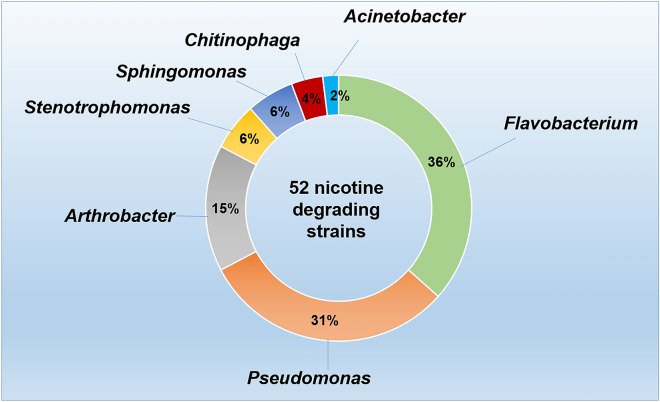
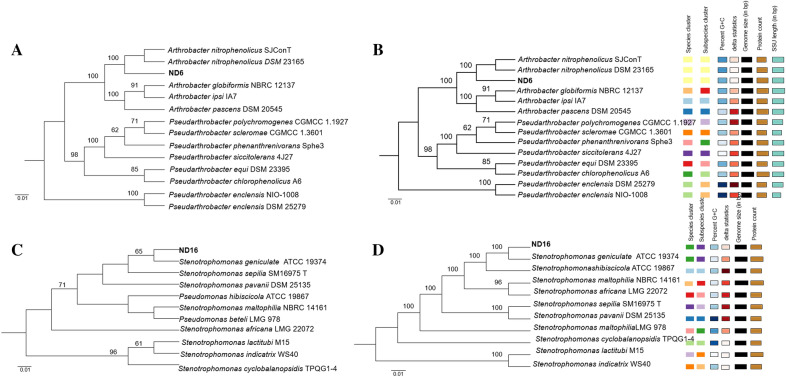
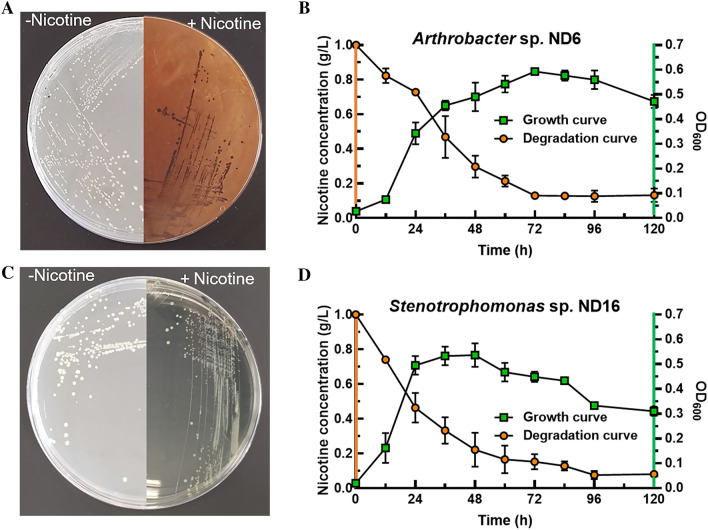
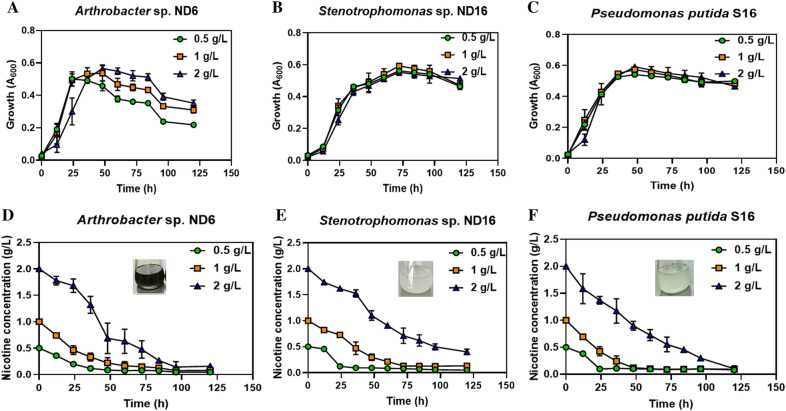
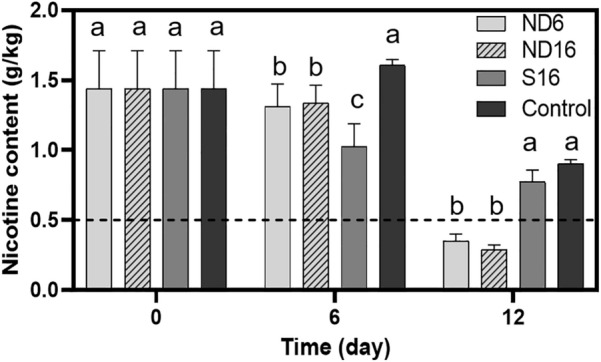
Nicotine, a toxic and addictive alkaloid from tobacco, is an environmental pollutant. However, nicotine-degrading bacteria (NDB) and their function in tobacco planting soil are not fully understood. First, 52 NDB strains belonging to seven genera were isolated from tobacco soil. The most dominant genera were Flavobacterium (36.5%), Pseudomonas (30.8%), and Arthrobacter (15.4%), and Chitinophaga and Flavobacterium have not been previously reported. Then, two efficient NDB strains, Arthrobacter nitrophenolicus ND6 and Stenotrophomonas geniculata ND16, were screened and inoculated in the compost fertilizer from tobacco waste. The nicotine concentrations were reduced from 1.5 mg/g (DW) to below the safety threshold of 0.5 mg/g. Furthermore, strain ND6 followed the pyridine pathway of nicotine degradation, but the degrading pathway in strain ND16 could not be determined according to genomic analysis and color change. Finally, the abundance of nicotine-degrading genes in tobacco rhizosphere soil was investigated via metagenomic analysis. Five key genes, ndhA, nctB, kdhL, nboR, and dhponh, represent the whole process of nicotine degradation, and their abundance positively correlated with soil nicotine concentrations (p < 0.05). In conclusion, various NDB including unknown species live in tobacco soil and degrade nicotine efficiently. Some key nicotine-degrading genes could be used in monitoring nicotine degradation in the environment. The fermentation of compost from tobacco waste is a promising application of efficient NDB.
尼古丁是一种来自烟草的有毒成瘾性生物碱,属于环境污染物。然而,尼古丁降解细菌(NDB)及其在烟草种植土壤中的功能尚未完全明确。首先,从烟草土壤中分离出52株属于7个属的尼古丁降解细菌菌株。最主要的属是黄杆菌属(36.5%)、假单胞菌属(30.8%)和节杆菌属(15.4%),而噬几丁质菌属和黄杆菌属此前未见报道。然后,筛选出两株高效尼古丁降解细菌菌株,嗜硝基酚节杆菌ND6和膝状窄食单胞菌ND16,并将它们接种到烟草废弃物堆肥中。尼古丁浓度从1.5毫克/克(干重)降至低于0.5毫克/克的安全阈值。此外,菌株ND6遵循尼古丁降解的吡啶途径,但根据基因组分析和颜色变化,无法确定菌株ND16的降解途径。最后,通过宏基因组分析研究了烟草根际土壤中尼古丁降解基因的丰度。5个关键基因,ndhA、nctB、kdhL、nboR和dhponh,代表了尼古丁降解的全过程,它们的丰度与土壤尼古丁浓度呈正相关(p < 0.05)。总之,包括未知物种在内的多种尼古丁降解细菌存在于烟草土壤中,并能高效降解尼古丁。一些关键的尼古丁降解基因可用于监测环境中的尼古丁降解情况。利用烟草废弃物堆肥发酵是高效尼古丁降解细菌的一个有前景的应用方向。