Dias da Rocha Marco Alexandre, Saint Aroman Markéta, Mengeaud Valérie, Carballido Fabienne, Doat Gautier, Coutinho Ana, Bagatin Edileia
Department of Dermatology, Universidade Federal de São Paulo, São Paulo, Brazil.
Corporate Medical Direction Dermocosmetics Care & Personal Care, Pierre Fabre, Toulouse, France.
Int J Womens Health. 2024 Apr 18;16:663-678. doi: 10.2147/IJWH.S431523. eCollection 2024.
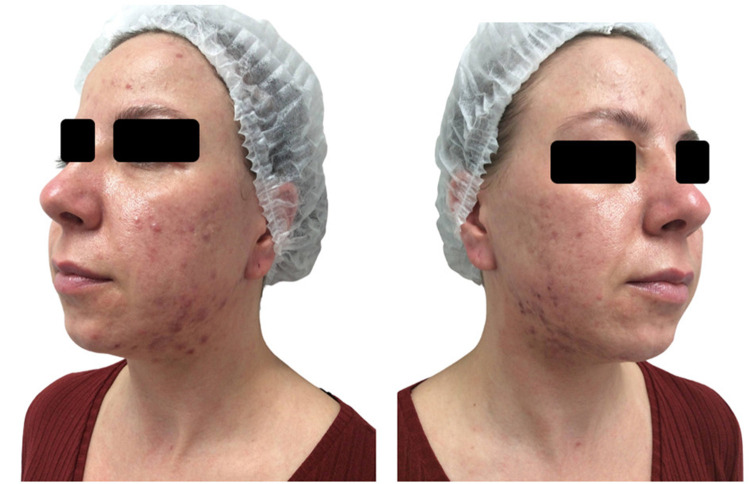
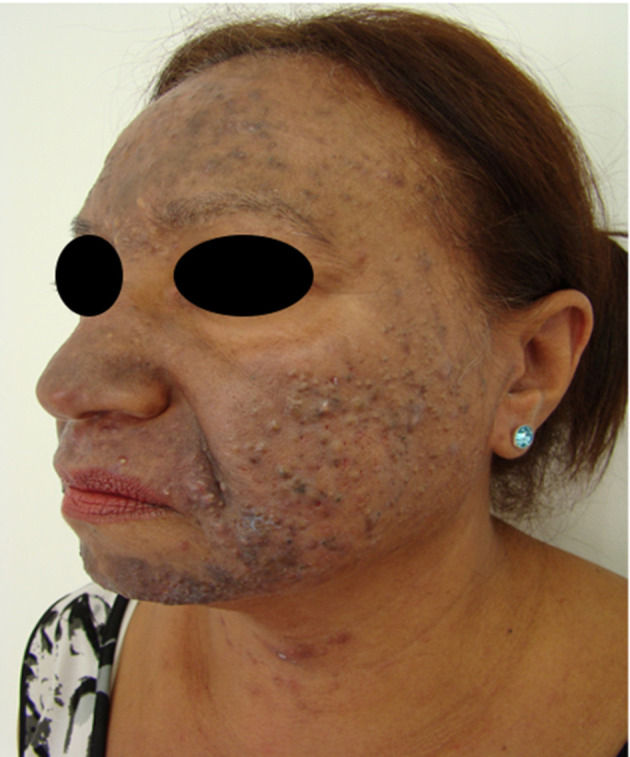
Previously considered a skin disease exclusively affecting adolescents, characterized by inflammatory and non-inflammatory skin lesions, acne vulgaris is now increasingly observed in adult life, including post-menopause. Today, adult female acne (AFA) is a common chronic inflammatory disease of the pilosebaceous unit, with polymorphic lesions presenting as open or closed comedones, papules, pustules, and even nodules or cysts, often with the presence of sequelae. AFA may persist from adolescence or manifest de novo in adulthood. Its etiology is multifactorial, involving genetic, hormonal, dietary, and environmental factors, yet still incompletely understood. Increased sebum production, keratinocyte hyper-proliferation, inflammation, and reduced diversity of strains are the underlying disease mechanisms. During menopausal transition, a relative increase in androgen levels occurs, just as estrogens begin to decline, which can manifest itself as acne. Whereas most AFA exhibit few acne lesions with normo-androgenic serum levels, baseline investigations including androgen testing panel enable associated comorbidities to be eliminated, such as polycystic ovarian syndrome, congenital adrenal hyperplasia, or tumors. Another interesting feature is AFA's impact on quality of life, which is greater than in adolescents, being similar to other chronic diseases like asthma. The therapeutic approach to AFA depends on its severity and associated features. This review investigates the intricate facets of AFA, with a specific focus on incidence rates, treatment modalities, and the curious impact of menopause. Utilizing insights from contemporary literature and scientific discussions, this article seeks to advance our understanding of AFA, offering new perspectives to shape clinical practices and improve patient outcomes.
寻常痤疮以前被认为是一种仅影响青少年的皮肤病,其特征为炎性和非炎性皮肤损害,现在在成年期越来越常见,包括绝经后。如今,成年女性痤疮(AFA)是一种常见的毛囊皮脂腺单位慢性炎症性疾病,具有多形性损害,表现为开放性或闭合性粉刺、丘疹、脓疱,甚至结节或囊肿,常伴有后遗症。AFA可能从青春期持续存在或在成年期新发。其病因是多因素的,涉及遗传、激素、饮食和环境因素,但仍未完全了解。皮脂分泌增加、角质形成细胞过度增殖、炎症以及菌株多样性降低是潜在的发病机制。在绝经过渡期,随着雌激素开始下降,雄激素水平相对升高,这可能表现为痤疮。虽然大多数AFA在血清雄激素水平正常时痤疮损害较少,但包括雄激素检测组在内的基线检查有助于排除相关的合并症,如多囊卵巢综合征、先天性肾上腺增生或肿瘤。另一个有趣的特点是AFA对生活质量的影响,这比青少年时期更大,与哮喘等其他慢性疾病相似。AFA的治疗方法取决于其严重程度和相关特征。本综述研究了AFA的复杂方面,特别关注发病率、治疗方式以及绝经的奇特影响。利用当代文献和科学讨论的见解,本文旨在增进我们对AFA的理解,提供新的视角以塑造临床实践并改善患者预后。