Khunger Niti, Mehrotra Krati
Department of Dermatology and STD, Vardhman Mahavir Medical College, Safdarjang Hospital, New Delhi, India.
Int J Womens Health. 2019 Oct 29;11:555-567. doi: 10.2147/IJWH.S174292. eCollection 2019.
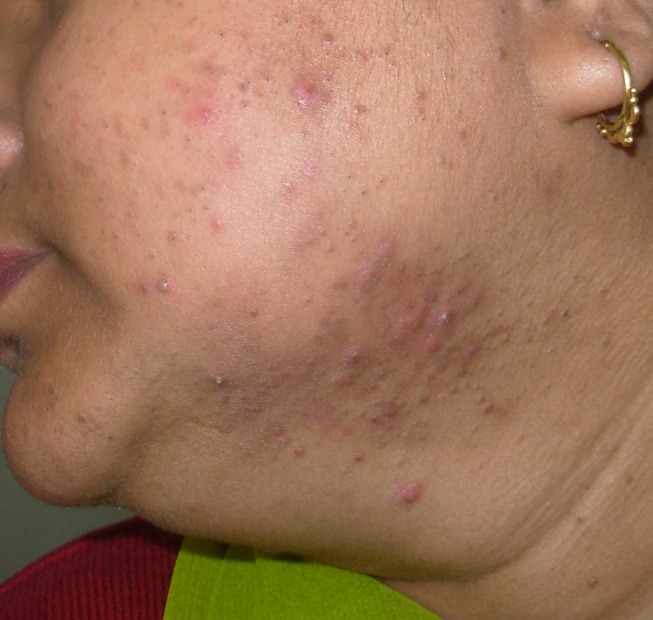
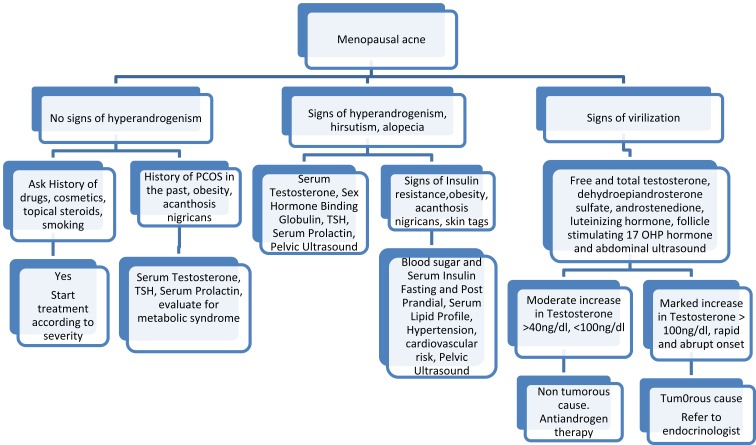
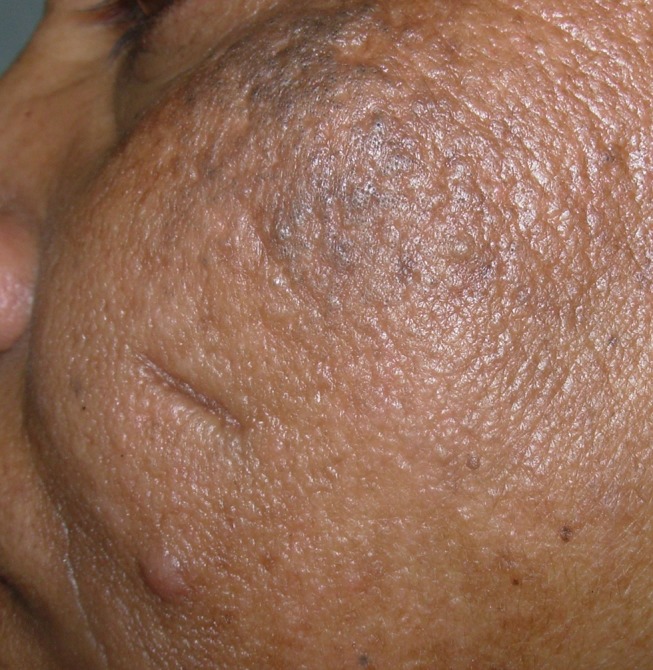
Although acne is a disease predominant in adolescence, it is being increasingly observed in adult life, including the menopausal period. The etiology of menopausal acne is multifactorial, with hormonal imbalance being the major culprit. There is a relative increase of androgens in the menopausal female that leads to clinical hyperandrogenism manifesting as acne, hirsutism and androgenetic alopecia. Other endocrine disorders including thyroid abnormalities, hyperprolactinemia and insulin resistance also play a role. Genetics, stress, dietary changes, lack of sleep and exercise and other lifestyle changes are implicated as trigger factors. Most menopausal women with isolated few acne lesions have normoandrogenic serum levels and do not require extensive investigations. However, baseline investigations including total testosterone are useful. Patients must also be evaluated for associated comorbidities such as obesity, diabetes, hypertension and dyslipidemia. A detailed history can help to exclude polycystic ovarian syndrome, late-onset congenital adrenal hyperplasia or medications as a cause of acne. The evaluation of menopausal acne and the approach to treatment depend on the severity of acne and associated features. In patients with mild acne without virilization, prolonged topical therapy is the mainstay of treatment. Though combined oral contraceptives are effective, they are relatively contraindicated in the postmenopausal period. Spironolactone is the first choice of therapy in the subset of patients that require oral anti-androgen therapy. Procedural treatment can be useful as it can also help in the treatment of associated acne scars and concomitant skin aging. It is also important to focus on lifestyle changes such as reducing stress, controlling obesity, having a healthy diet, exercise and proper skin care routine to reduce acne. The focus of this article is on the clinical presentation and management challenges of menopausal acne, which represents a special subtype of acne.
虽然痤疮是一种在青少年中占主导的疾病,但在成年期,包括更年期,其发病率也在日益增加。更年期痤疮的病因是多因素的,激素失衡是主要原因。更年期女性体内雄激素相对增加,导致临床高雄激素血症,表现为痤疮、多毛症和雄激素性脱发。其他内分泌紊乱,包括甲状腺异常、高泌乳素血症和胰岛素抵抗也起一定作用。遗传、压力、饮食变化、睡眠不足、缺乏运动以及其他生活方式的改变都被认为是触发因素。大多数仅有少量痤疮皮损的更年期女性血清雄激素水平正常,不需要进行广泛检查。然而,包括总睾酮在内的基线检查是有用的。还必须对患者进行相关合并症的评估,如肥胖、糖尿病、高血压和血脂异常。详细的病史有助于排除多囊卵巢综合征、迟发性先天性肾上腺皮质增生或药物作为痤疮的病因。更年期痤疮的评估和治疗方法取决于痤疮的严重程度和相关特征。对于轻度痤疮且无男性化表现的患者,长期局部治疗是主要治疗方法。虽然复方口服避孕药有效,但在绝经后期相对禁忌使用。螺内酯是需要口服抗雄激素治疗的患者的首选治疗药物。程序性治疗可能有用,因为它也有助于治疗相关的痤疮瘢痕和伴随的皮肤老化。关注生活方式的改变也很重要,如减轻压力、控制肥胖、保持健康饮食、进行运动和保持适当的皮肤护理常规,以减少痤疮。本文重点关注更年期痤疮的临床表现和管理挑战,更年期痤疮是痤疮的一种特殊亚型。