
埃塞俄比亚西北部某流行地区务工的农民工的人口统计学特征及无症状感染患病率
Demographic characteristics and prevalence of asymptomatic infection in migrant workers working in an endemic area in Northwest Ethiopia.
作者信息
Yimer Mulat, Takele Yegnasew, Yizengaw Endalew, Nibret Endalkachew, Sumova Petra, Volf Petr, Yismaw Gizachew, Alehegn Michael, Rowan Aileen, Müller Ingrid, Cotton James A, Chapman Lloyd A C, Kropf Pascale
机构信息
Department of Medical Laboratory Science, College of Medicine and Health Sciences, Bahir Dar University, Bahir Dar, Ethiopia.
Amhara Public Health Institute, Bahir Dar, Ethiopia.
出版信息
Front Epidemiol. 2024 Apr 9;4:1367387. doi: 10.3389/fepid.2024.1367387. eCollection 2024.
INTRODUCTION
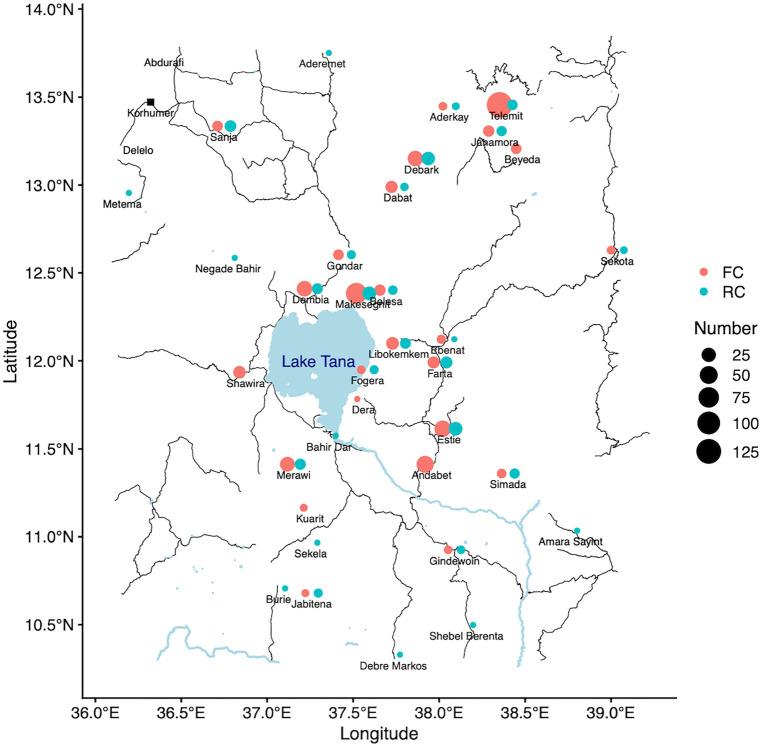
Visceral leishmaniasis (VL), a neglected tropical disease that causes substantial morbidity and mortality, is a serious health problem in Ethiopia. Infections are caused by (.) parasites. Most individuals remain asymptomatic, but some develop VL, which is generally fatal if not treated. We identified the area of Metema-Humera in Northwest Ethiopia as a setting in which we could follow migrant workers when they arrived in an endemic area. The demographic characteristics of this population and factors associated with their risk of asymptomatic infection are poorly characterised.
METHODS
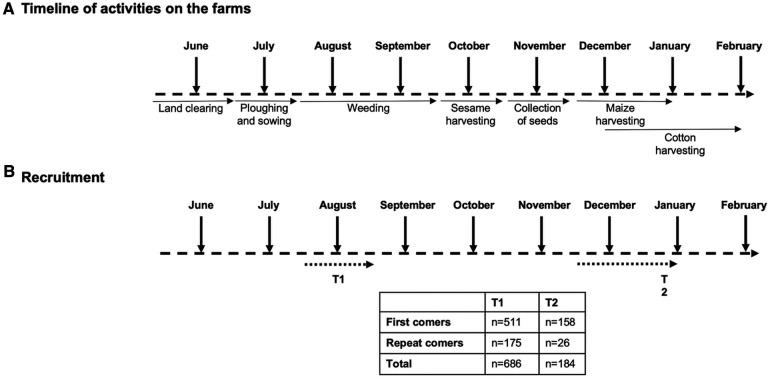
We divided our cohort into individuals who visited this area for the first time (first comers, FC) and those who had already been in this area (repeat comers, RC). We followed them from the beginning (Time 1, T1) to the end of the agricultural season (Time 2, T2), performing tests for sand fly bite exposure (anti-sand fly saliva antibody ELISA) and serology for infection (rK39 rapid diagnostic test and the direct agglutination test) at each time point and collecting information on risk factors for infection.
RESULTS
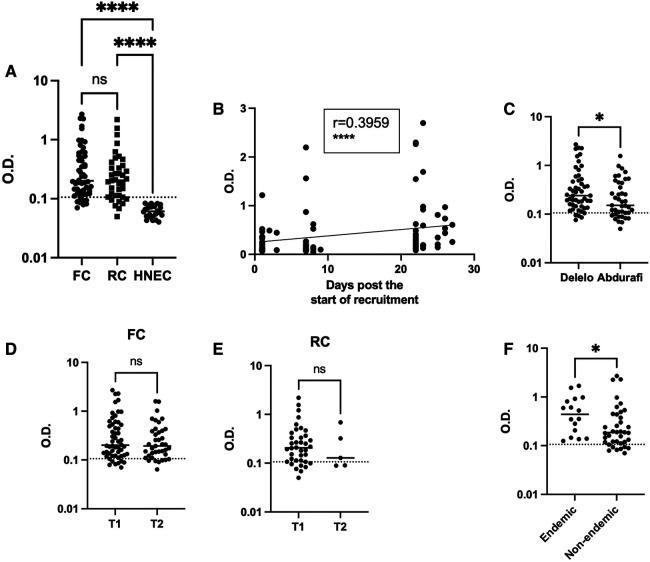
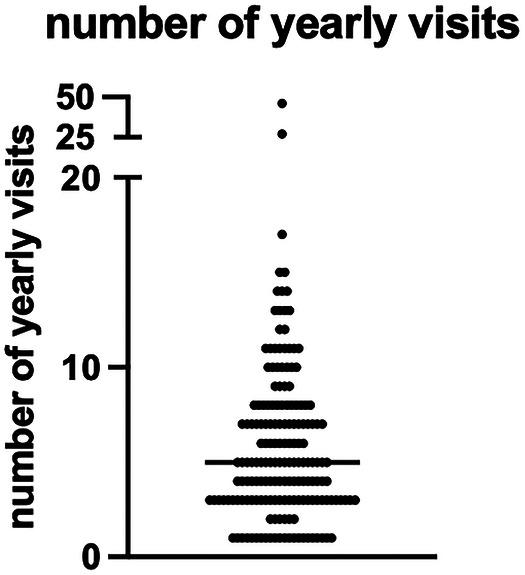
Our results show that most migrant workers come from non-endemic areas, are male, young (median age of 20 years) and are farmers or students. At T1, >80% of them had been already exposed to sand fly bites, as shown by the presence of anti-saliva antibodies. However, due to seasonality of sand flies there was no difference in exposure between FC and RC, or between T1 and T2. The serology data showed that at T1, but not at T2, a significantly higher proportion of RC were asymptomatic. Furthermore, 28.6% of FC became asymptomatic between T1 and T2. Over the duration of this study, one FC and one RC developed VL. In multivariable logistic regression of asymptomatic infection at T1, only age and the number of visits to Metema/Humera were significantly associated with asymptomatic infection.
CONCLUSION
A better understanding of the dynamics of parasite transmission and the risk factors associated with the development of asymptomatic infections and potentially VL will be essential for the development of new strategies to prevent leishmaniasis.
引言
内脏利什曼病(VL)是一种被忽视的热带疾病,会导致大量发病和死亡,在埃塞俄比亚是一个严重的健康问题。感染由(.)寄生虫引起。大多数个体保持无症状,但有些人会患上VL,如果不治疗通常会致命。我们将埃塞俄比亚西北部的梅特马 - 胡梅拉地区确定为一个我们可以在移民工人抵达流行地区时对其进行跟踪的地点。该人群的人口统计学特征以及与其无症状感染风险相关的因素目前了解甚少。
方法
我们将队列分为首次访问该地区的个体(初来者,FC)和已经在该地区的个体(再来者,RC)。我们从开始(时间1,T1)到农业季节结束(时间2,T2)对他们进行跟踪,在每个时间点进行沙蝇叮咬暴露检测(抗沙蝇唾液抗体ELISA)和利什曼原虫感染血清学检测(rK39快速诊断试验和直接凝集试验),并收集感染风险因素的信息。
结果
我们的结果表明,大多数移民工人来自非流行地区,为男性,年轻(中位年龄20岁),职业是农民或学生。在T1时,超过80%的人已被沙蝇叮咬,抗唾液抗体检测结果表明了这一点。然而,由于沙蝇的季节性,FC和RC之间以及T1和T2之间在叮咬暴露方面没有差异。血清学数据显示,在T1时,再来者中无症状的比例显著更高,但在T2时并非如此。此外,28.6%的初来者在T1和T2之间转为无症状感染。在本研究期间,一名初来者和一名再来者患上了VL。在T1时无症状感染的多变量逻辑回归分析中,只有年龄和访问梅特马/胡梅拉的次数与无症状感染显著相关。
结论
更好地了解寄生虫传播动态以及与无症状感染和潜在VL发生相关的风险因素对于制定预防利什曼病的新策略至关重要。
 Zotero 插件