• 文献检索
  • 文档翻译
  • 深度研究
  • 学术资讯
  • Suppr Zotero 插件Zotero 插件
  • 邀请有礼
  • 套餐&价格
  • 历史记录
应用&插件
Suppr Zotero 插件Zotero 插件浏览器插件Mac 客户端Windows 客户端微信小程序
定价
高级版会员购买积分包购买API积分包
服务
文献检索文档翻译深度研究API 文档MCP 服务
关于我们
关于 Suppr公司介绍联系我们用户协议隐私条款
关注我们

Suppr 超能文献

核心技术专利:CN118964589B侵权必究
粤ICP备2023148730 号-1Suppr @ 2026

文献检索

告别复杂PubMed语法,用中文像聊天一样搜索,搜遍4000万医学文献。AI智能推荐,让科研检索更轻松。

立即免费搜索

文件翻译

保留排版,准确专业,支持PDF/Word/PPT等文件格式,支持 12+语言互译。

免费翻译文档

深度研究

AI帮你快速写综述,25分钟生成高质量综述,智能提取关键信息,辅助科研写作。

立即免费体验

用于CHO细胞培养基优化和关键质量属性预测的可解释人工智能

Explainable AI for CHO cell culture media optimization and prediction of critical quality attribute.

作者信息

Gangwar Neelesh, Balraj Keerthiveena, Rathore Anurag S

机构信息

School of Interdisciplinary Research, Indian Institute of Technology, Delhi, New Delhi, 110016, India.

Yardi School of Artificial Intelligence, Indian Institute of Technology, Delhi, New Delhi, 110016, India.

出版信息

Appl Microbiol Biotechnol. 2024 Apr 24;108(1):308. doi: 10.1007/s00253-024-13147-w.

DOI:10.1007/s00253-024-13147-w
PMID:38656382
原文链接:https://pmc.ncbi.nlm.nih.gov/articles/PMC11043154/
Abstract

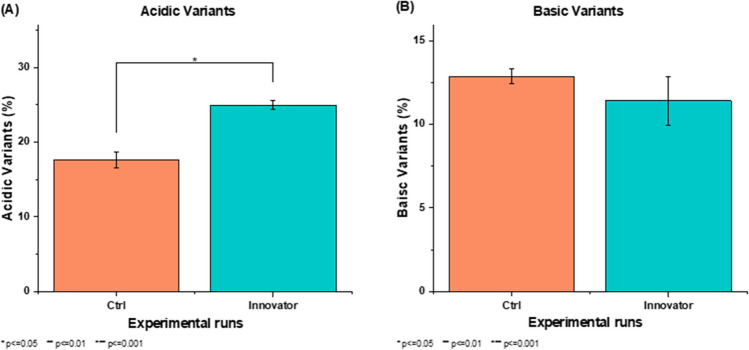
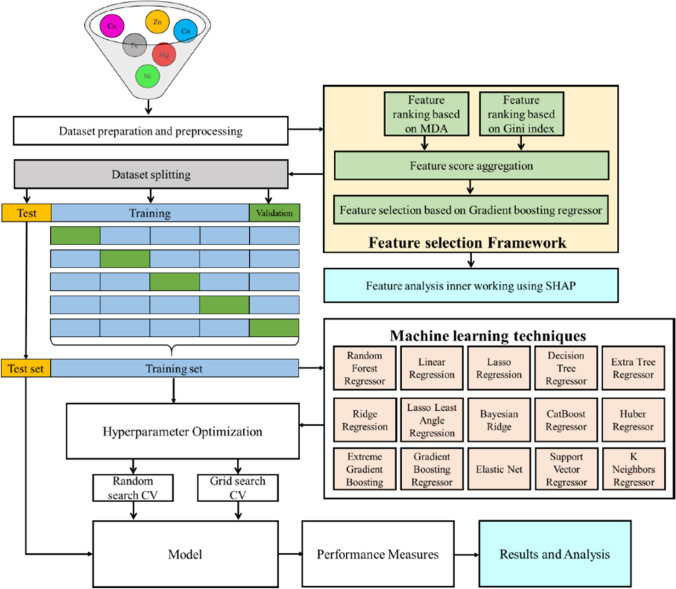
Cell culture media play a critical role in cell growth and propagation by providing a substrate; media components can also modulate the critical quality attributes (CQAs). However, the inherent complexity of the cell culture media makes unraveling the impact of the various media components on cell growth and CQAs non-trivial. In this study, we demonstrate an end-to-end machine learning framework for media component selection and prediction of CQAs. The preliminary dataset for feature selection was generated by performing CHO-GS (-/-) cell culture in media formulations with varying metal ion concentrations. Acidic and basic charge variant composition of the innovator product (24.97 ± 0.54% acidic and 11.41 ± 1.44% basic) was chosen as the target variable to evaluate the media formulations. Pearson's correlation coefficient and random forest-based techniques were used for feature ranking and feature selection for the prediction of acidic and basic charge variants. Furthermore, a global interpretation analysis using SHapley Additive exPlanations was utilized to select optimal features by evaluating the contributions of each feature in the extracted vectors. Finally, the medium combinations were predicted by employing fifteen different regression models and utilizing a grid search and random search cross-validation for hyperparameter optimization. Experimental results demonstrate that Fe and Zn significantly impact the charge variant profile. This study aims to offer insights that are pertinent to both innovators seeking to establish a complete pipeline for media development and optimization and biosimilar-based manufacturers who strive to demonstrate the analytical and functional biosimilarity of their products to the innovator. KEY POINTS: • Developed a framework for optimizing media components and prediction of CQA. • SHAP enhances global interpretability, aiding informed decision-making. • Fifteen regression models were employed to predict medium combinations.

摘要

细胞培养基通过提供底物在细胞生长和增殖中发挥关键作用;培养基成分也可以调节关键质量属性(CQAs)。然而,细胞培养基固有的复杂性使得阐明各种培养基成分对细胞生长和CQAs的影响并非易事。在本研究中,我们展示了一个用于培养基成分选择和CQAs预测的端到端机器学习框架。用于特征选择的初步数据集是通过在具有不同金属离子浓度的培养基配方中进行CHO-GS(-/-)细胞培养而生成的。选择创新产品的酸性和碱性电荷变体组成(24.97±0.54%酸性和11.41±1.44%碱性)作为评估培养基配方的目标变量。使用Pearson相关系数和基于随机森林的技术对酸性和碱性电荷变体的预测进行特征排名和特征选择。此外,利用SHapley Additive exPlanations进行全局解释分析,通过评估提取向量中每个特征的贡献来选择最佳特征。最后,通过采用十五种不同的回归模型并利用网格搜索和随机搜索交叉验证进行超参数优化来预测培养基组合。实验结果表明,铁和锌对电荷变体谱有显著影响。本研究旨在为寻求建立完整的培养基开发和优化流程的创新者以及努力证明其产品与创新者产品在分析和功能上具有生物相似性的生物类似药制造商提供相关见解。要点:• 开发了一个用于优化培养基成分和预测CQAs的框架。• SHAP增强了全局可解释性,有助于做出明智的决策。• 采用十五种回归模型预测培养基组合。
https://cdn.ncbi.nlm.nih.gov/pmc/blobs/0479/11043154/21755e51a56b/253_2024_13147_Fig8_HTML.jpg
https://cdn.ncbi.nlm.nih.gov/pmc/blobs/0479/11043154/bb2a31d56fb2/253_2024_13147_Fig1_HTML.jpg
https://cdn.ncbi.nlm.nih.gov/pmc/blobs/0479/11043154/aa8092ea73e5/253_2024_13147_Fig2_HTML.jpg
https://cdn.ncbi.nlm.nih.gov/pmc/blobs/0479/11043154/c76bd1d8a269/253_2024_13147_Fig3_HTML.jpg
https://cdn.ncbi.nlm.nih.gov/pmc/blobs/0479/11043154/81b92584a677/253_2024_13147_Fig4_HTML.jpg
https://cdn.ncbi.nlm.nih.gov/pmc/blobs/0479/11043154/9f73a3f12c6d/253_2024_13147_Fig5_HTML.jpg
https://cdn.ncbi.nlm.nih.gov/pmc/blobs/0479/11043154/05341b18f642/253_2024_13147_Fig6_HTML.jpg
https://cdn.ncbi.nlm.nih.gov/pmc/blobs/0479/11043154/7c12995bd9fe/253_2024_13147_Fig7_HTML.jpg
https://cdn.ncbi.nlm.nih.gov/pmc/blobs/0479/11043154/21755e51a56b/253_2024_13147_Fig8_HTML.jpg
https://cdn.ncbi.nlm.nih.gov/pmc/blobs/0479/11043154/bb2a31d56fb2/253_2024_13147_Fig1_HTML.jpg
https://cdn.ncbi.nlm.nih.gov/pmc/blobs/0479/11043154/aa8092ea73e5/253_2024_13147_Fig2_HTML.jpg
https://cdn.ncbi.nlm.nih.gov/pmc/blobs/0479/11043154/c76bd1d8a269/253_2024_13147_Fig3_HTML.jpg
https://cdn.ncbi.nlm.nih.gov/pmc/blobs/0479/11043154/81b92584a677/253_2024_13147_Fig4_HTML.jpg
https://cdn.ncbi.nlm.nih.gov/pmc/blobs/0479/11043154/9f73a3f12c6d/253_2024_13147_Fig5_HTML.jpg
https://cdn.ncbi.nlm.nih.gov/pmc/blobs/0479/11043154/05341b18f642/253_2024_13147_Fig6_HTML.jpg
https://cdn.ncbi.nlm.nih.gov/pmc/blobs/0479/11043154/7c12995bd9fe/253_2024_13147_Fig7_HTML.jpg
https://cdn.ncbi.nlm.nih.gov/pmc/blobs/0479/11043154/21755e51a56b/253_2024_13147_Fig8_HTML.jpg

相似文献

1
Explainable AI for CHO cell culture media optimization and prediction of critical quality attribute.用于CHO细胞培养基优化和关键质量属性预测的可解释人工智能
Appl Microbiol Biotechnol. 2024 Apr 24;108(1):308. doi: 10.1007/s00253-024-13147-w.
2
QbD-guided pharmaceutical development of Pembrolizumab biosimilar candidate PSG-024 propelled to industry meeting primary requirements of comparability to Keytruda®.由质量源于设计(QbD)引导的帕博利珠单抗生物类似药候选药物PSG-024的药物研发,已达到与可瑞达®(Keytruda®)具有可比性这一行业会议的主要要求。
Eur J Pharm Sci. 2022 Jun 1;173:106171. doi: 10.1016/j.ejps.2022.106171. Epub 2022 Apr 1.
3
Recent advances in culture medium design for enhanced production of monoclonal antibodies in CHO cells: A comparative study of machine learning and systems biology approaches.用于提高中国仓鼠卵巢细胞中单克隆抗体产量的培养基设计的最新进展:机器学习与系统生物学方法的比较研究
Biotechnol Adv. 2025 Jan-Feb;78:108480. doi: 10.1016/j.biotechadv.2024.108480. Epub 2024 Nov 19.
4
Improving titer while maintaining quality of final formulated drug substance via optimization of CHO cell culture conditions in low-iron chemically defined media.通过优化低铁化学成分确定的培养基中的 CHO 细胞培养条件来提高效价,同时保持最终制剂药物的质量。
MAbs. 2018 Apr;10(3):488-499. doi: 10.1080/19420862.2018.1433978. Epub 2018 Feb 20.
5
Use of spectroscopic process analytical technology for rapid quality evaluation during preparation of CHO cell culture media.利用光谱过程分析技术快速评估 CHO 细胞培养基制备过程中的质量。
Biotechnol Prog. 2024 Sep-Oct;40(5):e3477. doi: 10.1002/btpr.3477. Epub 2024 May 3.
6
Explainable machine learning models based on multimodal time-series data for the early detection of Parkinson's disease.基于多模态时间序列数据的可解释机器学习模型用于帕金森病的早期检测。
Comput Methods Programs Biomed. 2023 Jun;234:107495. doi: 10.1016/j.cmpb.2023.107495. Epub 2023 Mar 23.
7
Parallel experimental design and multivariate analysis provides efficient screening of cell culture media supplements to improve biosimilar product quality.平行实验设计和多变量分析为高效筛选细胞培养基补充剂以提高生物类似药产品质量提供了方法。
Biotechnol Bioeng. 2017 Jul;114(7):1448-1458. doi: 10.1002/bit.26269. Epub 2017 Mar 14.
8
Impacts on product quality attributes of monoclonal antibodies produced in CHO cell bioreactor cultures during intentional mycoplasma contamination events.在故意支原体污染事件中,CHO 细胞生物反应器培养生产的单克隆抗体对产品质量属性的影响。
Biotechnol Bioeng. 2020 Sep;117(9):2802-2815. doi: 10.1002/bit.27436. Epub 2020 Jun 4.
9
Development and Validation of an Explainable Machine Learning Model for Predicting Myocardial Injury After Noncardiac Surgery in Two Centers in China: Retrospective Study.中国两个中心用于预测非心脏手术后心肌损伤的可解释机器学习模型的开发与验证:一项回顾性研究
JMIR Aging. 2024 Jul 26;7:e54872. doi: 10.2196/54872.
10
Benchmarking of commercially available CHO cell culture media for antibody production.用于抗体生产的市售CHO细胞培养基的基准测试。
Appl Microbiol Biotechnol. 2015 Jun;99(11):4645-57. doi: 10.1007/s00253-015-6514-4. Epub 2015 Apr 7.

引用本文的文献

1
Machine learning-driven optimization of culture conditions and media components to mitigate charge heterogeneity in monoclonal antibody production: current advances and future perspectives.机器学习驱动的培养条件和培养基成分优化以减轻单克隆抗体生产中的电荷异质性:当前进展与未来展望
MAbs. 2025 Dec;17(1):2547084. doi: 10.1080/19420862.2025.2547084. Epub 2025 Aug 14.
2
Wheels turning: CHO cell modeling moves into a digital biomanufacturing era: Subtitle: CHO Metabolic Modeling.车轮转动:CHO细胞建模步入数字生物制造时代:副标题:CHO代谢建模
Comput Struct Biotechnol J. 2025 Jun 23;27:2796-2813. doi: 10.1016/j.csbj.2025.06.035. eCollection 2025.
3

本文引用的文献

1
Challenges in developing cell culture media using machine learning.使用机器学习开发细胞培养基面临的挑战。
Biotechnol Adv. 2024 Jan-Feb;70:108293. doi: 10.1016/j.biotechadv.2023.108293. Epub 2023 Nov 19.
2
Trace metal optimization in CHO cell culture through statistical design of experiments.通过实验设计统计学优化 CHO 细胞培养中的痕量金属。
Biotechnol Prog. 2023 Nov-Dec;39(6):e3368. doi: 10.1002/btpr.3368. Epub 2023 Jul 27.
3
Employing active learning in the optimization of culture medium for mammalian cells.采用主动学习优化哺乳动物细胞的培养基。
Innovative Formulation Strategies for Biosimilars: Trends Focused on Buffer-Free Systems, Safety, Regulatory Alignment, and Intellectual Property Challenges.
生物类似药的创新制剂策略:聚焦无缓冲系统、安全性、监管一致性及知识产权挑战的趋势
Pharmaceuticals (Basel). 2025 Jun 17;18(6):908. doi: 10.3390/ph18060908.
4
Characterization and design of dipeptide media formulation for scalable therapeutic production.用于可扩展治疗性生产的二肽培养基配方的表征与设计
Appl Microbiol Biotechnol. 2025 Jan 14;109(1):7. doi: 10.1007/s00253-024-13402-0.
5
Recent advances in culture medium design for enhanced production of monoclonal antibodies in CHO cells: A comparative study of machine learning and systems biology approaches.用于提高中国仓鼠卵巢细胞中单克隆抗体产量的培养基设计的最新进展:机器学习与系统生物学方法的比较研究
Biotechnol Adv. 2025 Jan-Feb;78:108480. doi: 10.1016/j.biotechadv.2024.108480. Epub 2024 Nov 19.
NPJ Syst Biol Appl. 2023 May 30;9(1):20. doi: 10.1038/s41540-023-00284-7.
4
A review of algorithmic approaches for cell culture media optimization.细胞培养基优化算法方法综述。
Front Bioeng Biotechnol. 2023 May 11;11:1195294. doi: 10.3389/fbioe.2023.1195294. eCollection 2023.
5
Effects and mechanism of small molecule additives on recombinant protein in CHO cells.小分子添加剂对 CHO 细胞中重组蛋白的影响及其作用机制。
Appl Microbiol Biotechnol. 2023 May;107(9):2771-2781. doi: 10.1007/s00253-023-12486-4. Epub 2023 Mar 27.
6
Big data and machine learning driven bioprocessing - Recent trends and critical analysis.大数据和机器学习驱动的生物工艺学——最新趋势和关键分析。
Bioresour Technol. 2023 Mar;372:128625. doi: 10.1016/j.biortech.2023.128625. Epub 2023 Jan 13.
7
Online Extra Trees Regressor.在线极端随机树回归器。
IEEE Trans Neural Netw Learn Syst. 2023 Oct;34(10):6755-6767. doi: 10.1109/TNNLS.2022.3212859. Epub 2023 Oct 5.
8
Artificial intelligence and machine learning applications in biopharmaceutical manufacturing.人工智能和机器学习在生物制药制造中的应用。
Trends Biotechnol. 2023 Apr;41(4):497-510. doi: 10.1016/j.tibtech.2022.08.007. Epub 2022 Sep 15.
9
Exploring the potential of machine learning for more efficient development and production of biopharmaceuticals.探索机器学习在提高生物制药开发和生产效率方面的潜力。
Biotechnol Prog. 2022 Nov;38(6):e3291. doi: 10.1002/btpr.3291. Epub 2022 Aug 11.
10
GPUTreeShap: massively parallel exact calculation of SHAP scores for tree ensembles.GPUTreeShap:用于树集成的SHAP值的大规模并行精确计算。
PeerJ Comput Sci. 2022 Apr 5;8:e880. doi: 10.7717/peerj-cs.880. eCollection 2022.