Ermini Florian, Low Victoria F, Song Jennifer J, Tan Adelie Y S, Faull Richard L M, Dragunow Michael, Curtis Maurice A, Dominy Stephen S
Previously Cortexyme, Inc., South San Francisco, CA, USA.
Department of Bioengineering, Stanford University, Stanford, CA, USA.
NPJ Parkinsons Dis. 2024 Apr 25;10(1):90. doi: 10.1038/s41531-024-00705-2.
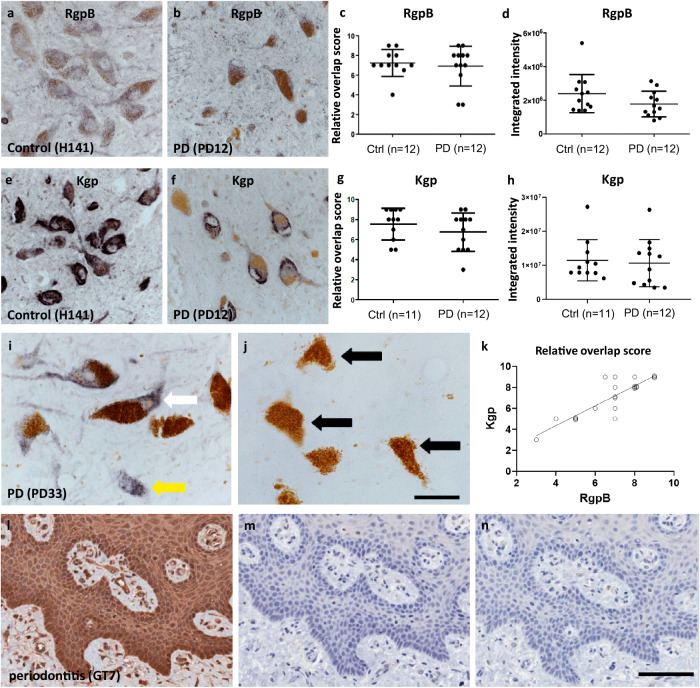
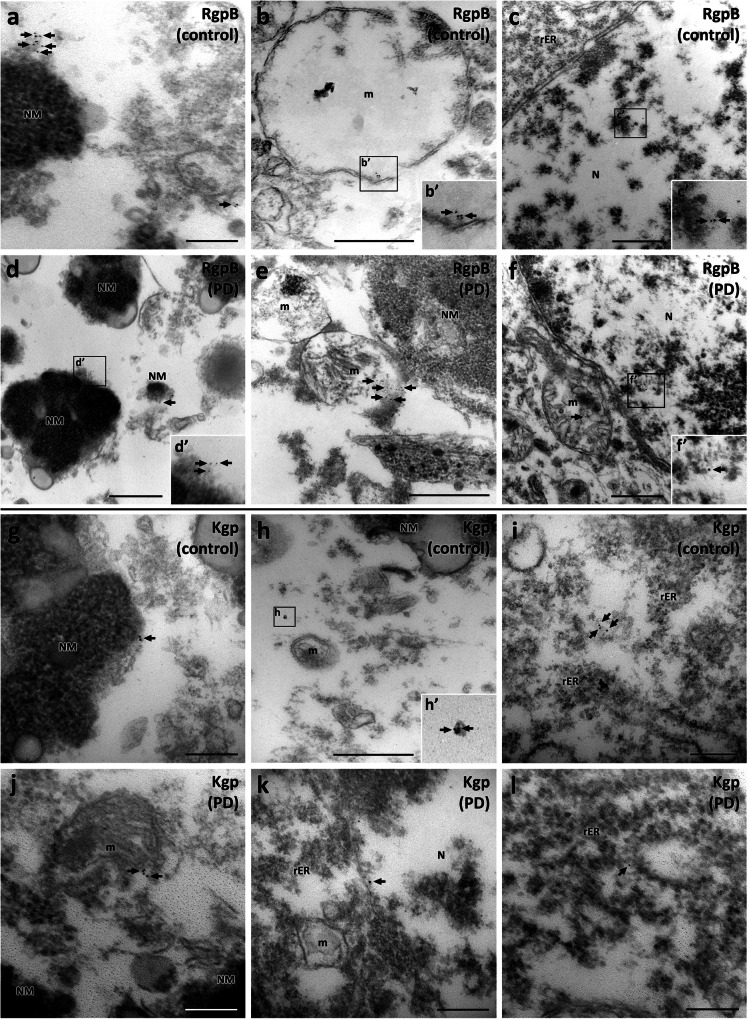
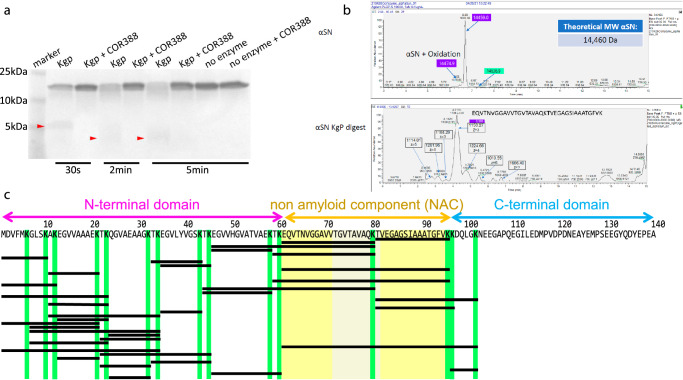
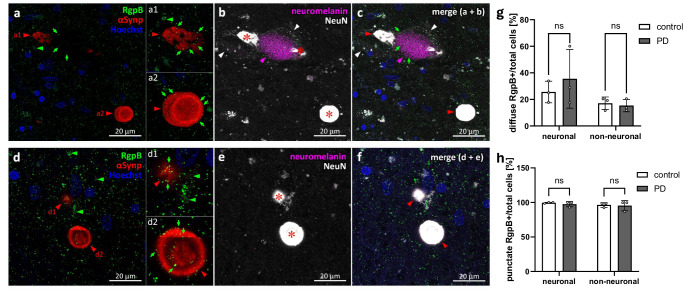
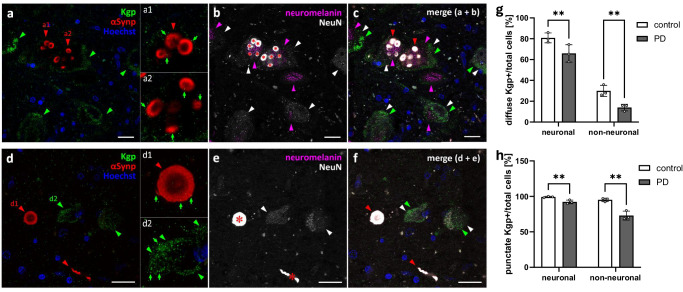
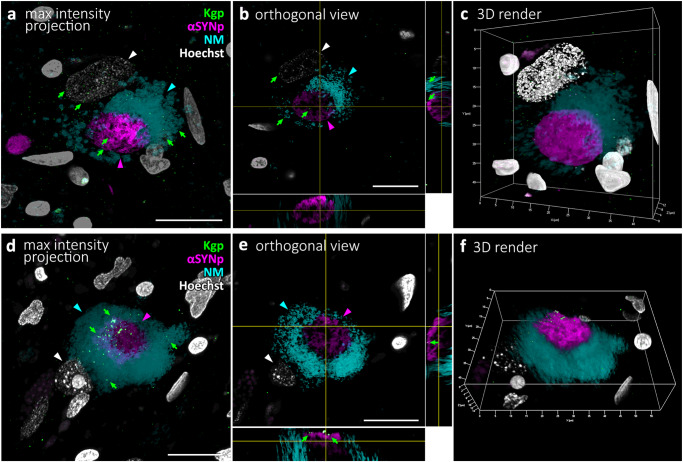
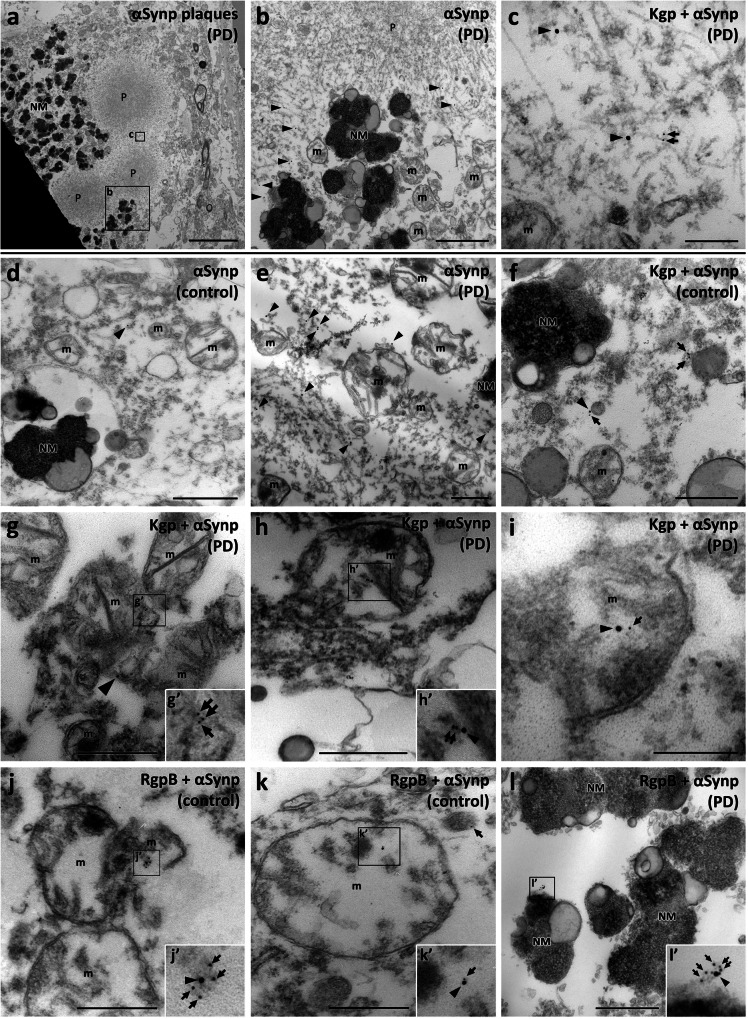
Gingipains are protease virulence factors produced by Porphyromonas gingivalis, a Gram-negative bacterium best known for its role in chronic periodontitis. Gingipains were recently identified in the middle temporal gyrus of postmortem Alzheimer's disease (AD) brains, where gingipain load correlated with AD diagnosis and tau and ubiquitin pathology. Since AD and Parkinson's disease (PD) share some overlapping pathologic features, including nigral pathology and Lewy bodies, the current study explored whether gingipains are present in the substantia nigra pars compacta of PD brains. In immunohistochemical techniques and multi-channel fluorescence studies, gingipain antigens were abundant in dopaminergic neurons in the substantia nigra of both PD and neurologically normal control brains. 3-dimensional reconstructions of Lewy body containing neurons revealed that gingipains associated with the periphery of alpha-synuclein aggregates but were occasionally observed inside aggregates. In vitro proteomic analysis demonstrated that recombinant alpha-synuclein is cleaved by lysine-gingipain, generating multiple alpha-synuclein fragments including the non-amyloid component fragments. Immunogold electron microscopy with co-labeling of gingipains and alpha-synuclein confirmed the occasional colocalization of gingipains with phosphorylated (pSER129) alpha-synuclein. In dopaminergic neurons, gingipains localized to the perinuclear cytoplasm, neuromelanin, mitochondria, and nucleus. These data suggest that gingipains localize in dopaminergic neurons in the substantia nigra and interact with alpha-synuclein.
牙龈蛋白酶是由牙龈卟啉单胞菌产生的蛋白酶毒力因子,牙龈卟啉单胞菌是一种革兰氏阴性菌,因其在慢性牙周炎中的作用而广为人知。最近在阿尔茨海默病(AD)患者死后大脑的颞中回中发现了牙龈蛋白酶,牙龈蛋白酶的含量与AD诊断以及tau蛋白和泛素病理学相关。由于AD和帕金森病(PD)具有一些重叠的病理特征,包括黑质病理和路易小体,因此本研究探讨了牙龈蛋白酶是否存在于PD患者大脑的黑质致密部。在免疫组织化学技术和多通道荧光研究中,牙龈蛋白酶抗原在PD患者和神经功能正常的对照者大脑黑质中的多巴胺能神经元中均大量存在。对含有路易小体的神经元进行三维重建显示,牙龈蛋白酶与α-突触核蛋白聚集体的外周相关,但偶尔也在聚集体内部观察到。体外蛋白质组学分析表明,重组α-突触核蛋白可被赖氨酸牙龈蛋白酶切割,产生多个α-突触核蛋白片段,包括非淀粉样成分片段。牙龈蛋白酶和α-突触核蛋白共标记的免疫金电子显微镜证实了牙龈蛋白酶与磷酸化(pSER129)α-突触核蛋白偶尔共定位。在多巴胺能神经元中,牙龈蛋白酶定位于核周细胞质、神经黑色素、线粒体和细胞核。这些数据表明,牙龈蛋白酶定位于黑质中的多巴胺能神经元,并与α-突触核蛋白相互作用。