Lu Hui, Zheng Shuaichao, Ma Chao, Gao Xueke, Ji Jichao, Luo Junyu, Hua Hongxia, Cui Jinjie
National Key Laboratory of Cotton Bio-Breeding and Integrated Utilization, Chinese Academy of Agricultural Sciences, No. 38, Huanghe Road, Anyang 455000, China.
Hubei Insect Resources Utilization and Sustainable Pest Management Key Laboratory, College of Plant, Science and Technology, Huazhong Agricultural University, Wuhan 430070, China.
Insects. 2024 Apr 8;15(4):254. doi: 10.3390/insects15040254.
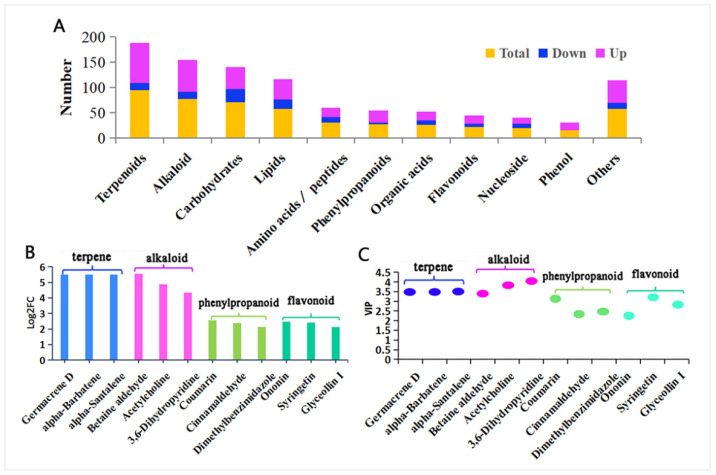
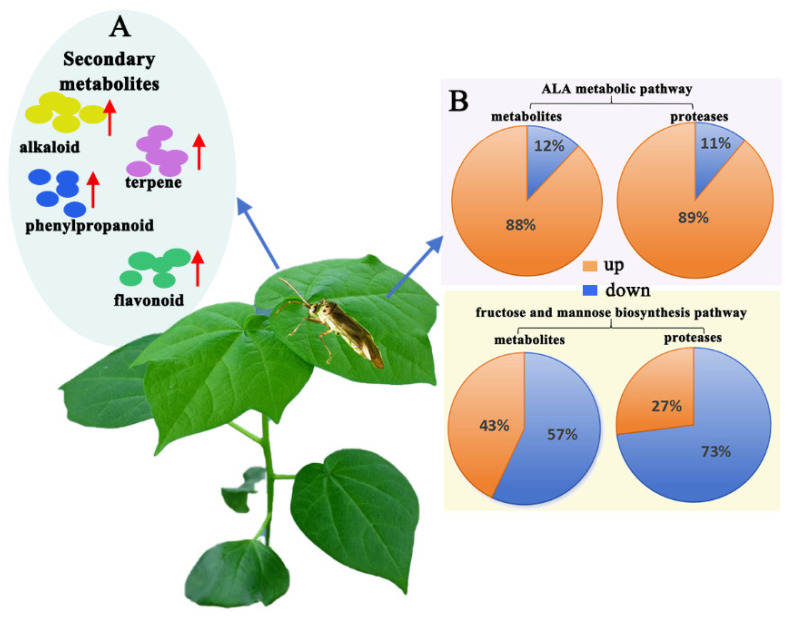
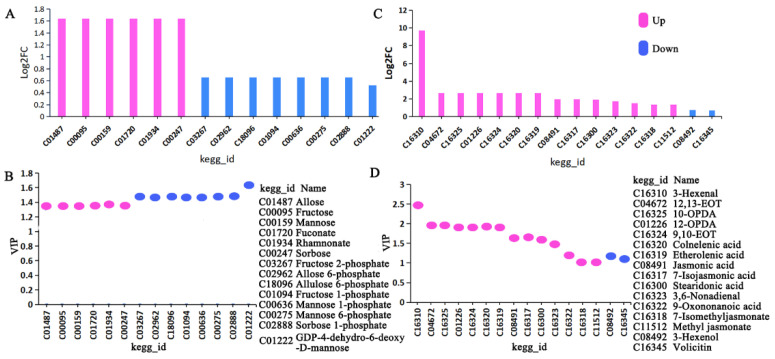
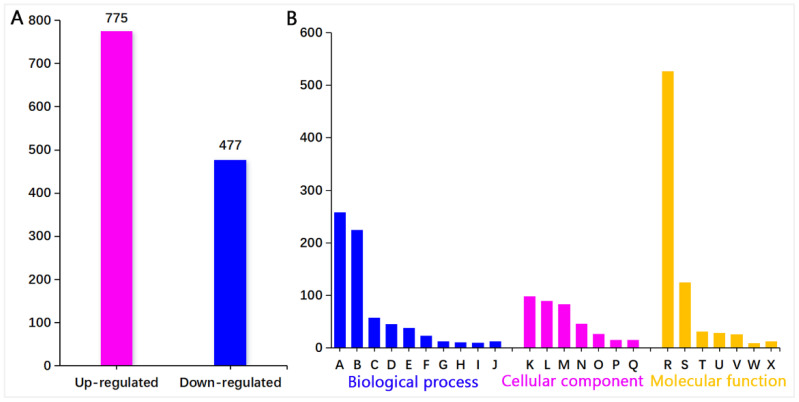
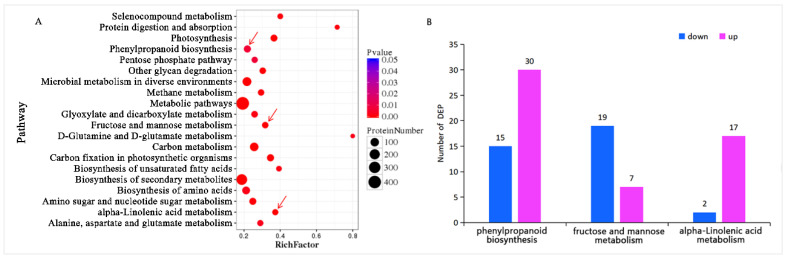
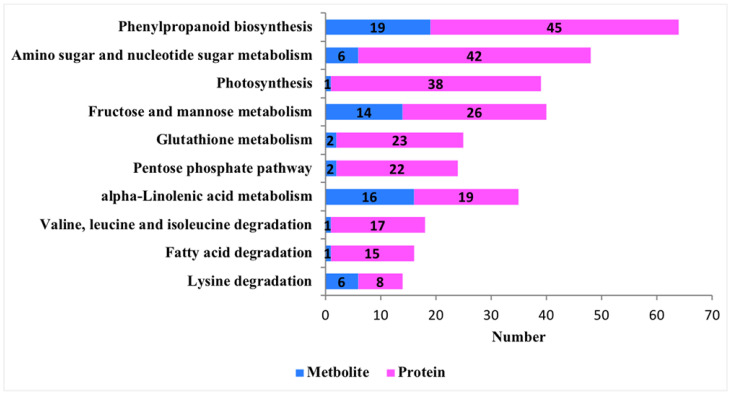
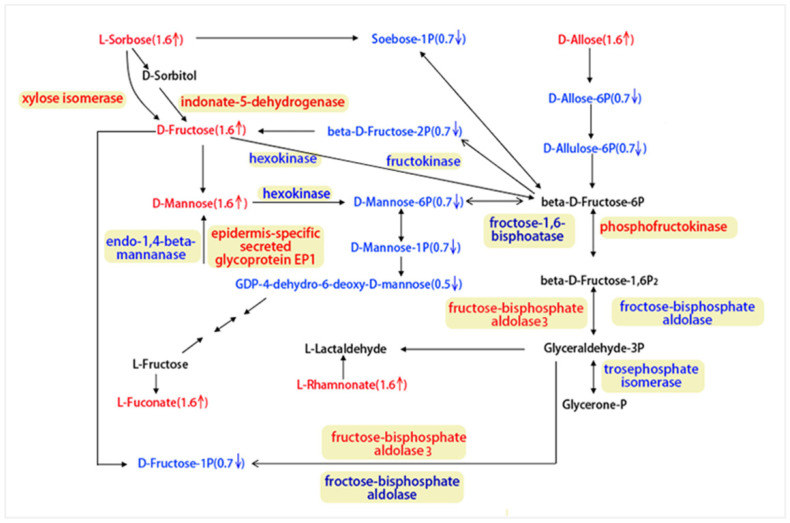
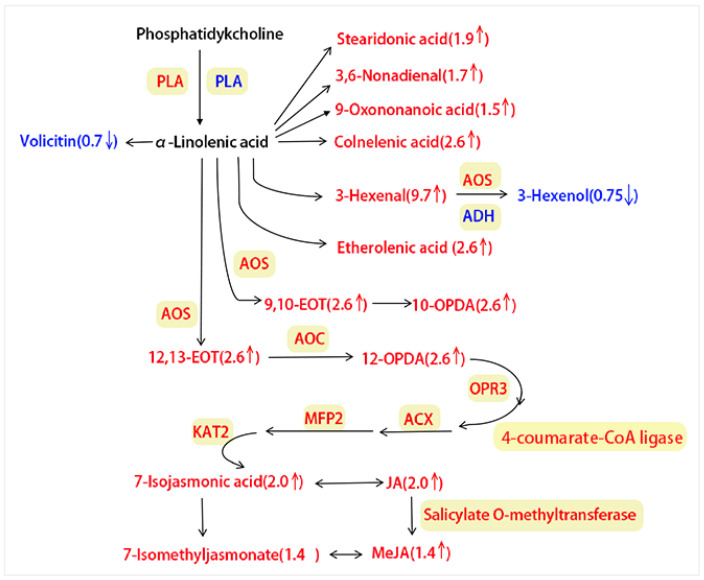
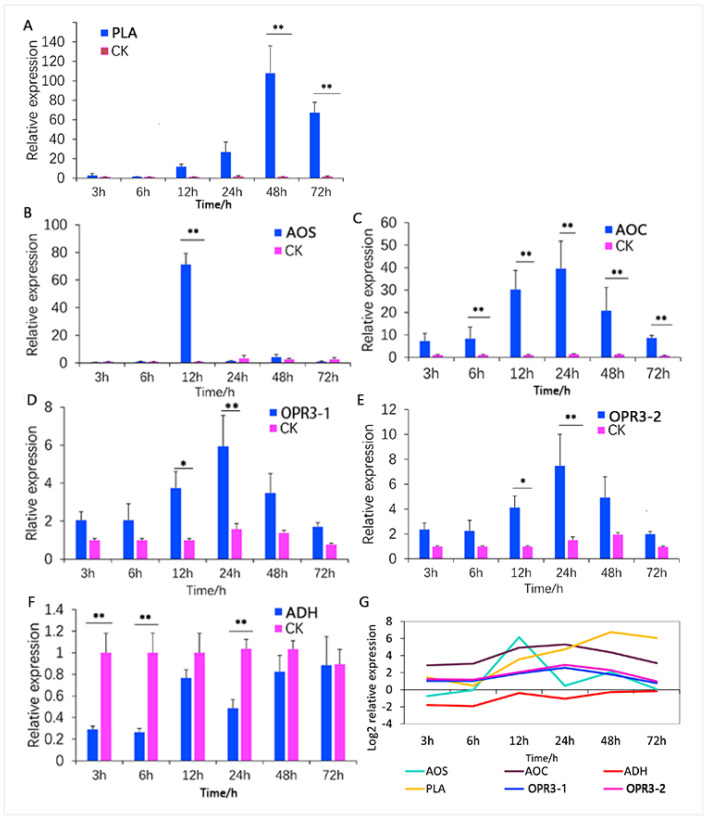
The recent dominance of Jakovlev as the primary cotton field pest in Bt-cotton-cultivated areas has generated significant interest in cotton pest control research. This study addresses the limited understanding of cotton defense mechanisms triggered by feeding. Utilizing LC-QTOF-MS, we analyzed cotton metabolomic changes induced by , and identified 496 differential positive ions (374 upregulated, 122 downregulated) across 11 categories, such as terpenoids, alkaloids, phenylpropanoids, flavonoids, isoflavones, etc. Subsequent iTRAQ-LC-MS/MS analysis of the cotton proteome revealed 1569 differential proteins enriched in 35 metabolic pathways. Integrated metabolome and proteome analysis highlighted significant upregulation of 17 (89%) proteases in the α-linolenic acid (ALA) metabolism pathway, concomitant with a significant increase in 14 (88%) associated metabolites. Conversely, 19 (73%) proteases in the fructose and mannose biosynthesis pathway were downregulated, with 7 (27%) upregulated proteases corresponding to the downregulation of 8 pathway-associated metabolites. Expression analysis of key regulators in the ALA pathway, including allene oxidase synthase (AOS), phospholipase A (PLA), allene oxidative cyclase (AOC), and 12-oxophytodienoate reductase3 (OPR3), demonstrated significant responses to feeding. Finally, this study pioneers the exploration of molecular mechanisms in the plant-insect relationship, thereby offering insights into potential novel control strategies against this cotton pest.
近期,雅科夫列夫棉铃虫在种植转基因抗虫棉地区成为主要棉田害虫,这引发了棉花害虫防治研究的广泛关注。本研究旨在解决对取食引发的棉花防御机制了解有限的问题。利用液相色谱-四极杆飞行时间质谱(LC-QTOF-MS),我们分析了由[具体害虫名称未给出]取食诱导的棉花代谢组变化,并在萜类、生物碱、苯丙烷类、黄酮类、异黄酮类等11个类别中鉴定出496个差异正离子(374个上调,122个下调)。随后,对棉花蛋白质组进行的iTRAQ-LC-MS/MS分析揭示了1569个差异蛋白质,这些蛋白质富集于35条代谢途径中。代谢组和蛋白质组的综合分析突出显示,α-亚麻酸(ALA)代谢途径中有17种(89%)蛋白酶显著上调,同时14种(88%)相关代谢物也显著增加。相反,果糖和甘露糖生物合成途径中的19种(73%)蛋白酶下调,7种(27%)上调的蛋白酶对应8种途径相关代谢物的下调。对ALA途径中关键调节因子的表达分析,包括丙二烯氧化酶合酶(AOS)、磷脂酶A(PLA)、丙二烯氧化环化酶(AOC)和12-氧代植物二烯酸还原酶3(OPR3),显示出对[具体害虫名称未给出]取食的显著响应。最后,本研究率先探索了植物-昆虫关系中的分子机制,从而为针对这种棉花害虫的潜在新型防治策略提供了见解。