Kostadinov Kostadin, Popova-Sotirova Ivelina, Marinova Yuliyana, Musurlieva Nina, Iskrov Georgi, Stefanov Rumen
Department of Social Medicine and Public Health, Faculty of Public Health, Medical University of Plovdiv, 4002 Plovdiv, Bulgaria.
Institute for Rare Diseases, 4023 Plovdiv, Bulgaria.
Cancers (Basel). 2024 Apr 12;16(8):1489. doi: 10.3390/cancers16081489.
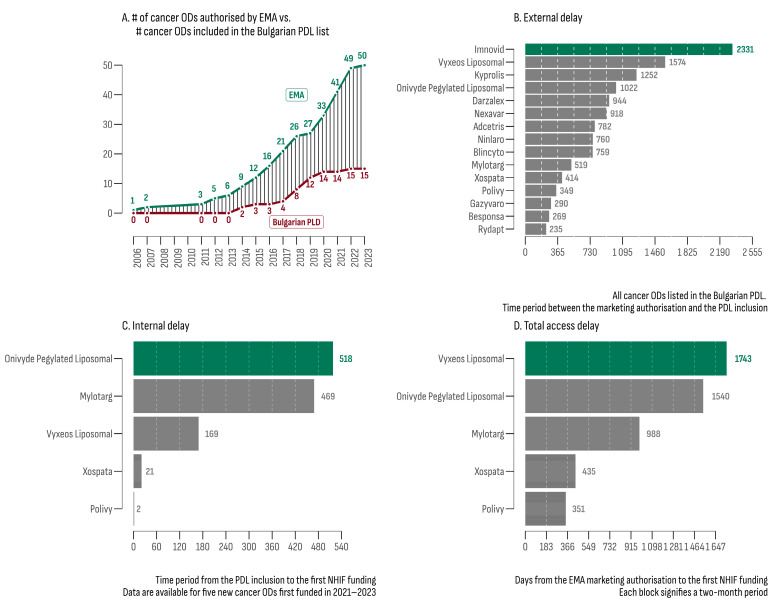
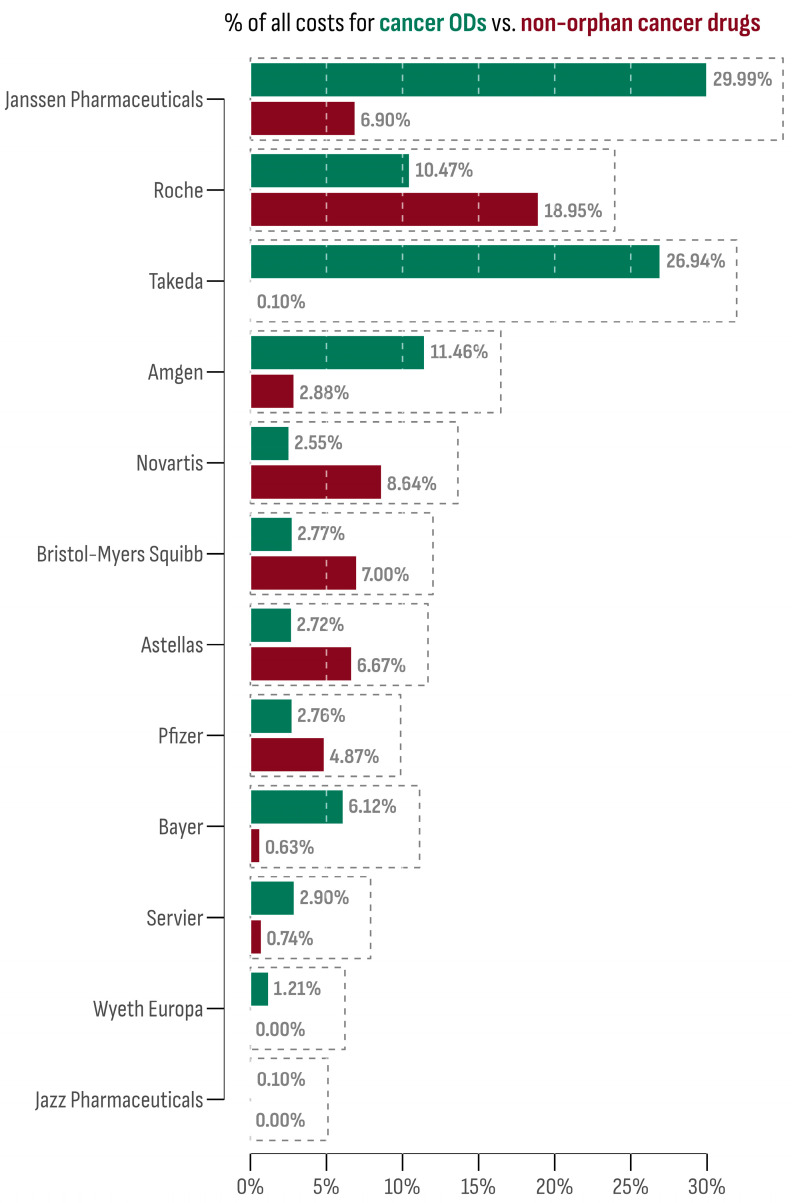
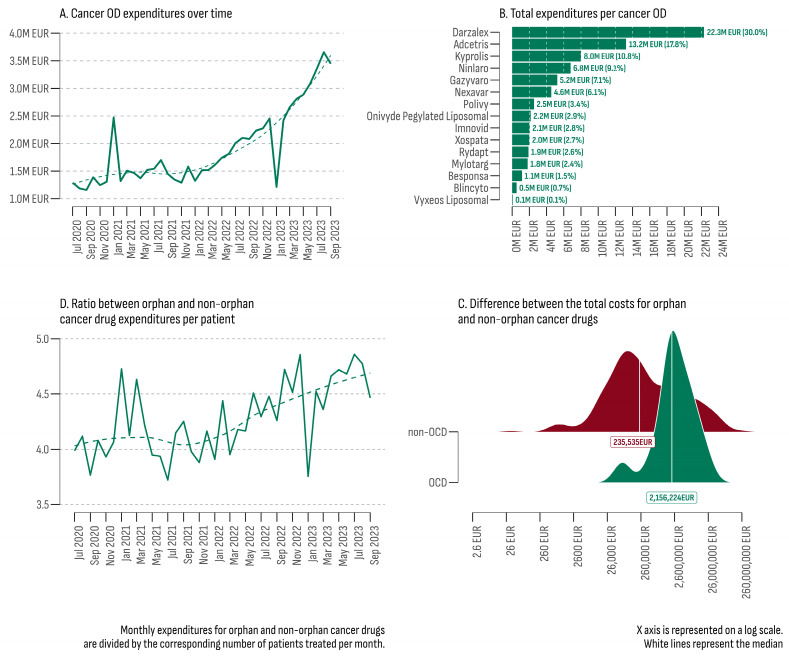
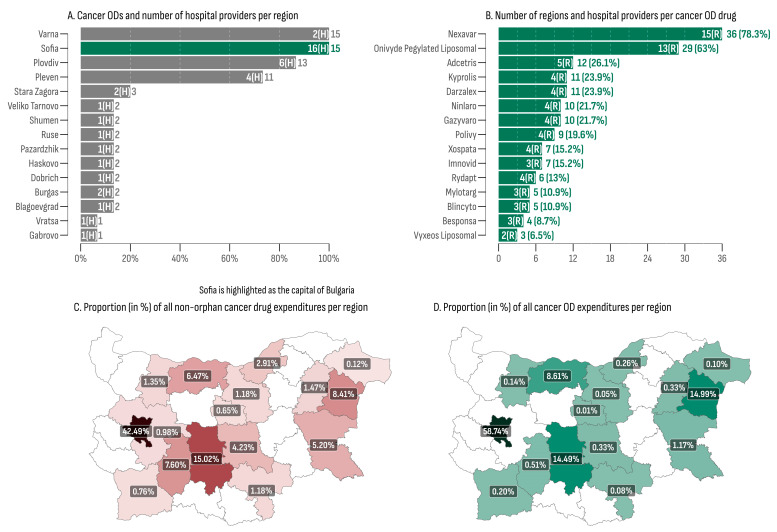
Rare cancers are defined by an annual incidence of fewer than 6 per 100,000. Bearing similarities to rare diseases, they are associated with substantial health inequalities due to diagnostic complexity and delayed access to innovative therapies. This situation is further aggravated in Southeastern European countries like Bulgaria, where limited public resources and expertise underscore the need for additional policy and translational research on rare cancers. This study aimed to explore the availability and access to orphan drugs for rare cancers in Bulgaria for the period of 2020-2023. We cross-compared data from both the European Union and national public sources to evaluate the number of available and accessible orphan drugs for rare cancers, the delay from market authorization to reimbursement, the dynamics of public expenditures, and regional disparities in access across the country. We juxtaposed the main characteristics of oncological and non-oncological orphan drugs as well. Only 15 out of 50 oncological orphan drugs that were authorized by the European Medicine Agency were accessible for rare cancer patients in Bulgaria. The median delay between market authorization and inclusion in the Bulgarian Positive Drug List was 760 days. The total expenditures for all orphan drugs for rare cancers amounted to EUR 74,353,493 from 2020 to 2023. The budgetary impact of this group rose from 0.24% to 3.77% of total public medicinal product expenditures for the study period. Rare cancer patients represent a vulnerable population that often faces limited to no access to treatment. We call for targeted European and national policies to address this major inequality.
罕见癌症的定义是年发病率低于十万分之六。与罕见疾病相似,由于诊断复杂以及获得创新疗法的时间延迟,它们与严重的健康不平等现象相关联。在保加利亚等东南欧国家,这种情况进一步恶化,那里有限的公共资源和专业知识凸显了对罕见癌症进行更多政策和转化研究的必要性。本研究旨在探讨2020年至2023年期间保加利亚罕见癌症孤儿药的可获得性和获取情况。我们对欧盟和国家公共来源的数据进行交叉比较,以评估罕见癌症可用和可获取的孤儿药数量、从市场授权到报销的延迟、公共支出动态以及全国范围内获取的地区差异。我们还对比了肿瘤学和非肿瘤学孤儿药的主要特征。在欧洲药品管理局批准的50种肿瘤学孤儿药中,保加利亚的罕见癌症患者只能获得15种。从市场授权到列入保加利亚《阳性药品清单》的中位延迟时间为760天。2020年至2023年期间,用于罕见癌症的所有孤儿药总支出达74353493欧元。在研究期间,该类药物的预算影响从公共药品总支出的0.24%升至3.77%。罕见癌症患者是一个弱势群体,常常面临治疗机会有限或根本无法获得治疗的情况。我们呼吁制定有针对性的欧洲和国家政策来解决这一重大不平等问题。