de Oliveira Bruna Eduarda Gandra, Maia Fernanda Latorre Melgaço, Massimino Lívia Contini, Garcia Claudio Fernandes, Plepis Ana Maria de Guzzi, Martins Virgínia da Conceição Amaro, Reis Carlos Henrique Bertoni, Silva Vinícius Rodrigues, Bezerra Andre Alves, Pauris Carolina Chen, Buchaim Daniela Vieira, Silva Yggor Biloria E, Buchaim Rogerio Leone, da Cunha Marcelo Rodrigues
Orthopedics and Traumatology Sector, Faculty of Medicine of Jundiaí, Jundiaí 13202-550, Brazil.
Department of Implant Dentistry, Faculdade São Leopoldo Mandic, Campinas 13045-755, Brazil.
Pharmaceutics. 2024 Apr 2;16(4):491. doi: 10.3390/pharmaceutics16040491.
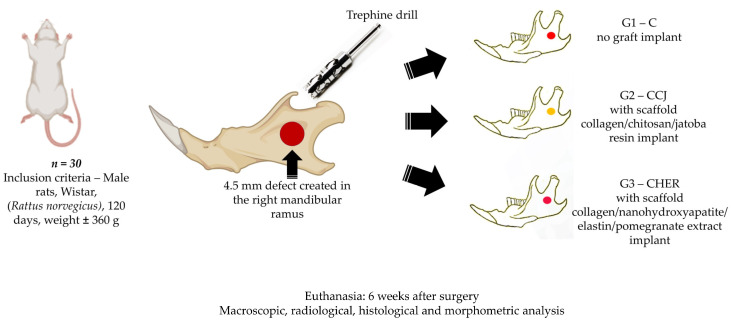
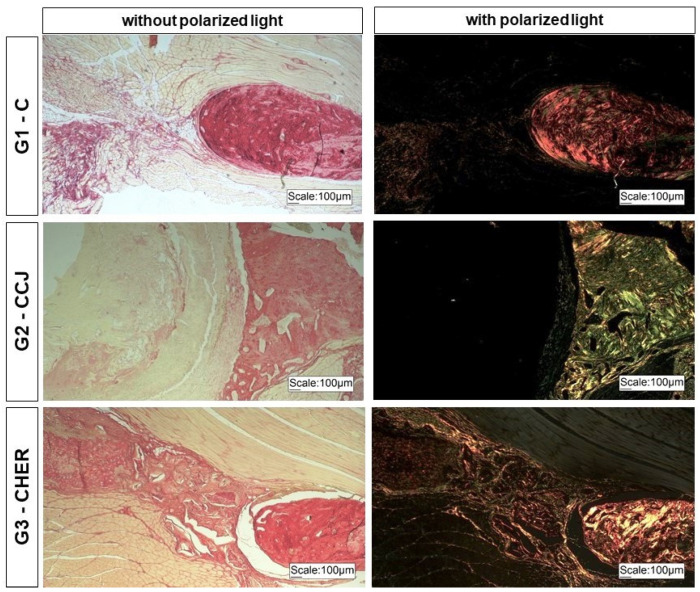
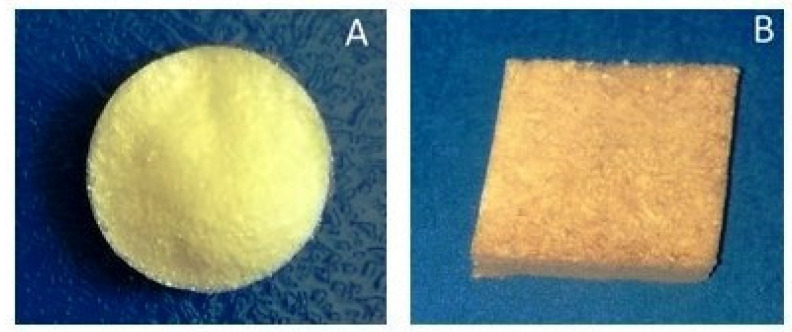
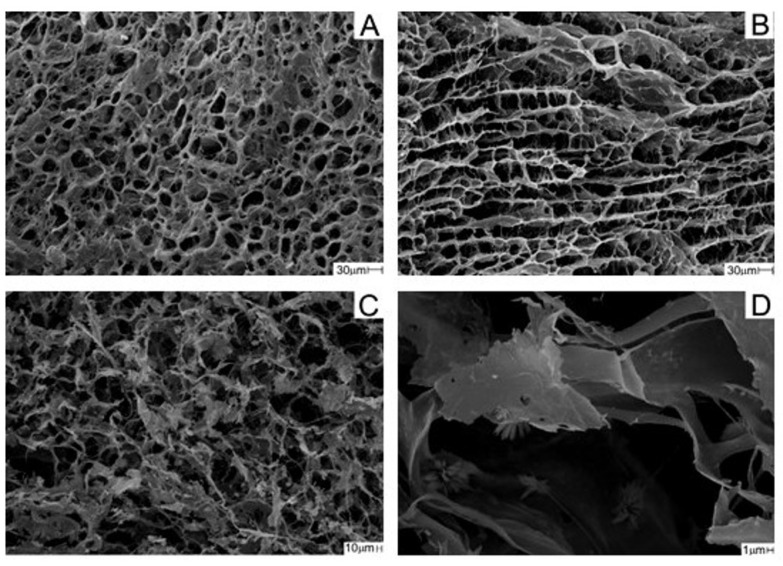
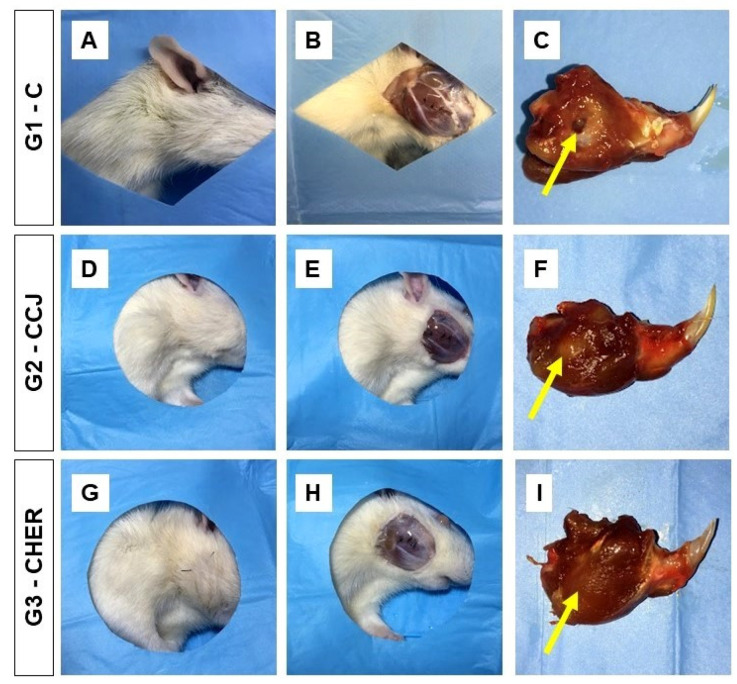
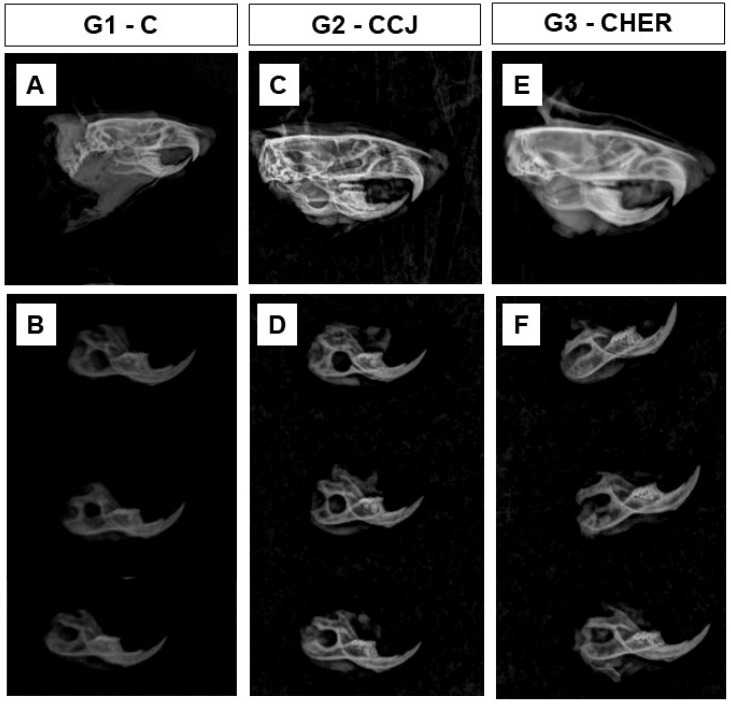
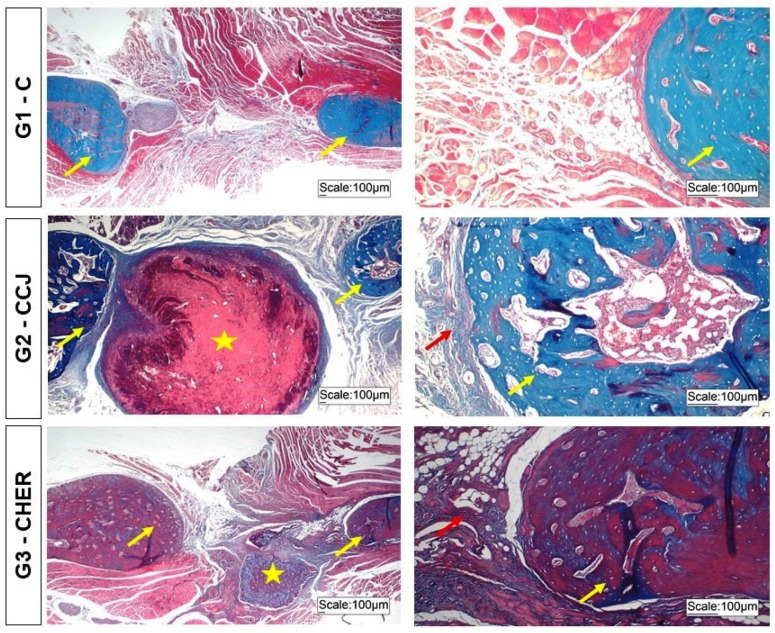
Severe loss of bone mass may require grafting, and, among the alternatives available, there are natural biomaterials that can act as scaffolds for the cell growth necessary for tissue regeneration. Collagen and elastin polymers are a good alternative due to their biomimetic properties of bone tissue, and their characteristics can be improved with the addition of polysaccharides such as chitosan and bioactive compounds such as jatoba resin and pomegranate extract due to their antigenic actions. The aim of this experimental protocol was to evaluate bone neoformation in experimentally made defects in the mandible of rats using polymeric scaffolds with plant extracts added. Thirty rats were divided into group 1, with a mandibular defect filled with a clot from the lesion and no graft implant (G1-C, = 10); group 2, filled with collagen/chitosan/jatoba resin scaffolds (G2-CCJ, = 10); and group 3, with collagen/nanohydroxyapatite/elastin/pomegranate extract scaffolds (G3-CHER, = 10). Six weeks after surgery, the animals were euthanized and samples from the surgical areas were submitted to macroscopic, radiological, histological, and morphometric analysis of the mandibular lesion repair process. The results showed no inflammatory infiltrates in the surgical area, indicating good acceptance of the scaffolds in the microenvironment of the host area. In the control group (G1), there was a predominance of reactive connective tissue, while in the grafted groups (G2 and G3), there was bone formation from the margins of the lesion, but it was still insufficient for total bone repair of the defect within the experimental period standardized in this study. The histomorphometric analysis showed that the mean percentage of bone volume formed in the surgical area of groups G1, G2, and G3 was 17.17 ± 2.68, 27.45 ± 1.65, and 34.07 ± 0.64 (mean ± standard deviation), respectively. It can be concluded that these scaffolds with plant extracts added can be a viable alternative for bone repair, as they are easily manipulated, have a low production cost, and stimulate the formation of new bone by osteoconduction.
严重的骨质流失可能需要进行骨移植,在现有的替代方案中,有一些天然生物材料可作为组织再生所需细胞生长的支架。胶原蛋白和弹性蛋白聚合物是很好的替代品,因为它们具有骨组织的仿生特性,并且由于壳聚糖等多糖以及jatoba树脂和石榴提取物等生物活性化合物的抗原作用,添加它们可以改善其特性。本实验方案的目的是使用添加了植物提取物的聚合物支架,评估大鼠下颌骨实验性缺损处的骨新生情况。30只大鼠被分为三组:第一组(G1-C,n = 10),下颌骨缺损处填充损伤处的血凝块,未植入移植物;第二组(G2-CCJ,n = 10),填充胶原蛋白/壳聚糖/jatoba树脂支架;第三组(G3-CHER,n = 10),填充胶原蛋白/纳米羟基磷灰石/弹性蛋白/石榴提取物支架。术后六周,对动物实施安乐死,并将手术区域的样本进行下颌骨损伤修复过程的宏观、放射学、组织学和形态计量学分析。结果显示手术区域无炎性浸润,表明支架在宿主区域的微环境中具有良好的耐受性。在对照组(G1)中,主要是反应性结缔组织,而在移植组(G2和G3)中,从损伤边缘有骨形成,但在本研究标准化的实验期内,仍不足以完全修复缺损的骨组织。组织形态计量学分析表明,G1、G2和G3组手术区域形成的骨体积平均百分比分别为17.17±2.68、27.45±1.65和34.07±0.64(平均值±标准差)。可以得出结论,这些添加了植物提取物的支架可作为骨修复的可行替代方案,因为它们易于操作,生产成本低,并通过骨传导刺激新骨形成。