Lan Ying-Wei, Chen Chia-En, Huang Tsung-Teng, Huang Tse-Hung, Chen Chuan-Mu, Chong Kowit-Yu
Department of Child Health, Phoenix Children's Research Institute, University of Arizona College of Medicine-Phoenix, Phoenix, AZ, USA.
Department of Medical Biotechnology and Laboratory Sciences, College of Medicine, Chang Gung University, Taoyuan, Taiwan.
Biomed J. 2024 Dec;47(6):100720. doi: 10.1016/j.bj.2024.100720. Epub 2024 Apr 26.
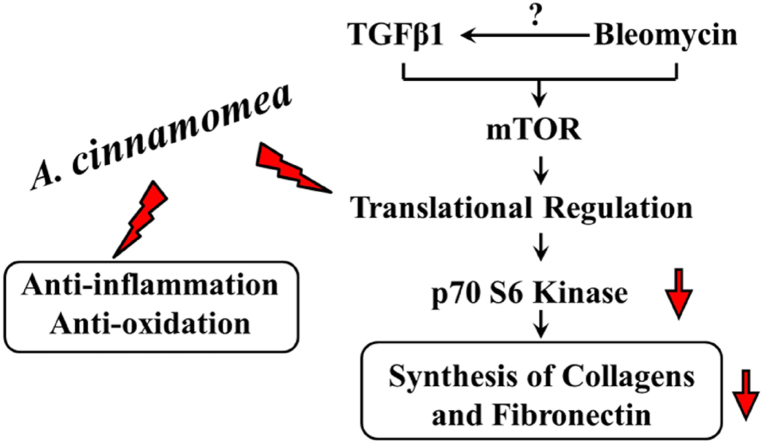
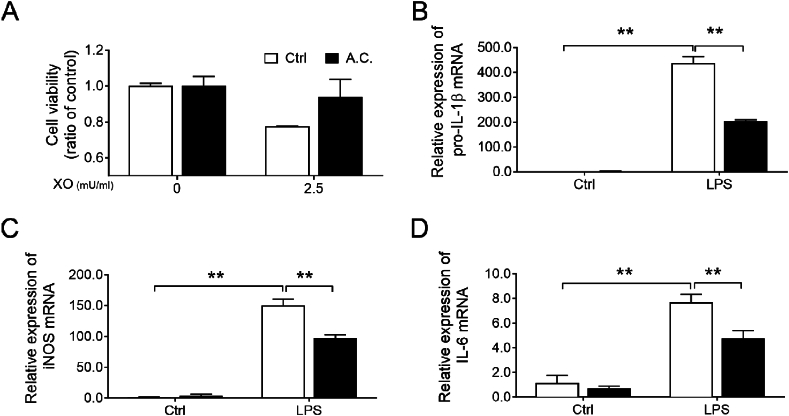
Pulmonary fibrosis is a progressive diffuse parenchymal lung disorder with a high mortality rate. Studies have indicated that injured lung tissues release various pro-inflammatory factors, and produce a large amount of nitric oxide. There is also accumulation of collagen and oxidative stress-induced injury, collectively leading to pulmonary fibrosis. Antrodia cinnamomea is an endemic fungal growth in Taiwan, and its fermented extracts exert anti-inflammatory effects to alleviate liver damages. Hence, we hypothesized and tested the feasibility of using A. cinnamomea extracts for treatment of pulmonary fibrosis.
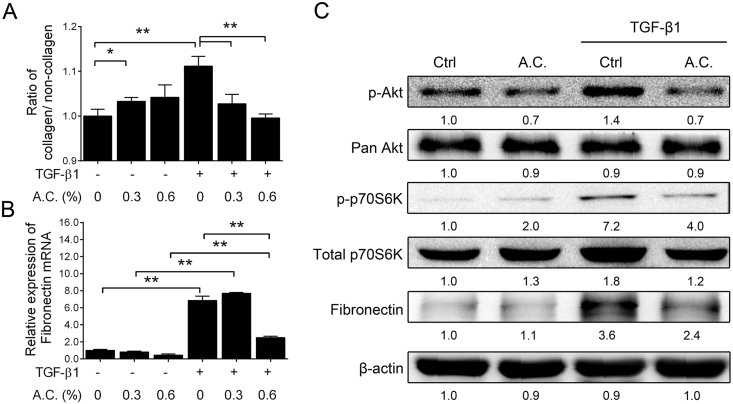
The TGF-β1-induced human lung fibroblast cells (MRC-5) in vitro cell assay were used to evaluate the effects of A. cinnamomea extracts on the collagen production in MRC-5. Eight-week-old ICR mice were intratracheally administered bleomycin and then fed with an A. cinnamomea extract on day 3 post-administration of bleomycin. At day 21 post-bleomycin administration, the pulmonary functional test, the expression level of inflammation- and fibrosis-related genes in the lung tissue, and the histopathological change were examined.
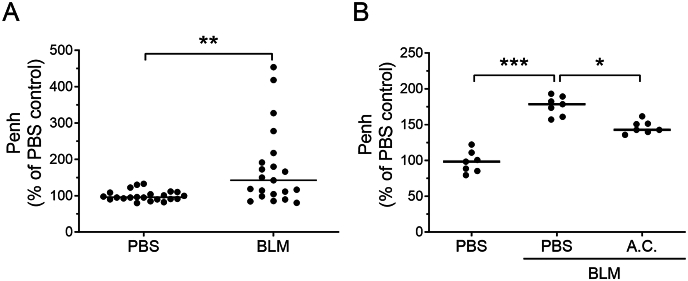
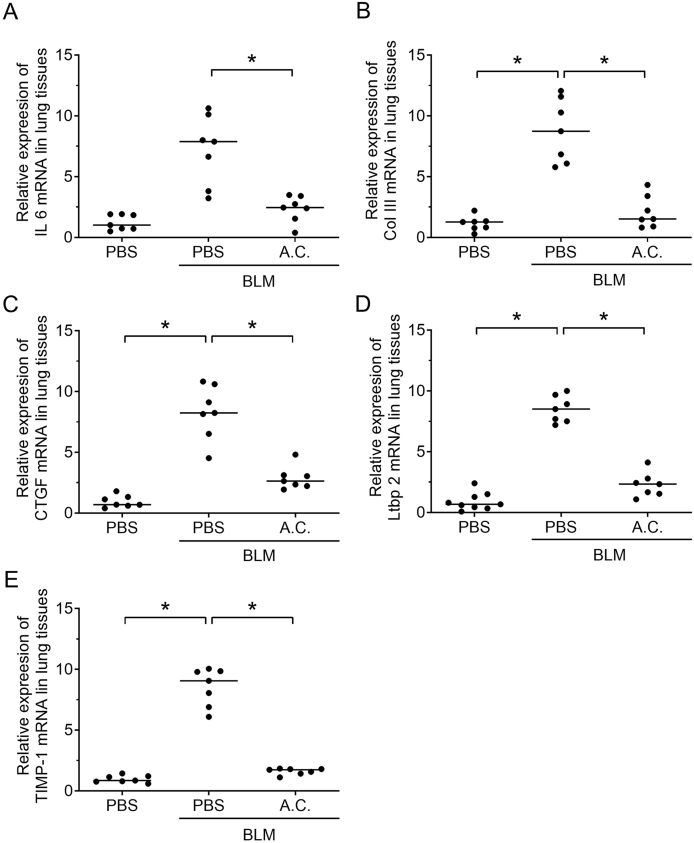
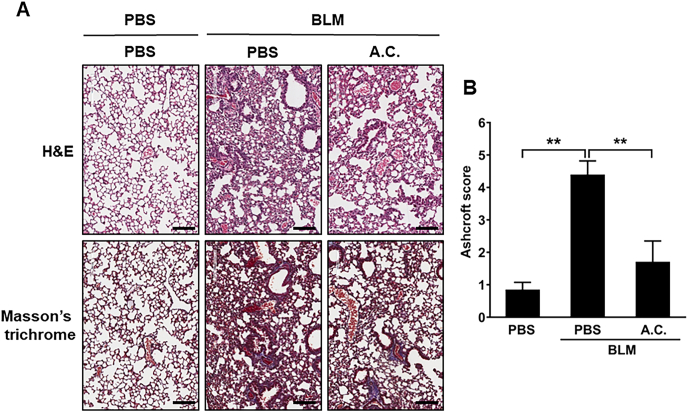
The A. cinnamomea extract significantly attenuated the expression level of collagen in the TGF-β1-induced MRC-5 cells. In the A. cinnamome-treated bleomycin-induced lung fibrotic mice, the bodyweight increased, pulmonary functions improved, the lung tissues expression level of inflammatory factor and the fibrotic indicator were decreased, and the histopathological results showed the reduction of thickening of the inter-alveolar septa.
The Antrodia cinnamomea extract significant protects mice against bleomycin-induced lung injuries through improvement of body weight gain and lung functions, and attenuation of expression of inflammatory and fibrotic indicators.
肺纤维化是一种具有高死亡率的进行性弥漫性肺实质疾病。研究表明,受损的肺组织会释放各种促炎因子,并产生大量一氧化氮。还存在胶原蛋白积累和氧化应激诱导的损伤,共同导致肺纤维化。牛樟芝是台湾特有的真菌,其发酵提取物具有抗炎作用,可减轻肝脏损伤。因此,我们提出并测试了使用牛樟芝提取物治疗肺纤维化的可行性。
采用转化生长因子-β1(TGF-β1)诱导的人肺成纤维细胞(MRC-5)体外细胞试验,评估牛樟芝提取物对MRC-5中胶原蛋白产生的影响。8周龄的ICR小鼠经气管内给予博来霉素,然后在博来霉素给药后第3天喂食牛樟芝提取物。在博来霉素给药后第21天,检测肺功能、肺组织中炎症和纤维化相关基因的表达水平以及组织病理学变化。
牛樟芝提取物显著降低了TGF-β1诱导的MRC-5细胞中胶原蛋白的表达水平。在牛樟芝治疗的博来霉素诱导的肺纤维化小鼠中,体重增加,肺功能改善,肺组织中炎症因子和纤维化指标的表达水平降低,组织病理学结果显示肺泡间隔增厚减轻。
牛樟芝提取物通过改善体重增加和肺功能以及减轻炎症和纤维化指标的表达,显著保护小鼠免受博来霉素诱导的肺损伤。