Montironi Chiara, Chen Zhenghao, Derks Ingrid A M, Cretenet Gaspard, Krap Esmée A, Eldering Eric, Simon-Molas Helga
Amsterdam UMC Location University of Amsterdam, Department of Experimental Immunology, Amsterdam, the Netherlands.
Amsterdam Institute for Infection and Immunity, Cancer Immunology, Amsterdam, the Netherlands.
iScience. 2024 Mar 28;27(5):109640. doi: 10.1016/j.isci.2024.109640. eCollection 2024 May 17.
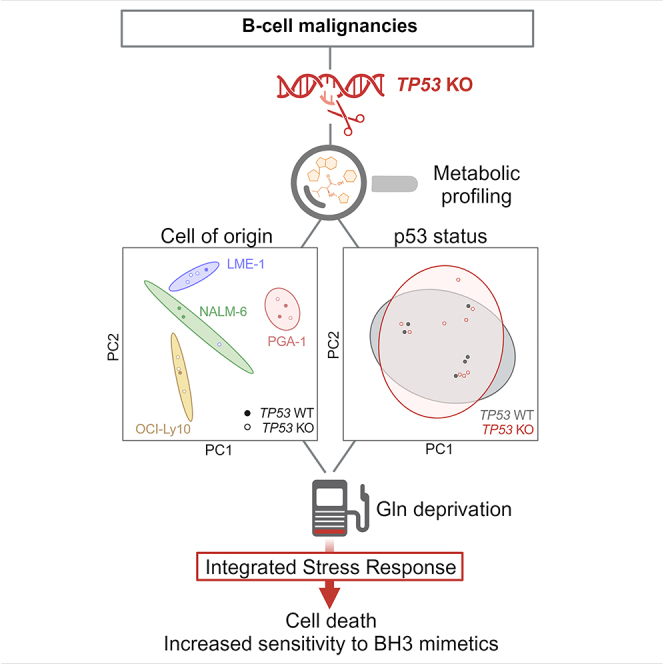
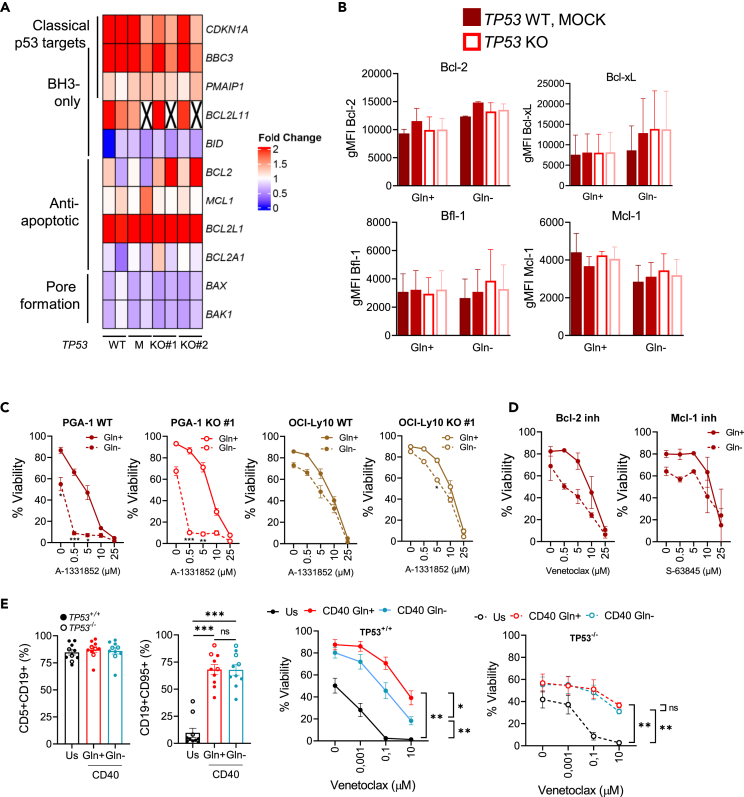
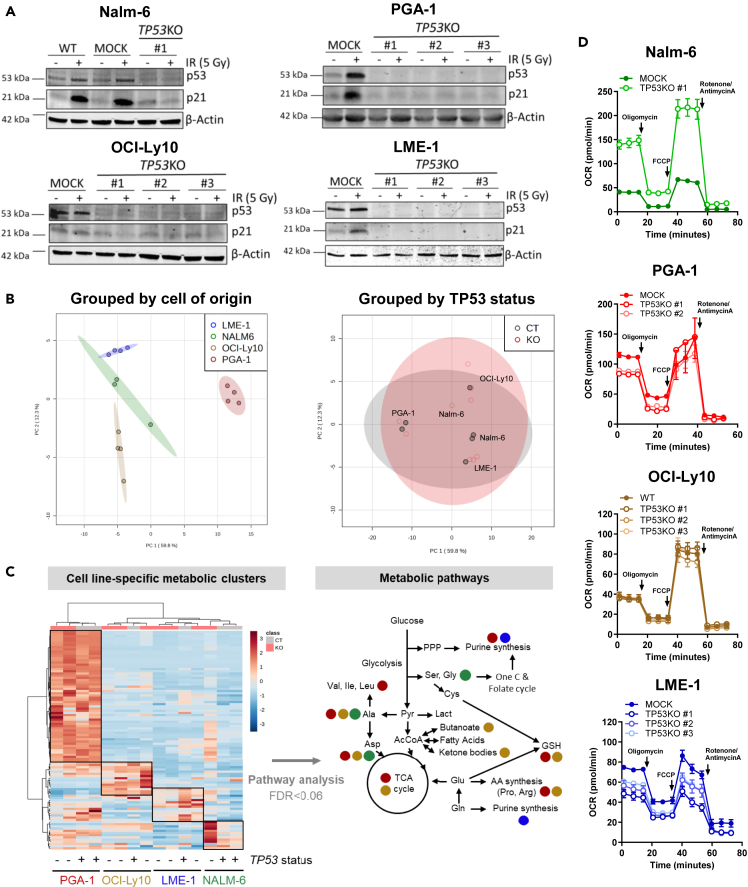
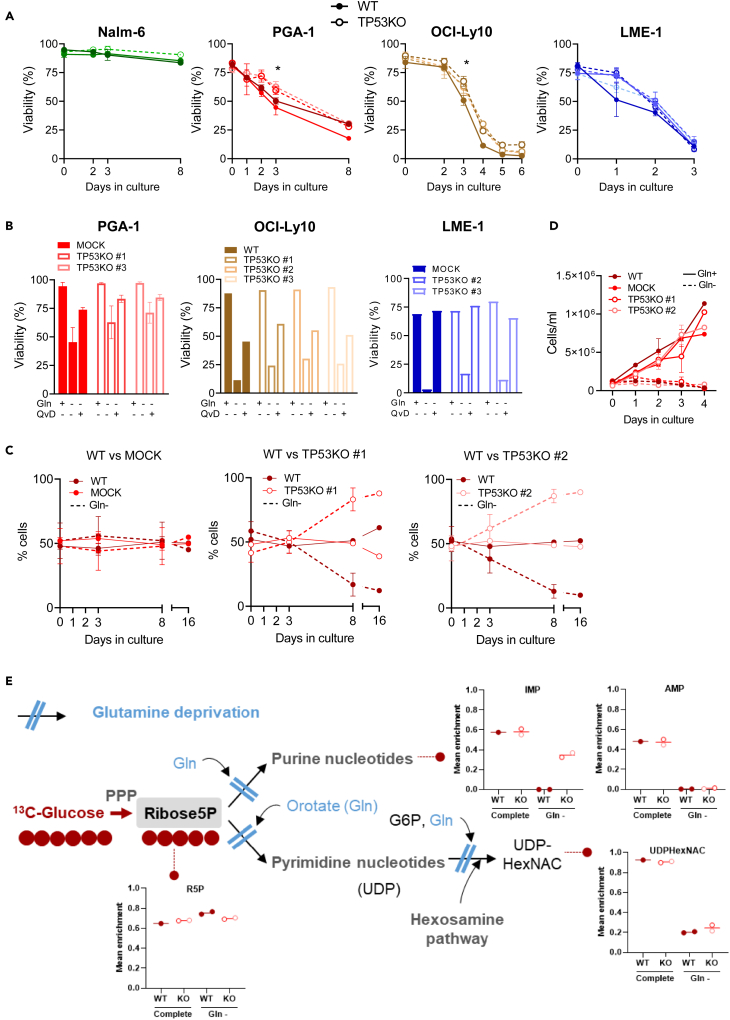
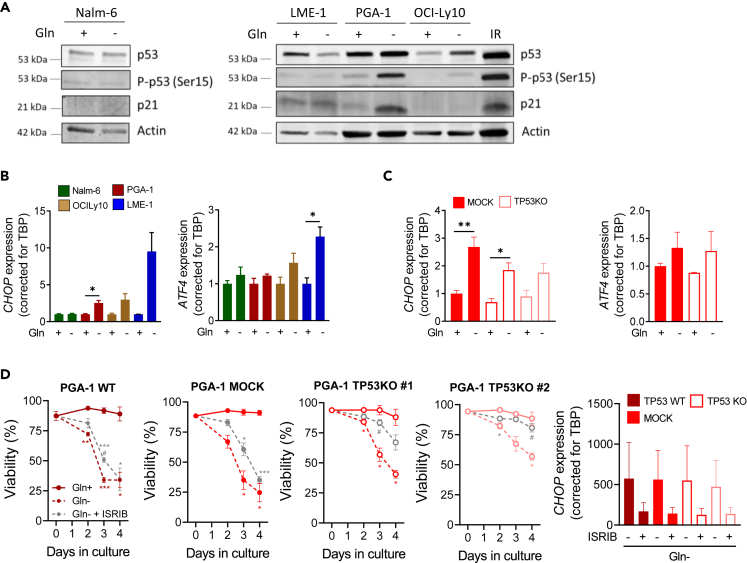
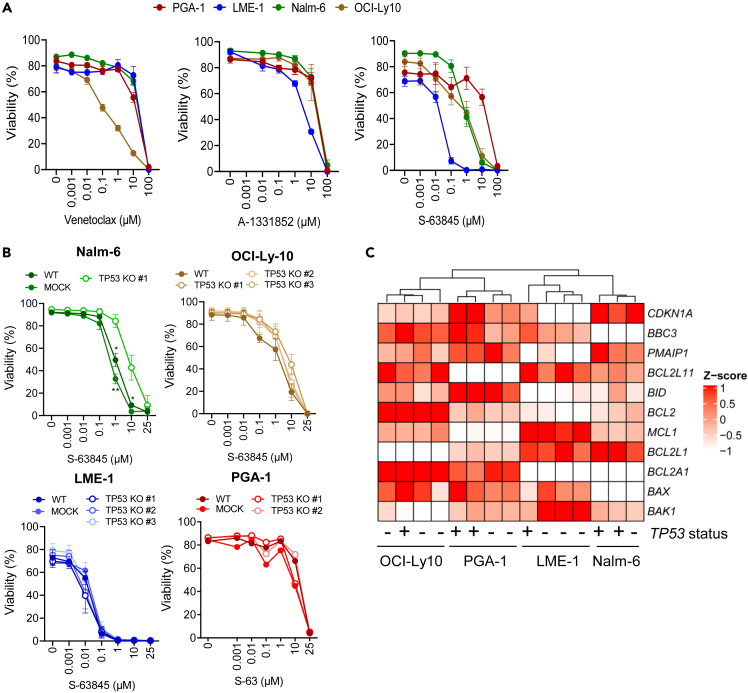
The tumor suppressor p53 has been described to control various aspects of metabolic reprogramming in solid tumors, but in B cell malignancies that role is as yet unknown. We generated pairs of p53 functional and knockout (KO) clones from distinct B cell malignancies (acute lymphoblastic leukemia, chronic lymphocytic leukemia, diffuse large B cell lymphoma, and multiple myeloma). Metabolomics and isotope tracing showed that p53 loss did not drive a common metabolic signature. Instead, cell lines segregated according to cell of origin. Next, we focused on glutamine as a crucial energy source in the B cell tumor microenvironment. In both wild-type and KO cells, glutamine deprivation induced cell death through the integrated stress response, via CHOP/ATF4. Lastly, combining BH3 mimetic drugs with glutamine starvation emerged as a possibility to target resistant clones. In conclusion, our analyses do not support a common metabolic signature of p53 deficiency in B cell malignancies and suggest therapeutic options for exploration based on glutamine dependency.
肿瘤抑制因子p53已被描述为可控制实体瘤中代谢重编程的各个方面,但在B细胞恶性肿瘤中,其作用尚不清楚。我们从不同的B细胞恶性肿瘤(急性淋巴细胞白血病、慢性淋巴细胞白血病、弥漫性大B细胞淋巴瘤和多发性骨髓瘤)中生成了p53功能克隆和基因敲除(KO)克隆对。代谢组学和同位素示踪表明,p53缺失并未驱动共同的代谢特征。相反,细胞系根据起源细胞进行了分类。接下来,我们将谷氨酰胺作为B细胞肿瘤微环境中的关键能量来源进行了研究。在野生型和基因敲除细胞中,谷氨酰胺剥夺均通过综合应激反应,经由CHOP/ATF4诱导细胞死亡。最后,将BH3模拟药物与谷氨酰胺饥饿相结合,成为靶向耐药克隆的一种可能。总之,我们的分析不支持B细胞恶性肿瘤中p53缺乏的共同代谢特征,并提出了基于谷氨酰胺依赖性进行探索的治疗选择。