Sakamoto Takuya, Fuku Atsushi, Horie Tetsuhiro, Kitajima Hironori, Nakamura Yuka, Tanida Ikuhiro, Sunami Hiroshi, Hirata Hiroaki, Tachi Yoshiyuki, Iida Yasuo, Yamada Sohsuke, Yamamoto Naoki, Shimizu Yusuke, Ishigaki Yasuhito, Ichiseki Toru, Kaneuji Ayumi, Osawa Satoshi, Kawahara Norio
Medical Research Institute, Kanazawa Medical University, Uchinada, Kahoku, Ishikawa, 920-0293, Japan.
Department of Pharmacy, Kanazawa Medical University Hospital, Uchinada, Kahoku, Ishikawa, 920-0293, Japan.
Regen Ther. 2024 Apr 23;27:408-418. doi: 10.1016/j.reth.2024.04.010. eCollection 2024 Dec.
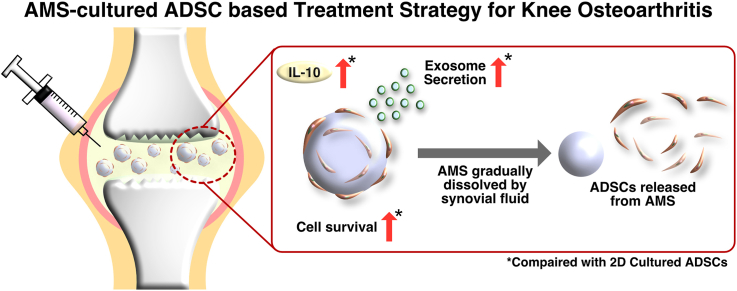
Administration of adipose-derived stem cells (ADSCs) into the joint cavity has been shown to alleviate the symptoms of knee osteoarthritis (OA) by releasing exosomes and anti-inflammatory cytokines. However, the therapeutic effect of these cells is limited by their rapid disappearance after administration. Thus, it is necessary to prolong cell survival in the joint cavity. This study aimed to investigate the potential application of ADSCs adhered to atelocollagen microspheres (AMSs) for cell therapy of knee OA.
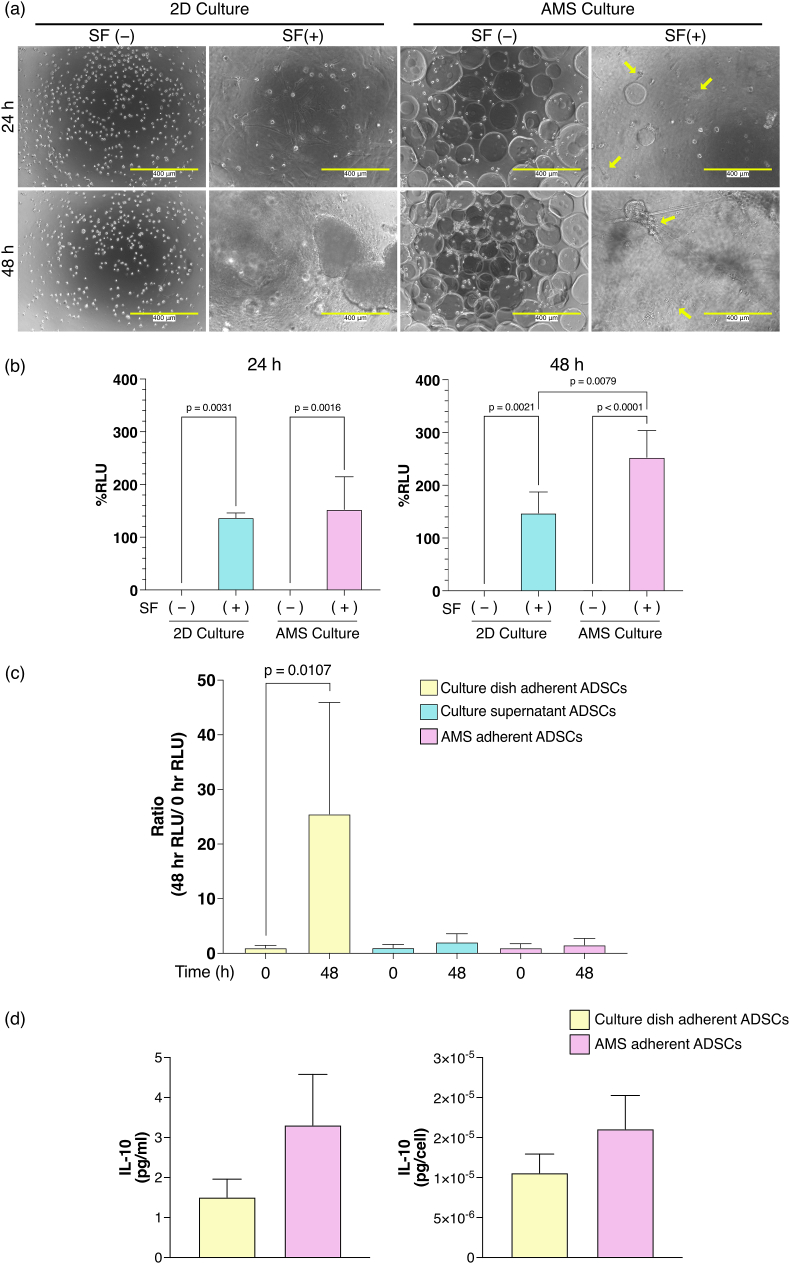
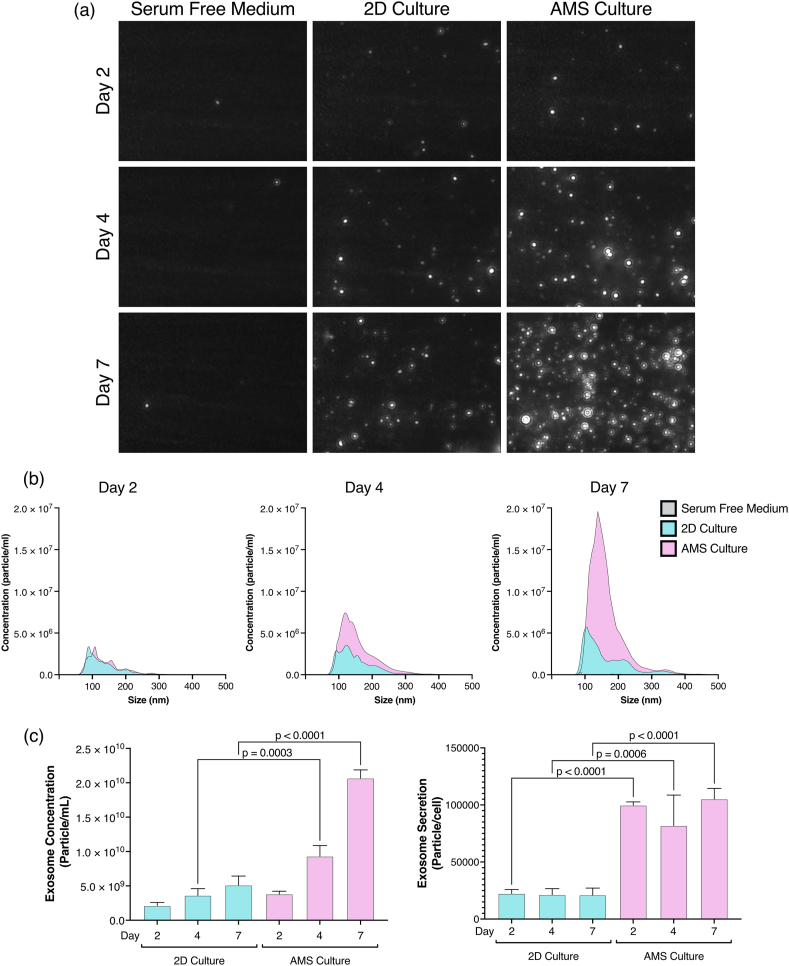
ADSCs were cultured for 2, 4, and 7 days in AMS suspension or adherent culture dishes. The supernatants were analyzed for IL-10 and exosome secretion via enzyme-linked immunosorbent assay and Nanosight. The effect of AMS was compared with that of adherent-cultured ADSCs (2D-cultured ADSCs) using transcriptome analysis. Moreover, the solubility of AMS and viability of ADSCs were evaluated using synovial fluid (SF) from patients with knee OA.
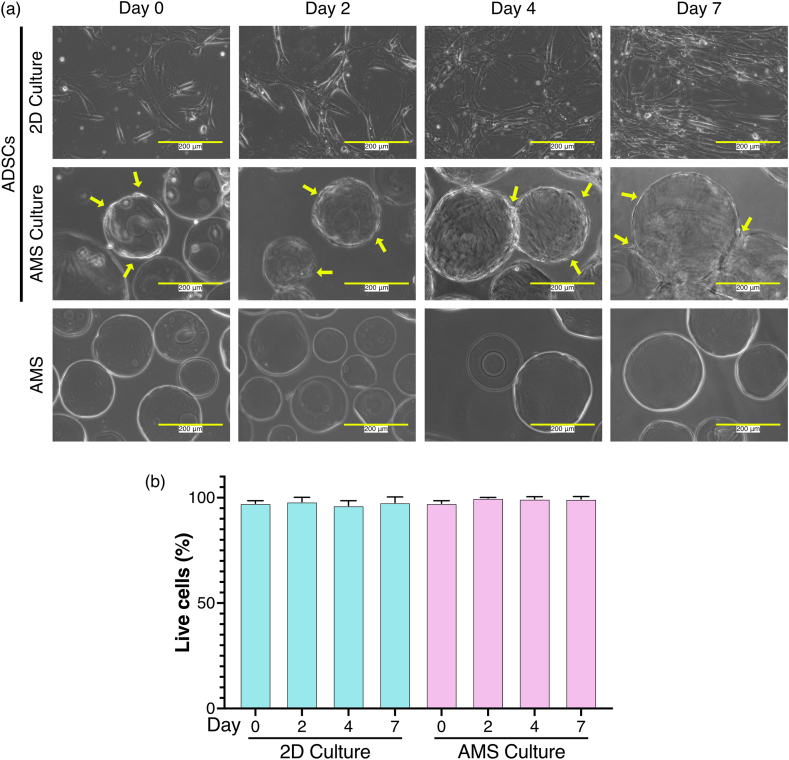
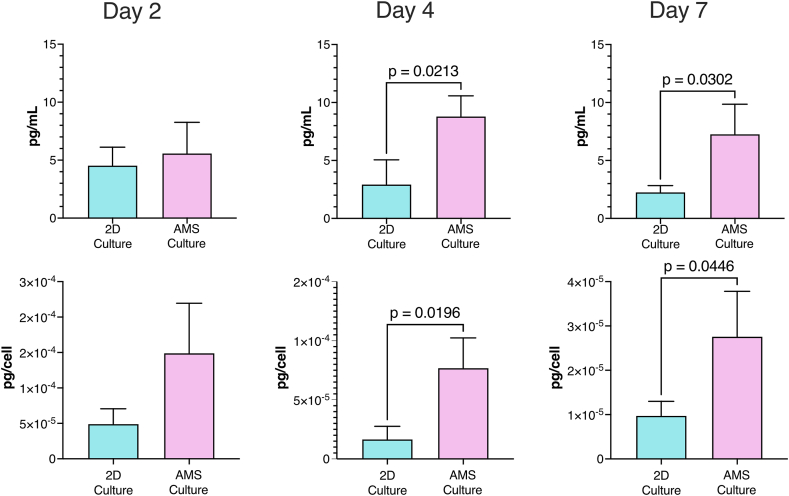
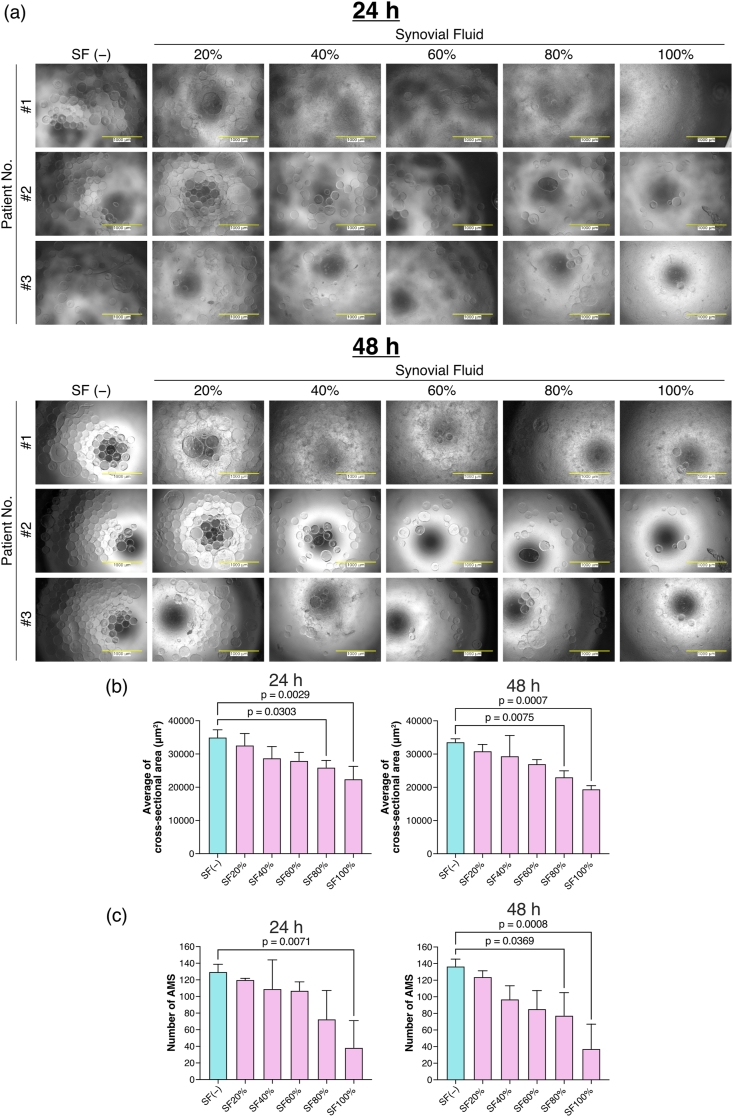
Compared with 2D-cultured ADSCs, AMS-cultured ADSCs exhibited a significant increase in secretion of exosomes and IL-10, and the expression of several genes involved in extracellular matrix and immune regulation were altered. Furthermore, when AMS-cultured ADSCs were cultured in SF from knee OA patients to mimic the intra-articular environment, the SF dissolved the AMSs and released viable ADSCs. In addition, AMS-cultured ADSCs showed significantly higher long-term cell viability than 2D-cultured ADSCs.
Increased survival of AMS-adhered ADSCs was observed in the intra-articular environment, and AMSs were found to gradually dissipate. These results suggest that AMS-adhered ADSCs are promising source for cell therapy of knee OA.
将脂肪来源干细胞(ADSCs)注入关节腔已被证明可通过释放外泌体和抗炎细胞因子来缓解膝关节骨关节炎(OA)的症状。然而,这些细胞的治疗效果受到给药后迅速消失的限制。因此,有必要延长细胞在关节腔内的存活时间。本研究旨在探讨附着于去端胶原微球(AMSs)的ADSCs在膝关节OA细胞治疗中的潜在应用。
将ADSCs在AMS悬浮液或贴壁培养皿中培养2、4和7天。通过酶联免疫吸附测定和纳米可视技术分析上清液中的白细胞介素-10(IL-10)和外泌体分泌情况。使用转录组分析比较AMS与贴壁培养的ADSCs(二维培养的ADSCs)的效果。此外,使用膝关节OA患者的滑液(SF)评估AMS的溶解性和ADSCs的活力。
与二维培养的ADSCs相比,AMS培养的ADSCs外泌体和IL-10的分泌显著增加,并且参与细胞外基质和免疫调节的几个基因的表达发生了改变。此外,当将AMS培养的ADSCs在膝关节OA患者的SF中培养以模拟关节内环境时,SF溶解了AMS并释放出有活力的ADSCs。此外,AMS培养的ADSCs显示出比二维培养的ADSCs显著更高的长期细胞活力。
在关节内环境中观察到附着于AMS的ADSCs存活增加,并且发现AMS逐渐消散。这些结果表明,附着于AMS的ADSCs是膝关节OA细胞治疗的有前景的来源。