Gobezie Mengistie Yirsaw, Tesfaye Nuhamin Alemayehu, Solomon Tewodros, Demessie Mulat Belete, Kassa Tesfaye Dessale, Wendie Teklehaimanot Fentie, Alemayehu Ermiyas, Hassen Minimize
Department of Clinical Pharmacy, School of Pharmacy, College of Medicine and Health Sciences, Wollo University, Dessie, Ethiopia.
Department of Clinical Pharmacy, College of Health Sciences, Mekelle University, Mekelle, Ethiopia.
Front Microbiol. 2024 Apr 12;15:1390001. doi: 10.3389/fmicb.2024.1390001. eCollection 2024.
() represents a significant causative agent of sexually transmitted infections (STIs), posing considerable global health challenges. Despite the presence of diagnostic tools and empirically guided therapies, the escalating AMR of continues to pose a threat. This study aims to assess the prevalence of among STI suspected patients in Ethiopia and explore the patterns of AMR to common antimicrobials.
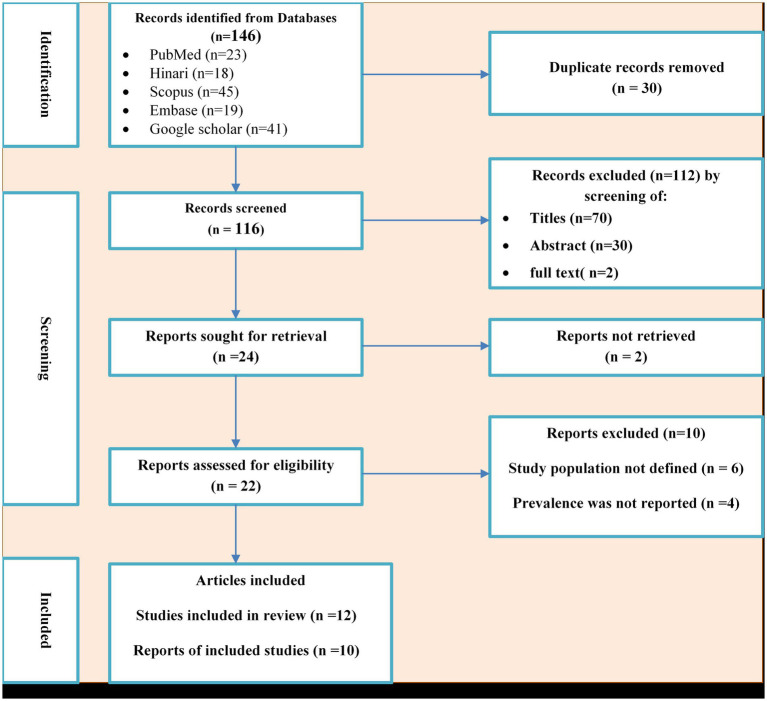
Following the Preferred Reporting Items for Systematic Reviews and Meta-Analyses (PRISMA) guidelines, we conducted a systematic review and meta-analysis. A thorough search of electronic databases from July 11 to July 24, 2023, identified 10 eligible studies. Data were extracted and analyzed using a random-effects model. Heterogeneity was assessed using the I statistic, and publication bias was evaluated through Egger's regression test and funnel plots.
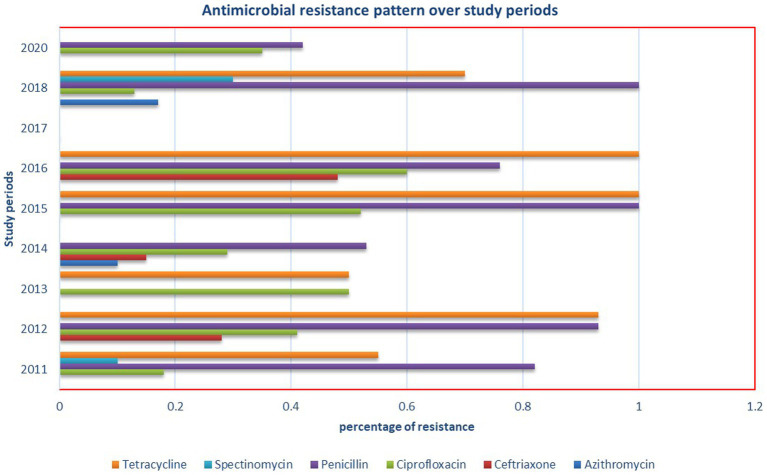
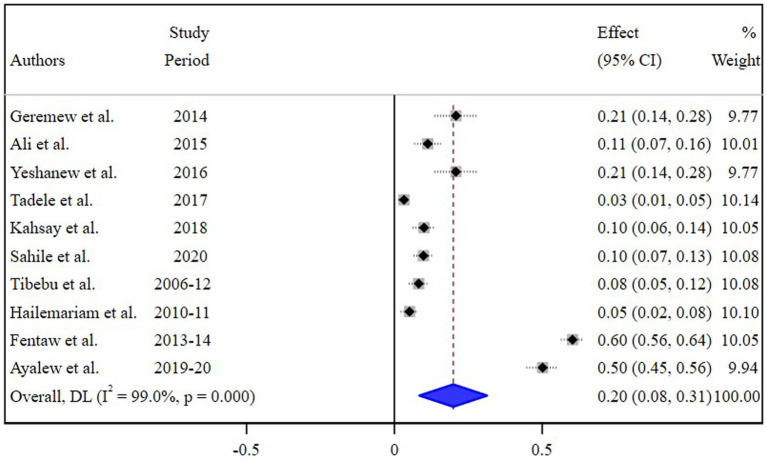
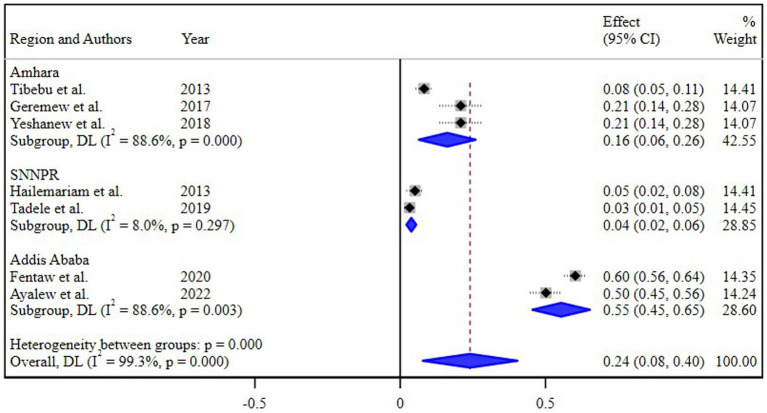
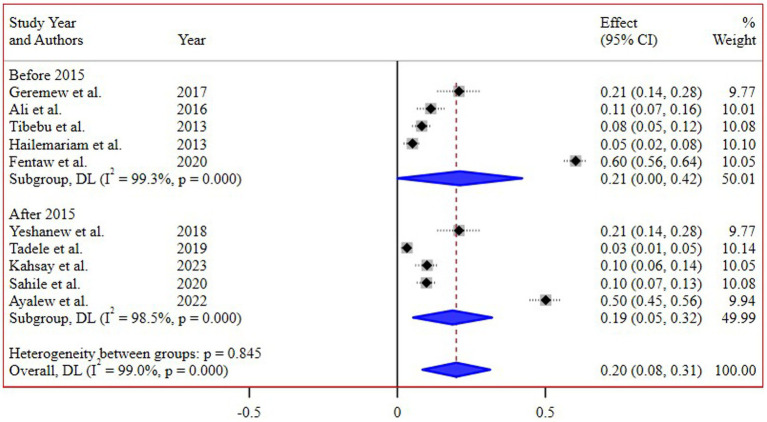
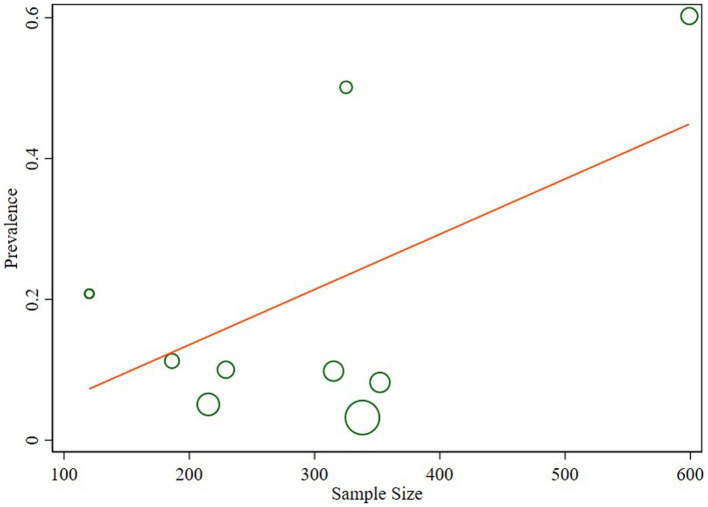
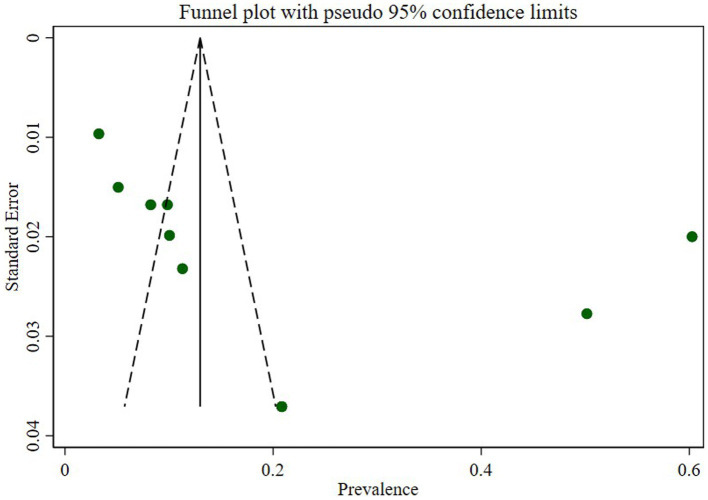
The overall pooled prevalence of among STI suspected patients in Ethiopia was 20% (95% confidence interval (CI): 8-30, I = 99.0%; -value <0.001). Substantial regional variations were observed, with the highest prevalence in Addis Ababa (55, 95% CI: 45-65) and the lowest in the Southern Nations, Nationalities, and Peoples' Region (SNNPR) (4, 95% CI: 2-8). The pooled prevalence of AMR to ciprofloxacin, ceftriaxone, azithromycin, benzylpenicillin, tetracycline, and spectinomycin was 37, 9, 10, 79, 93, and 2%, respectively. Significant heterogeneity existed between studies (I = 99.0%; value <0.001). Publication bias, identified through funnel plot examination and Egger's regression test ( < 0.001), execution of trim and fill analysis resulted in an adjusted pooled prevalence of (6.2, 95% CI: -6.8 to 19.3).
The prevalence of among STI suspected patients in Ethiopia is alarming, particularly in specific regions. The elevated AMR to ciprofloxacin underscores the immediate need for alternative treatment options and enhanced surveillance systems. Future initiatives should prioritize strengthening laboratory capacities and implementing targeted interventions to curtail transmission and prevent the emergence of AMR.
https://www.crd.york.ac.uk/prospero, identifier CRD42023459698.
()是性传播感染(STIs)的一种重要病原体,给全球健康带来了巨大挑战。尽管有诊断工具和经验性指导疗法,但()不断上升的抗菌药物耐药性(AMR)仍然构成威胁。本研究旨在评估埃塞俄比亚疑似性传播感染患者中()的流行情况,并探讨其对常见抗菌药物的AMR模式。
按照系统评价和Meta分析的首选报告项目(PRISMA)指南,我们进行了一项系统评价和Meta分析。对2023年7月11日至7月24日的电子数据库进行全面检索,确定了10项符合条件的研究。使用随机效应模型提取和分析数据。使用I统计量评估异质性,并通过Egger回归检验和漏斗图评估发表偏倚。
埃塞俄比亚疑似性传播感染患者中()的总体合并流行率为20%(95%置信区间(CI):8 - 30,I = 99.0%;P值<0.001)。观察到显著的地区差异,亚的斯亚贝巴的流行率最高(55,95% CI:45 - 65),而南方各族州人民地区(SNNPR)最低(4,95% CI:2 - 8)。对环丙沙星、头孢曲松、阿奇霉素、苄青霉素、四环素和壮观霉素的AMR合并流行率分别为37%、9%、10%、79%、93%和2%。研究之间存在显著异质性(I = 99.0%;P值<0.001)。通过漏斗图检查和Egger回归检验(P < 0.001)确定存在发表偏倚,进行修剪和填充分析后,调整后的合并流行率为(6.2,95% CI: - 6.8至19.3)。
埃塞俄比亚疑似性传播感染患者中()的流行情况令人担忧,特别是在特定地区。环丙沙星的AMR升高凸显了迫切需要替代治疗方案和加强监测系统。未来的举措应优先加强实验室能力,并实施有针对性的干预措施,以减少()传播并防止AMR的出现。