Department of Physics and Astronomy, Faculty of Science, Vrije Universiteit Amsterdam, Amsterdam 1081 HV, theNetherlands.
Lancaster Environment Centre, Lancaster University, Lancaster LA1 3SX, UK.
Plant Cell. 2024 Oct 3;36(10):3944-3973. doi: 10.1093/plcell/koae132.
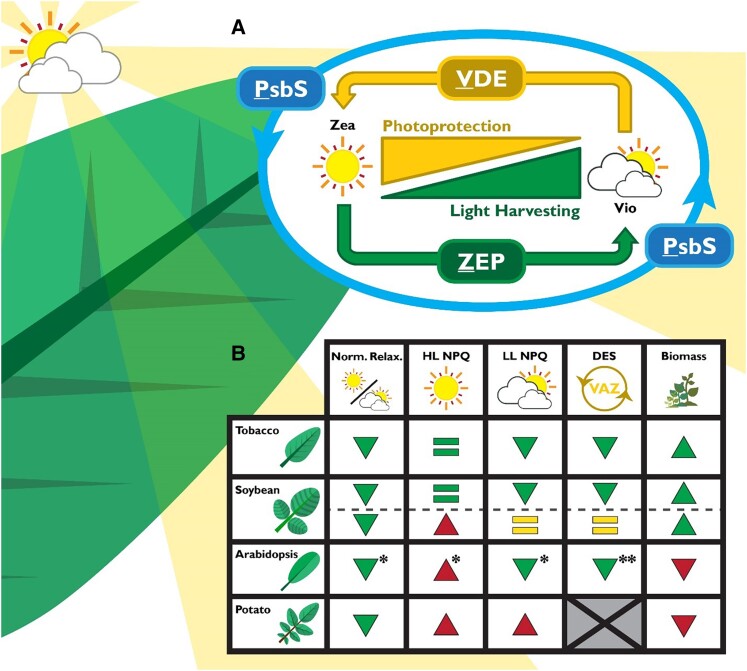
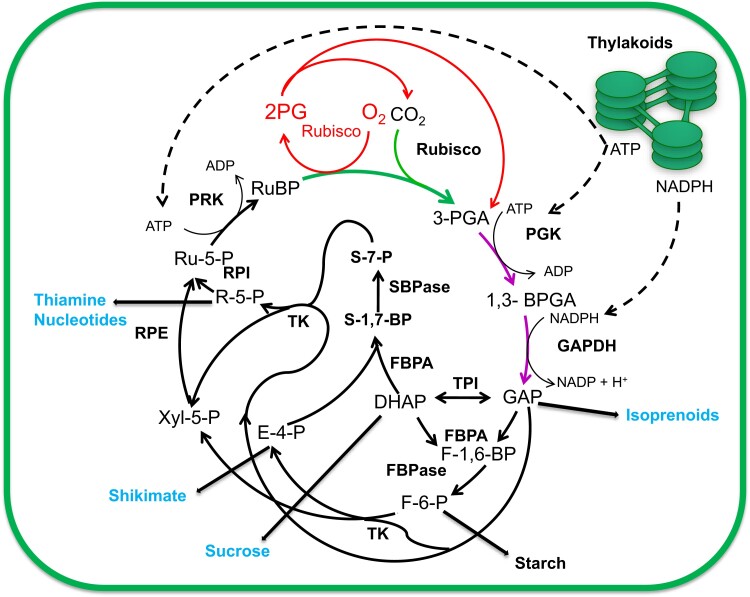
Improving photosynthesis, the fundamental process by which plants convert light energy into chemical energy, is a key area of research with great potential for enhancing sustainable agricultural productivity and addressing global food security challenges. This perspective delves into the latest advancements and approaches aimed at optimizing photosynthetic efficiency. Our discussion encompasses the entire process, beginning with light harvesting and its regulation and progressing through the bottleneck of electron transfer. We then delve into the carbon reactions of photosynthesis, focusing on strategies targeting the enzymes of the Calvin-Benson-Bassham (CBB) cycle. Additionally, we explore methods to increase carbon dioxide (CO2) concentration near the Rubisco, the enzyme responsible for the first step of CBB cycle, drawing inspiration from various photosynthetic organisms, and conclude this section by examining ways to enhance CO2 delivery into leaves. Moving beyond individual processes, we discuss two approaches to identifying key targets for photosynthesis improvement: systems modeling and the study of natural variation. Finally, we revisit some of the strategies mentioned above to provide a holistic view of the improvements, analyzing their impact on nitrogen use efficiency and on canopy photosynthesis.
提高光合作用,即植物将光能转化为化学能的基本过程,是一个具有巨大潜力的研究领域,可以提高可持续农业生产力并解决全球粮食安全挑战。本观点深入探讨了旨在优化光合作用效率的最新进展和方法。我们的讨论涵盖了整个过程,从光的吸收和调节开始,一直到电子传递的瓶颈。然后,我们深入研究光合作用的碳反应,重点关注针对卡尔文-本森-巴斯汉姆(Calvin-Benson-Bassham,CBB)循环酶的策略。此外,我们还探索了增加 Rubisco 附近二氧化碳(CO2)浓度的方法,Rubisco 是 CBB 循环第一步的酶,从各种光合生物中汲取灵感,并通过研究增强 CO2 向叶片输送的方法来结束这一部分。超越单个过程,我们讨论了两种确定光合作用改进关键目标的方法:系统建模和自然变异研究。最后,我们重新审视了上述一些策略,以提供对改进的整体看法,分析它们对氮利用效率和冠层光合作用的影响。